
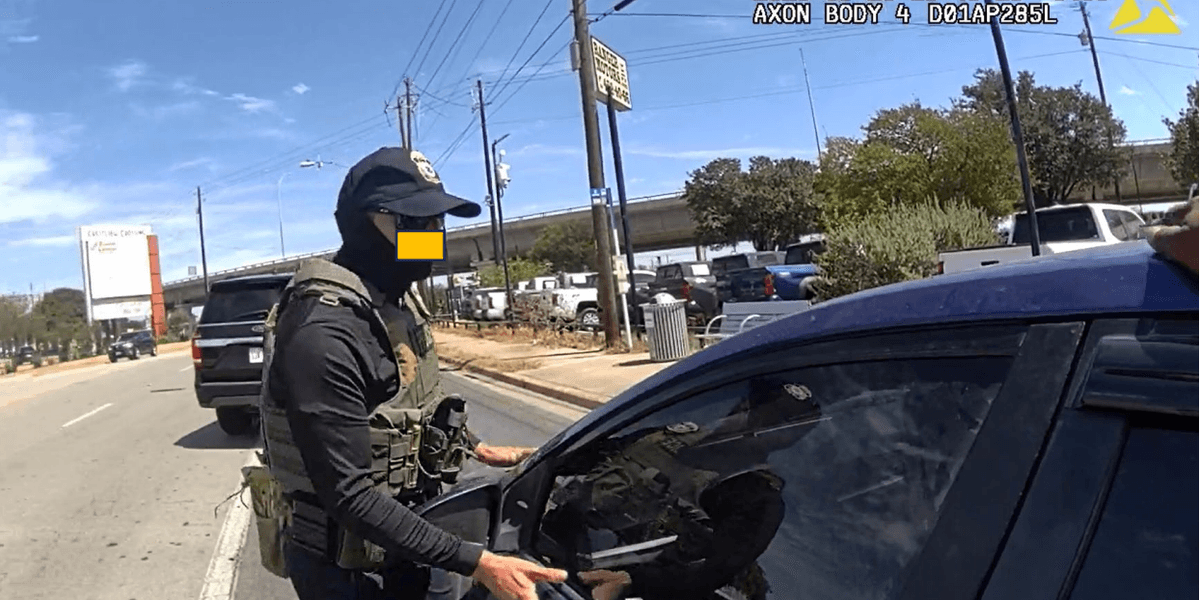
Federal investigators say a routine encounter in Washington state turned violent in seconds after a DoorDash driver clipped an officer with his car, leading to gunfire and a rapid arrest. The case has already drawn attention because it sits at the crossroads of immigration enforcement, street-level chaos, and the split-second judgments officers are forced to make.
The incident, described in a Justice Department filing, centers on a man identified as an illegal immigrant who was working as a food delivery driver when officers moved in. According to the account, body camera footage captured the moment the vehicle struck the officer, setting off a chaotic sequence that ended with the driver being shot after the collision. The images and the official filing have pushed the story into the public spotlight, where it has sparked fresh debate about enforcement and public safety.
What makes the case stand out is how fast it escalated. A traffic stop or contact with law enforcement can go sideways in an instant, but this one moved from an encounter to a violent collision and then to gunfire with almost no time for anyone involved to reset. That kind of rapid turn leaves little room for neat explanations, and it is exactly why bodycam evidence matters so much in cases like this.
Authorities say the video is central to understanding what happened, and that is no surprise. When a story involves an officer, a vehicle, and a suspect who is already under scrutiny, the footage often becomes the clearest piece of the puzzle. It can confirm details, settle timelines, and show whether commands were followed, ignored, or lost in the confusion.
The immigration angle is also impossible to miss. The government’s description of the driver as an illegal alien adds another layer to an already serious case, especially for people who see border enforcement and local public safety as deeply connected. Supporters of tougher immigration enforcement point to incidents like this as proof that ignoring immigration violations can bleed into broader public danger.
That view has gained traction because the details are stark. A person who should not have been in the country, according to federal officials, was out on the road doing gig work when the encounter turned dangerous. For many Americans, that raises a simple and uncomfortable question: how many preventable risks are being brushed aside before they become headlines?
At the same time, the shooting itself is bound to face close review. Any time an officer fires after being struck or endangered by a vehicle, investigators have to sort out whether the response matched the threat in front of them. Those questions matter, and they tend to generate intense scrutiny from both law enforcement supporters and critics.
Still, the bigger picture is hard to ignore. Police officers are expected to make life-or-death calls in moments where a car can become a weapon and a suspect’s next move can change everything. When a driver uses a vehicle in a way that puts an officer in harm’s way, the odds of a peaceful ending drop fast.
Cases like this also show why bodycam footage has become such a powerful force in modern policing. It can cut through spin, expose confusion, and give the public a direct look at what officers faced on the street. In a country where trust in law enforcement is often tested, raw video carries weight that official statements alone never can.
The fallout from the incident is likely to keep rolling as more details emerge and prosecutors continue to build the record. Immigration status, the officer’s condition, and the exact sequence of events will all matter as the case moves forward. For now, the video and the filing have already done their job by forcing a hard look at how quickly an ordinary contact can blow up into something far more dangerous.
