
Greenland has jumped from a remote Arctic outpost to a serious strategic prize, and the reasons are hard to miss. Its size, location, military value, and mineral wealth have all pushed it closer to the center of U.S. national security thinking.
President Donald Trump’s renewed focus on the island lines up with a new security agreement involving Denmark and Greenland that would deepen the American military role there. The deal is still waiting on approval, but the broad idea is straightforward: keep Greenland tied to the Western security orbit while blocking rivals from gaining a foothold.
That matters because Greenland sits in a spot that gives it outsized importance. It is a semi-autonomous territory of Denmark, but it also sits near North America’s northern edge, close to key Arctic routes and critical defense lines. The island already hosts a major U.S. military presence at Pituffik Space Base, which has been in place for decades.
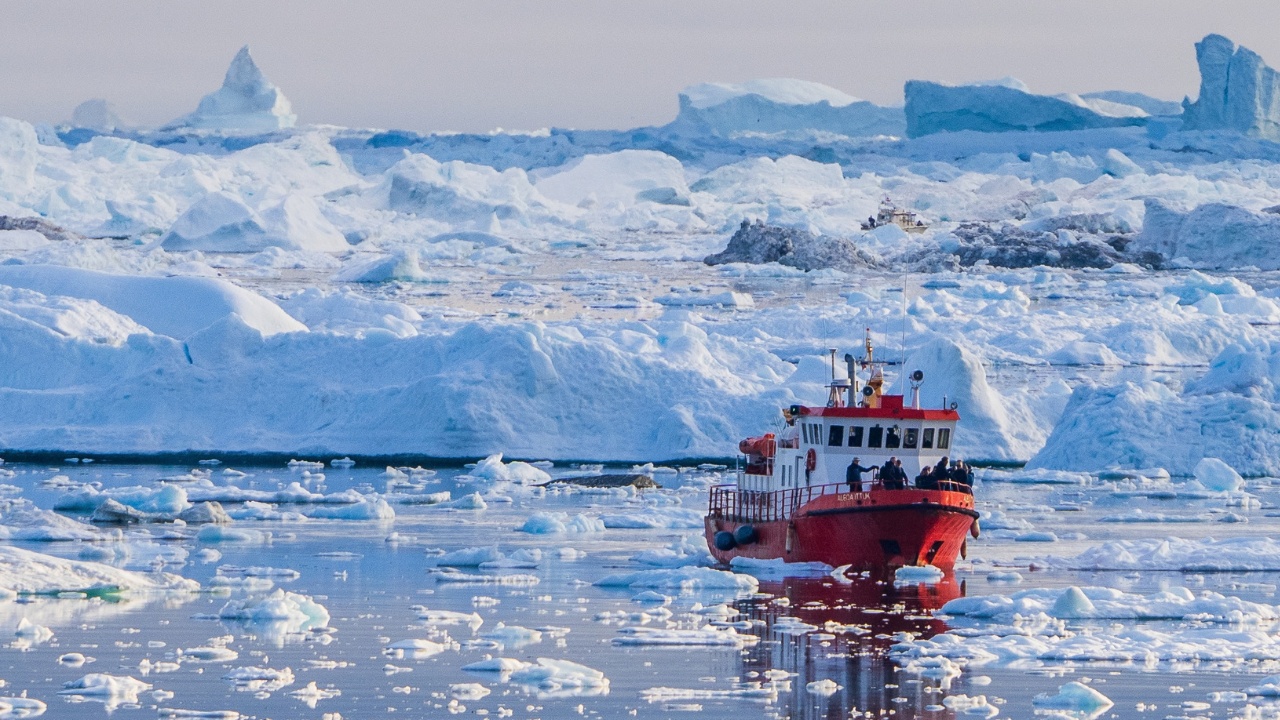
The numbers alone make Greenland look almost unreal. Roughly 56,000 people live there, mostly in small coastal communities, while about 80% of the land is covered by ice. Even with such a tiny population, the island is nearly the size of Alaska and Texas combined, which makes its empty interior feel even more dramatic.
That icy landscape is changing fast. As the Arctic warms, sea ice is retreating and opening shipping lanes that could reshape trade between North America, Europe, and Asia. What used to be a frozen barrier is turning into a corridor, and that has governments paying close attention.
For Washington, the military angle is impossible to ignore. Russia already maintains a heavy presence in the region, and China has spent years trying to expand its Arctic reach after calling itself a “near-Arctic state” in 2018. Greenland’s location gives the U.S. a better view of that competition and a better chance to respond before rivals get comfortable.
The island’s economic value is rising too. Beneath the ice and rock are rare earth elements and other critical minerals that matter for modern industry, including advanced electronics, energy systems, and defense tech. That has made Greenland more than just a map point, because it also sits in the middle of the global scramble for materials that power the next generation of manufacturing.
Rare earths are especially valuable because they show up in high-performance magnets, electric vehicles, wind turbines, radar, satellites, missiles, and precision weapons. They are the kind of inputs that rarely make headlines, yet they shape who can build what, and how fast. In a world where supply chains can be weaponized, that gives Greenland fresh weight.
China’s dominance in the rare-earth supply chain is a big part of the story. Beijing controls a huge share of mining and an even bigger share of processing, which leaves the U.S. and its allies looking for ways to reduce exposure. Greenland offers one possible path, not as a magic fix, but as a serious piece of a larger strategy.
The geopolitical stakes keep climbing because the Arctic is no longer frozen in place, either literally or strategically. Shipping shortcuts, defense positioning, and mineral access are all getting tied together, which is why a place with so few people can still punch far above its weight. Greenland may look like a sheet of ice on the map, but in the current power struggle, it feels a lot more like open ground.
