
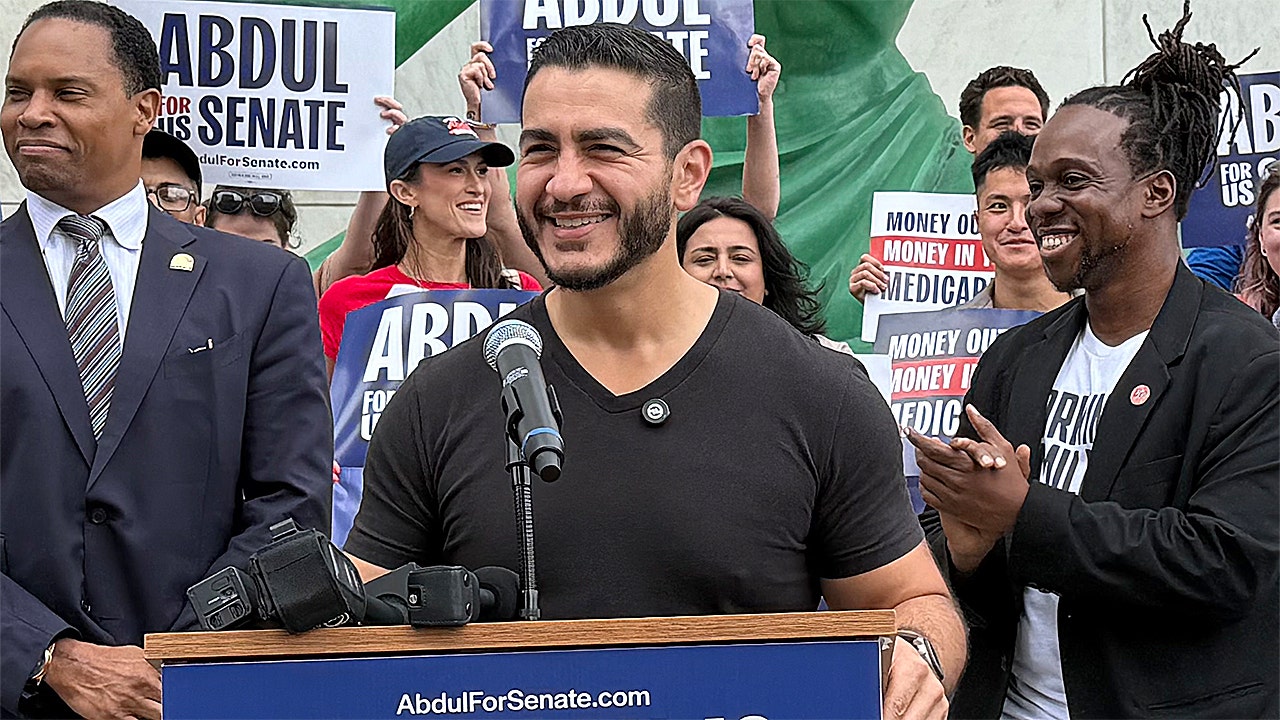
• Abdul El-Sayed is trying to present himself as a moderate while carrying a very different political trail. • His campaign is tangled up with socialist figures and left-wing groups that keep pulling attention back to him. • His public appearances with controversial activists and clerics have fueled backlash, especially among Jewish voters. • Republicans are using those associations to sharpen their attack in Michigan’s Senate race. • El-Sayed’s camp is countering by pointing to controversy around Mike Rogers and his allies.
Michigan Democrat Abdul El-Sayed is working hard to look like a mainstream Senate candidate, but his political circle keeps dragging him back toward the hard left. He has spent months trimming old content, softening his language, and saying flat out that he is not a socialist, all while standing next to people who sound nothing like a centrist.
That tension has become one of the biggest storylines in the race. El-Sayed says he believes in capitalism, just with guardrails, but voters are seeing a trail of endorsements, rallies, and alliances that tells a very different story. In politics, image matters, and his image keeps getting scratched up by the company he keeps.
Among the biggest names in that orbit is Bernie Sanders, who backed El-Sayed early and has long served as the public face of the American left. Add in support from Reps. Rashida Tlaib, Summer Lee, and Alexandria Ocasio-Cortez, and the idea that El-Sayed is some kind of moderate starts to look shaky fast.
His ties to the Democratic Socialists of America have been especially awkward. El-Sayed has tried to step away from the group recently, but he spoke at multiple DSA events over the years and once headlined a fundraiser for one of its chapters. Even after that, DSA figures were still talking as if he was one of their own.
The messaging problem gets worse when the names around him start getting more extreme. William Lawrence, a DSA member who has campaigned with El-Sayed, drew attention after a podcast appearance where he talked about “destroying the American way of life,” a line that handed critics an easy opening and reinforced the sense that El-Sayed’s world is far from ordinary Democratic politics.
Then there is the whole second lane of controversy, the one tied to religious and political figures with deeply offensive records on Israel, Hamas, Hezbollah, and antisemitism. El-Sayed has appeared with or been introduced by people who have praised Hezbollah members, dismissed Holocaust realities, or spoken sympathetically about Hamas, and that has made his attempts at moderation look even thinner.
One of the loudest moments came when he helped open Imam Hassan Qazwini’s Islamic Institute of America and called the mosque “incredible.” Qazwini has faced criticism for past comments about Israel, Hezbollah, and Sanders, and later urged his congregation to vote for El-Sayed, calling it a “moral responsibility” and “religious duty” in a July sermon.
El-Sayed also shared a stage with Sheikh Fadhel al-Sahlani, who praised Hamas’ Oct. 7 attack and minimized the Holocaust death toll. That kind of backdrop is not easy to spin away, especially when the campaign is trying to win over voters who want steady leadership, not ideological baggage.
The calendar is not helping either. El-Sayed is set to appear at the Islamic Society of North America’s annual convention with Qazwini, while other figures scheduled to be there include Imam Baqir Berry and Siraj Wahhaj, names that are sure to keep the spotlight fixed on the candidate’s associations rather than his stump speech.
There is also a separate thread involving the Nation of Islam and people connected to it. El-Sayed has appeared with or promoted figures tied to that movement, including local leaders who shared photos with him, and he has also highlighted support from a Detroit-area pastor who once praised Louis Farrakhan.
Republicans are absolutely hammering that angle. They see a candidate trying to sell restraint and normalcy while his own record keeps pointing in the opposite direction, and they believe that contrast can matter a lot in a race likely to be decided by narrow margins.
El-Sayed’s team is fighting back by tossing the same kind of smoke at GOP nominee Mike Rogers. His spokesman has pointed to damaging associations on the other side and argued that Rogers is just as compromised, if not more so, which keeps the race muddy and keeps both camps throwing punches instead of talking policy.
That fight is unlikely to fade soon. For El-Sayed, the challenge is simple but brutal: convince voters he is something he has spent years looking very much unlike, while every new event and every new ally makes that sales job harder to believe.
