
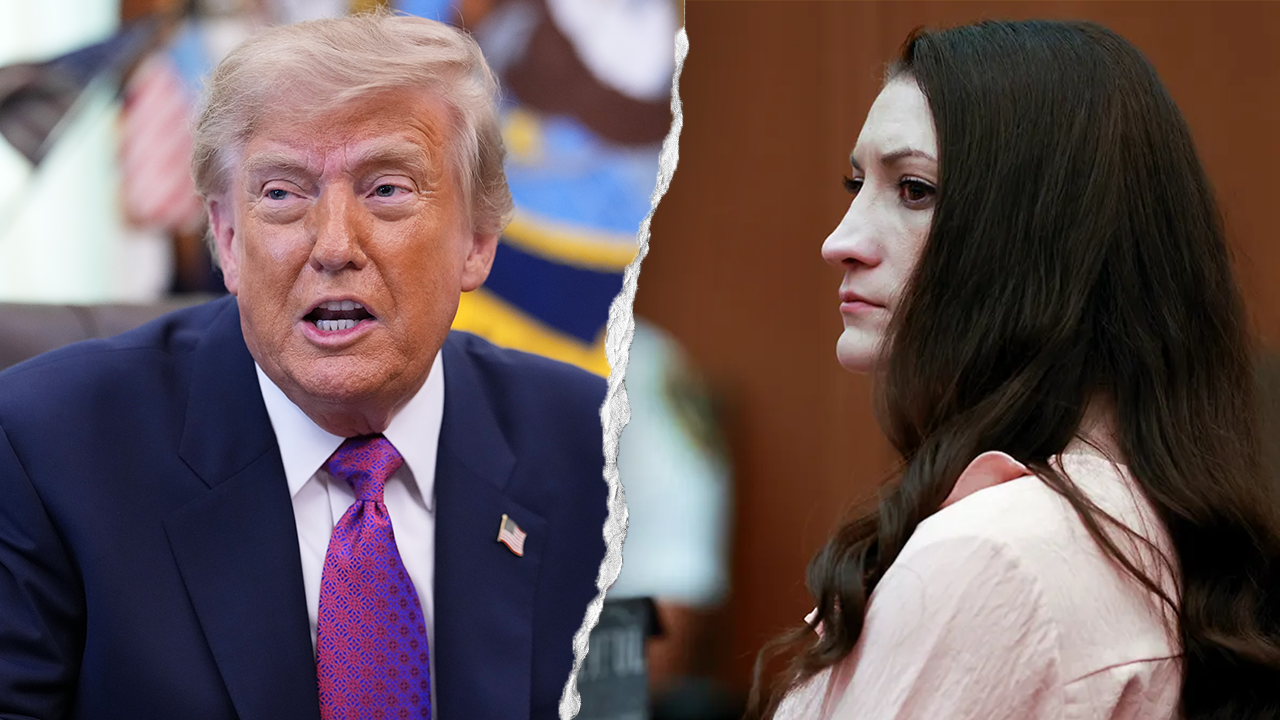
The Lindsay Clancy murder trial has landed in the center of a brutal national debate, mixing a heartbreaking family tragedy with questions about mental illness, legal responsibility, and a jury that could not reach a final answer. After a six-week trial ended in a mistrial, the case drew sharp reactions from Donald Trump and several Republican lawmakers who said the outcome fell far short of justice for the three young children involved.
Trump said the case was a devastating one and made clear he expected more courtroom action ahead. He told reporters that the situation looked like a hung jury and said the final outcome would still have to reflect the seriousness of what happened, whether that meant a mental institution or prison. The former president’s comments added fresh fuel to an already explosive story that has gripped both legal watchers and political voices.
Clancy’s defense centered on insanity, arguing she suffered from postpartum psychosis, a rare and severe condition that can disconnect a person from reality. Prosecutors and critics have pointed to the horrifying facts of the case, while the defense has tried to place the tragedy inside a wider medical and psychiatric context. That split has made the trial a lightning rod, with emotions running hot on all sides.
The jury’s 11-1 deadlock made the mistrial official after nearly a week of deliberations. Eleven jurors were ready to acquit, while one remained unconvinced, setting off immediate debate about whether the system had stumbled or whether the holdout had stood firm when it mattered most. The jury included nine women and three men, a detail that some observers quickly seized on as the argument over the verdict started spreading online.
That online frenzy has been ugly. The case quickly morphed into a culture-war storm, with misinformation and wild theories flooding social media, including false claims aimed at Clancy’s ex-husband, Patrick Clancy. Instead of staying focused on the evidence and the law, a lot of the public conversation veered into speculation, outrage, and political score-settling.
Republican lawmakers were among the loudest critics of the mistrial. Rep. Michael Rulli called the lone holdout a hero, Sen. Mike Lee warned that the juror might need security, and Gov. Ron DeSantis blasted the result as a “miscarriage of justice.” Rep. Nancy Mace was even more blunt, saying, “This case is not about the excuses for why she committed murder,” and adding, “This is about justice for the three beautiful souls whose lives were taken after their mother strangled them with her bare hands and workout bands.”
The case also exposed how fast public sympathy can turn into a fight over who gets protected and who gets condemned. Supporters of Clancy have gathered outside the courthouse and cheered her on online, while her critics see that sympathy as wildly misplaced given the deaths of Cora, Dawson, and Callan. That contrast has only sharpened the tension around the proceedings.
Inside the courtroom, the defense tried to paint a different picture of Clancy as a mother in deep distress who had been overwhelmed by medication and mental strain. Her attorneys said she was loving and devoted, and they pointed to a heavy medication load in the months before the killings. Testimony from family members, including Susan Clancy, described her as nurturing and struggling, which added another layer to a case already loaded with grief and anger.
The legal fight is not over yet. Clancy is expected back in court later this month for a status hearing, another trial assignment, and a defense motion that could shape what happens next. On the civil side, Patrick Clancy has also filed wrongful death and medical malpractice claims, turning this already painful case into a long-running legal battle with no easy end in sight.
