
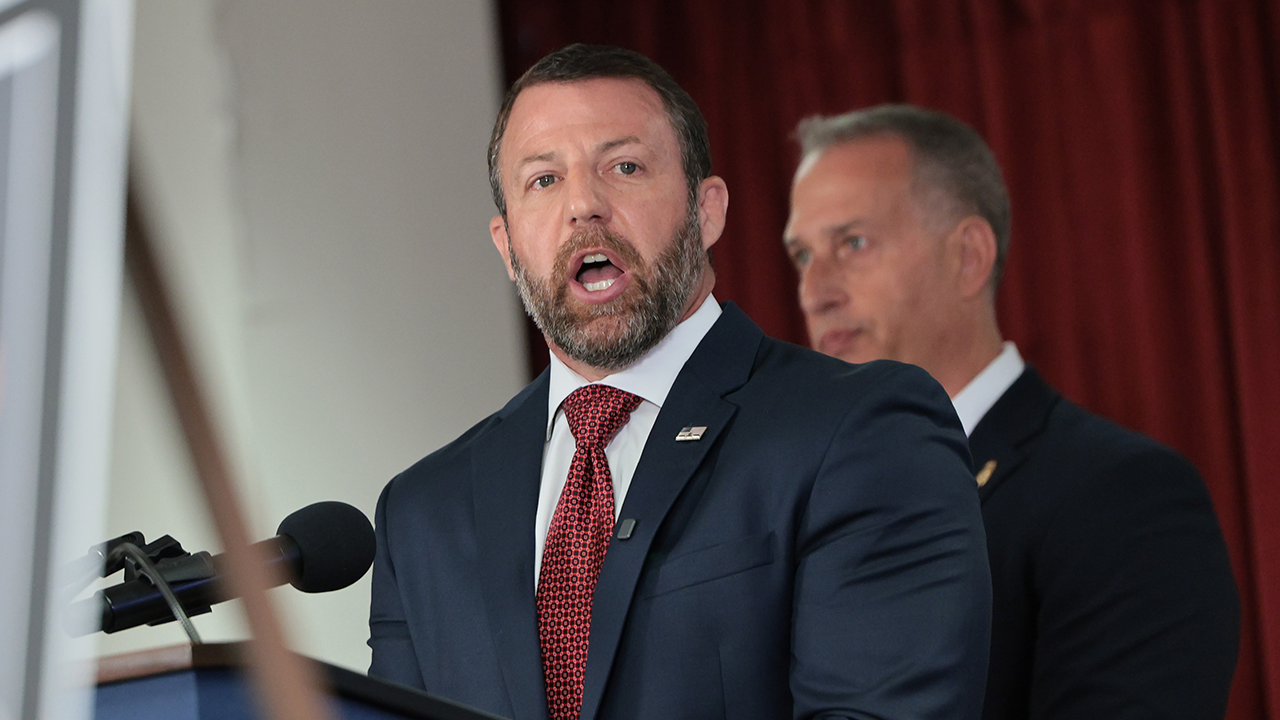
A Coast Guard jet carrying Department of Homeland Security Secretary Markwayne Mullin was forced down at Ronald Reagan Washington National Airport on Wednesday after an engine failure turned a routine flight into a tense airborne problem. The aircraft was traveling from Georgia to Washington, D.C., when the crew decided not to gamble with the issue and declared an emergency landing.
The pilot’s radio call made the seriousness of the situation clear. “We just lost our right engine and would like to declare an emergency and immediate landing at DCA,” the pilot told the airport’s control tower, according to an audio recording.
There were 14 people aboard, along with about 2.5 hours of fuel, which gave the crew enough margin to handle the diversion carefully. The aircraft, a U.S. Coast Guard C-37A Gulfstream V jet, landed safely, and the flight ended without injuries or further trouble.
Mullin later praised the pilots on X, saying the landing felt calm and controlled despite the obvious risk. “The United States Coast Guard pilots made the single-engine landing feel routine,” Mullin wrote on X about the ordeal. “No panic, just straight professionalism. After we landed, the pilots told me that was a first for them! We could not have been in better hands.”
The incident also threw a spotlight back onto the age of the Coast Guard’s aircraft fleet. DHS has already flagged the plane as one of several older aircraft that are pushing far past the point where officials feel comfortable relying on them for demanding missions and travel.
That concern has been building for a while. In 2025, the department said the C101 was more than “20 years old, outside of Gulfstream’s service life, and well beyond operational usage hours for a corporate aircraft.”
Those warnings have also fed into a bigger fight over priorities inside DHS and the Coast Guard. Instead of pouring attention and money into the aircraft already in service, the department has been criticized for leaning toward luxury executive travel while frontline aviation and rescue needs still need attention.
At the center of that backlash was the purchase of two Gulfstream G700 private jets for the Coast Guard, a move that sparked congressional scrutiny and fresh debate over spending. The price tag, estimated between $172 million and $200 million, was far above the $50 million request that had originally been laid out.
That argument did not stay quiet for long. In May 2025, Democratic Reps. Bennie Thompson of Mississippi and LaMonica McIver of New Jersey pressed DHS over why upgraded executive aircraft were getting attention before aging Coast Guard search-and-rescue planes.
“We know President Trump has set a high bar for wasteful luxury travel by government officials with his unconstitutional attempt to personally acquire a $400 million jet from a foreign government,” the pair wrote in a letter to Noem. “That does not mean members of his Cabinet must follow suit. Your desire to travel in luxury should not eclipse the need for USCG service members to fly safely and conduct lifesaving missions.”
The emergency landing gave that whole debate a sharp, real-world edge. When an aircraft loses an engine with a senior DHS official on board, the argument about old planes stops being abstract and turns into a question of risk, readiness, and whether the fleet is being pushed harder than it should be.
DHS and the Coast Guard have both faced pressure over how to balance executive travel, mission needs, and the condition of aging aircraft. The situation has become even more sensitive because the Coast Guard is expected to handle everything from government transport to lifesaving work, and the margin for error is getting thinner as those planes get older.
For now, the landing is being treated as a success because the crew handled it cleanly and everyone walked away safe. But the bigger issue is still sitting there, buzzing louder than ever, with every old aircraft that has to limp home on one engine.

1 Comment
Sabotage? Hacking Iran