
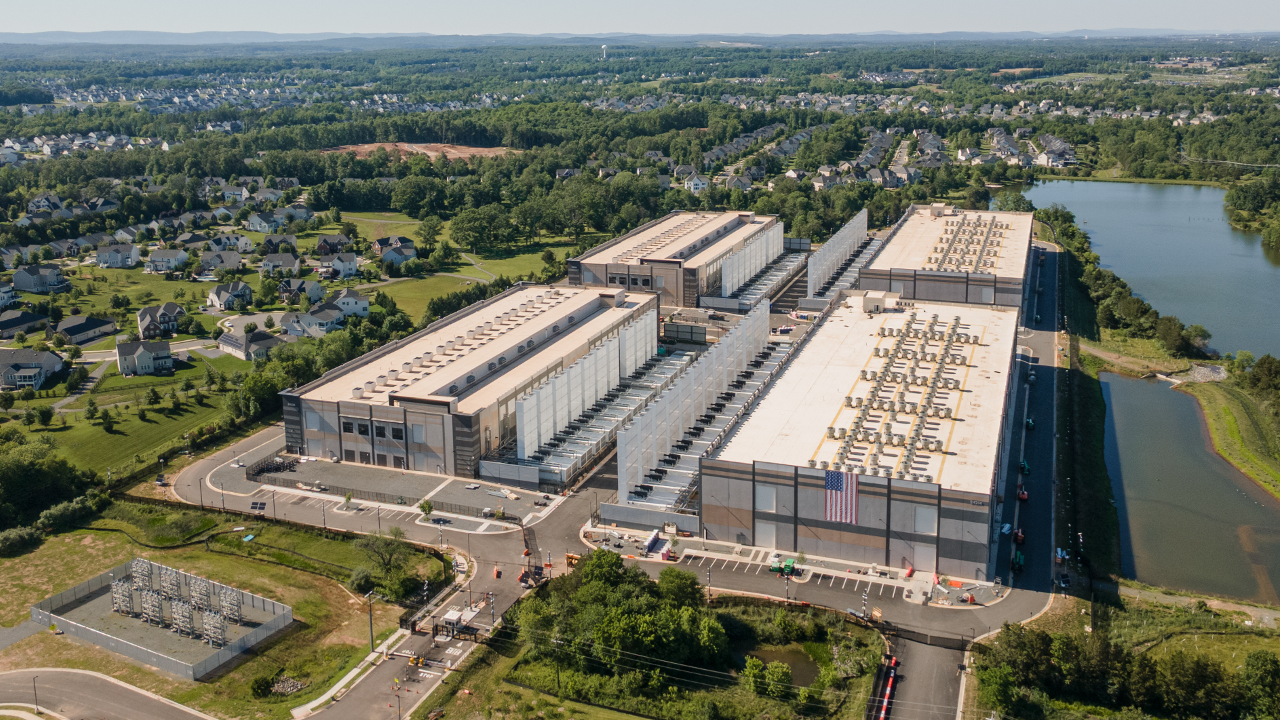
• Jefferson County fairgoers are focused on data centers, not grocery bills.
• Water use, power lines, and groundwater are central worries.
• Local control keeps coming up as the real flashpoint.
• Democrats and Republicans alike are uneasy about rapid growth.
• Big Tech is drawing suspicion from people who live nearby.
At the Jefferson County Fair in West Virginia, the chatter was not dominated by sticker shock or the usual gripes about prices. Instead, people kept circling back to the same uneasy question: what happens when big development lands in a place that still feels small enough to know everybody’s name?
The fair has long been a kind of civic pressure test, and the answers there were blunt. Folks talked about data centers, power lines, water use, and the sense that local communities are being asked to swallow change before they have much say in it.
One farmer, Roy, put the issue in plain language. “I’m a farmer,” he said, adding that data centers and power lines threaten the land his livelihood depends on.
That concern kept surfacing in different forms. For some residents, the worry is groundwater being tapped too hard. For others, it is the visual and practical burden of transmission lines, plus the feeling that the county’s rural character could be slowly squeezed out.
Even among Democrats seeking office, the pushback was less about rejecting development outright than about demanding limits. Jenny Thacker and Marta Beck both signaled that they are not reflexively against data centers, but they want guardrails that protect water and respect the people already living there.
Thacker’s warning was direct: “We cannot afford to have water taken out of our system. So, if we can make a law that says, ‘Yes, you can use surface water, but you cannot use well water,’ that goes a long way to protecting our groundwater,” Thacker said.
Beck’s concern landed on a different nerve. She said the state has stripped municipalities of “local control,” and that word has become the real center of the fight.
That theme was echoed by Tamara Thompson, vice president of We The People of Jefferson County. She said she had heard plenty of skepticism from residents, especially about noise and the pace of change, even if her own on-the-ground experience did not confirm every complaint she heard.
“I hear a lot of people being against it [data centers],” Thompson said, noting complaints about noise pollution. “I like boots on the ground, so going there and hearing whether or not there is an export of extreme sounds was something I took personal, and I didn’t experience that.”
What made the fair conversations interesting was the mix of urgency and annoyance. People were not describing a distant theoretical problem. They were talking about what a fast-moving industry can do to a county that already feels stretched by growth.
One fairgoer, Sarah, a retired teacher, reduced the whole debate to a single shrugging truth. “I guess we need ‘em,” she said while holding up her phone, “but nobody wants ‘em.”
That is the tightrope rural communities are walking. The tech economy wants land, electricity, and connectivity, while the people who live on that land want assurance that they will not be steamrolled in the process.
The tension is not really about being anti-progress. It is about who gets to decide what progress looks like, where it goes, and what price gets paid along the way. In places like Jefferson County, that question is starting to sound less like a policy debate and more like a line in the sand.
Republicans and Democrats may argue over the details, but the underlying mood is hard to miss. People want growth that fits the place, not growth that bulldozes it, and they want decision-making to stay close to home rather than drifting off to distant boardrooms and state capitals.
