
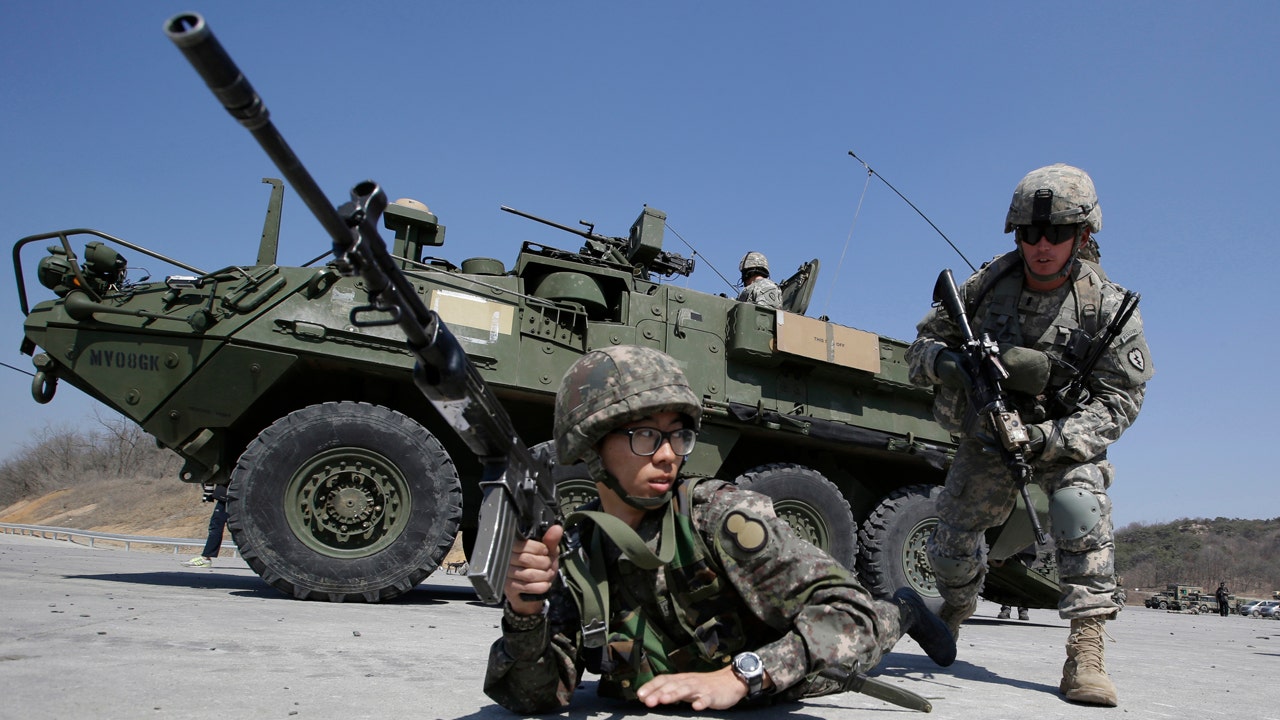
Here’s the situation in plain terms: Trump moved to trim a major U.S.-South Korea military drill just as North Korea stepped up missile launches, and that decision landed in the middle of a tense regional backdrop. The drill is a long-running part of alliance readiness, but it also draws sharp criticism from Pyongyang and now sits alongside fresh questions about deterrence, diplomacy, and whether the U.S. is sending the right signal in Asia.
President Donald Trump ordered the Pentagon to scale back upcoming U.S.-South Korea exercises, saying the drills are expensive and send the wrong message to Kim Jong Un. He also took a swipe at Seoul for not joining U.S. efforts tied to Iran, folding two separate foreign policy frustrations into one public message. The post made clear that Trump sees the alliance through a hard-nosed lens, where cost, leverage, and message matter just as much as tradition.
In his remarks on Truth Social, Trump said he was unhappy that Washington had agreed long ago to participate in joint military exercises with South Korea. He framed the drills as a burden on American taxpayers and argued they project hostility toward a country he described as respectful while he has been president. That kind of blunt language fits Trump’s style, but it also puts the alliance under a brighter spotlight at a time when the region is already on edge.
The timing matters. The directive came right before Ulchi Freedom Shield, the annual 11-day exercise that usually draws thousands of troops and is designed to sharpen readiness across the Korean Peninsula. About 28,500 U.S. personnel are stationed in Korea, and this year’s training was set to include roughly 18,000 South Korean troops, making it one of the clearest demonstrations of allied coordination in the region.
North Korea has never liked these drills, and that part of the story never really changes. Pyongyang again blasted the exercise as a rehearsal for war, echoing a familiar line that has followed these events for years. Still, the complaints landed in a louder way this time because the regime had already fired off two ballistic missiles in less than a week, turning the optics of any military adjustment into a live strategic issue.
That missile activity has been hard to ignore. After the latest launch, U.S. Indo-Pacific Command said it was working closely with allies and assessed that the test did not pose an immediate threat to U.S. personnel, territory, or partners. Officials made a similar point after the earlier launch, stressing that Washington remains committed to defending the homeland and regional allies even as North Korea keeps pushing the envelope.
Mark Montgomery, a senior fellow with The Foundation for Defense of Democracies, warned that Kim Jong Un should never be taken lightly. That warning has extra weight now because North Korea’s weapons work keeps advancing while the regime watches for openings, distractions, and pressure points in U.S. policy. When missile tests continue during other global crises, the message is pretty simple: Pyongyang is paying attention and wants the world to know it.
The broader picture also includes Russia’s war in Ukraine, where North Korea has become more than just a spectator. Ukrainian President Volodymyr Zelenskyy said Moscow is relying on North Korean support and that the cooperation is helping improve North Korean missiles and battlefield tactics. He warned that the spillover could eventually raise risks for Japan, South Korea, the Philippines, and other countries in the region.
Trump has taken this same general approach before. During his first term, after his initial summit with Kim Jong Un, he also called major U.S.-South Korea exercises “war games” and said they were provocative and costly. That history gives this new order a familiar feel, but the stakes are not standing still, and neither is North Korea’s weapons program.
