
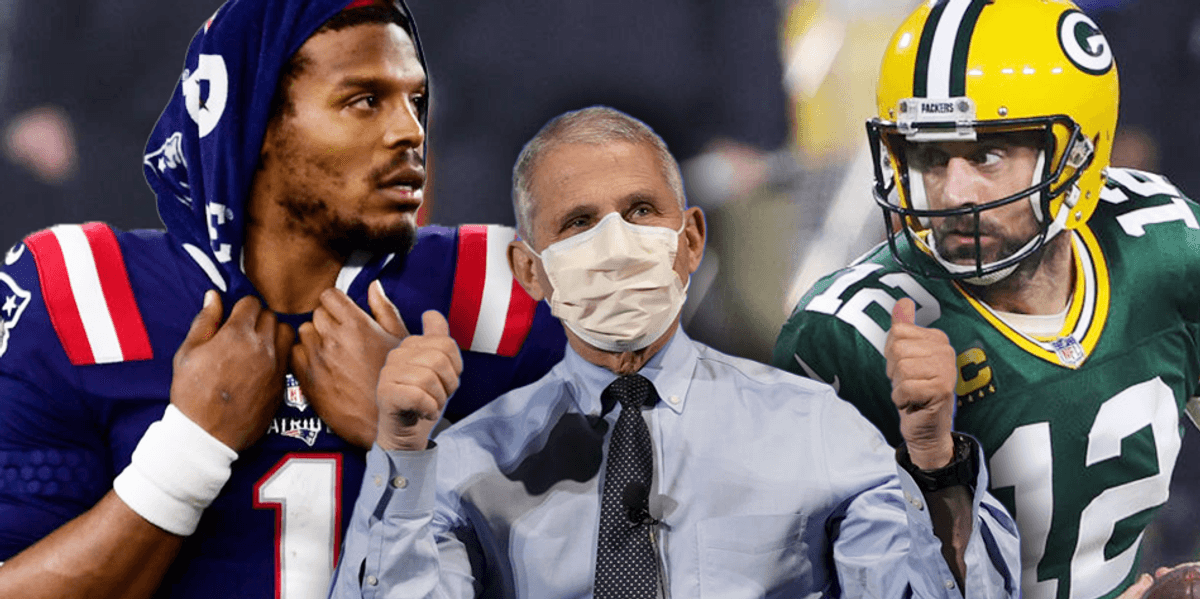
The NFL’s COVID vaccine era is still stirring up heat, and Cam Newton just tossed fresh gasoline on the fire. In a blunt conversation, he suggested the league was full of people who played along with the rules while quietly doing whatever they wanted behind the scenes. That kind of claim hits a nerve because it reaches beyond football and straight into trust, pressure, and the strange reality of life in a high-stakes league.
Newton’s comments land in a landscape already loaded with suspicion. For years, players, coaches, and front-office voices were navigating a world where public messaging, personal choice, and league expectations often seemed to collide. When somebody from inside that world says the whole thing was more performative than honest, it naturally drags old debates back into the spotlight.
The big sting in Newton’s accusation is not just the vaccine issue itself. It is the idea that appearances mattered more than truth, and that people in powerful positions were willing to say one thing while living another way. In sports, that sort of hypocrisy hits hard because locker rooms run on credibility, and once that cracks, everything starts to feel slippery.
Newton has never been the type to tiptoe around a subject, and that is part of why his remarks spread so fast. He has long carried the reputation of a confident, boundary-pushing voice, someone who speaks like a man who has seen enough to stop pretending the room is clean. Whether people agree with him or not, he knows how to turn a passing thought into a full-blown debate.
The NFL was one of the most visible arenas for the broader vaccine controversy, with players and coaches constantly asked to manage personal decisions in public view. That made every move feel magnified, every private choice more political than personal. For some, the league’s handling of that period looked like a test of discipline; for others, it looked like a messy lesson in compliance and optics.
That is why Newton’s comments hit harder than a simple hot take. They tap into the feeling that large institutions often reward the polished story over the messy truth, especially when there is pressure to keep business moving. In a league built on toughness and image, even a whisper that people were faking it can sound louder than a stadium roar.
There is also a wider cultural angle here. Aaron Rodgers made the vaccine debate a national topic, and countless other athletes found themselves pulled into arguments they probably never wanted in the first place. Once the issue became part science, part politics, and part personality contest, every fresh comment from a star player risked reopening wounds that never fully healed.
Newton’s point, as controversial as it is, also speaks to a larger frustration many fans have with institutions in general. People get tired of being told one story while sensing another one is happening behind closed doors. That gap between the public script and the private reality is where cynicism grows, and in a league as watched as the NFL, cynicism travels fast.
Still, the real power of the remark comes from how casually it brushes against a very serious subject. Health decisions were not abstract during that period, and the tension around them affected careers, relationships, and public reputations. When a player says the system was partly theater, it forces people to wonder how much of what they saw was genuine and how much was just survival.
Newton’s words also fit a broader pattern in modern sports, where athletes are no longer just athletes. They are public figures, cultural lightning rods, and sometimes unwilling symbols in arguments that have almost nothing to do with the game itself. That makes every statement heavier, every opinion a potential flashpoint, and every old controversy ready to erupt again.
For the NFL, the aftermath of that era still lingers in the background like a bad beat nobody wants to replay. The league moved on, the season kept rolling, and the headlines shifted, but the tension never completely disappeared. Now, with Newton reopening the door, the conversation feels raw again, and that old discomfort is suddenly back in the room.
