
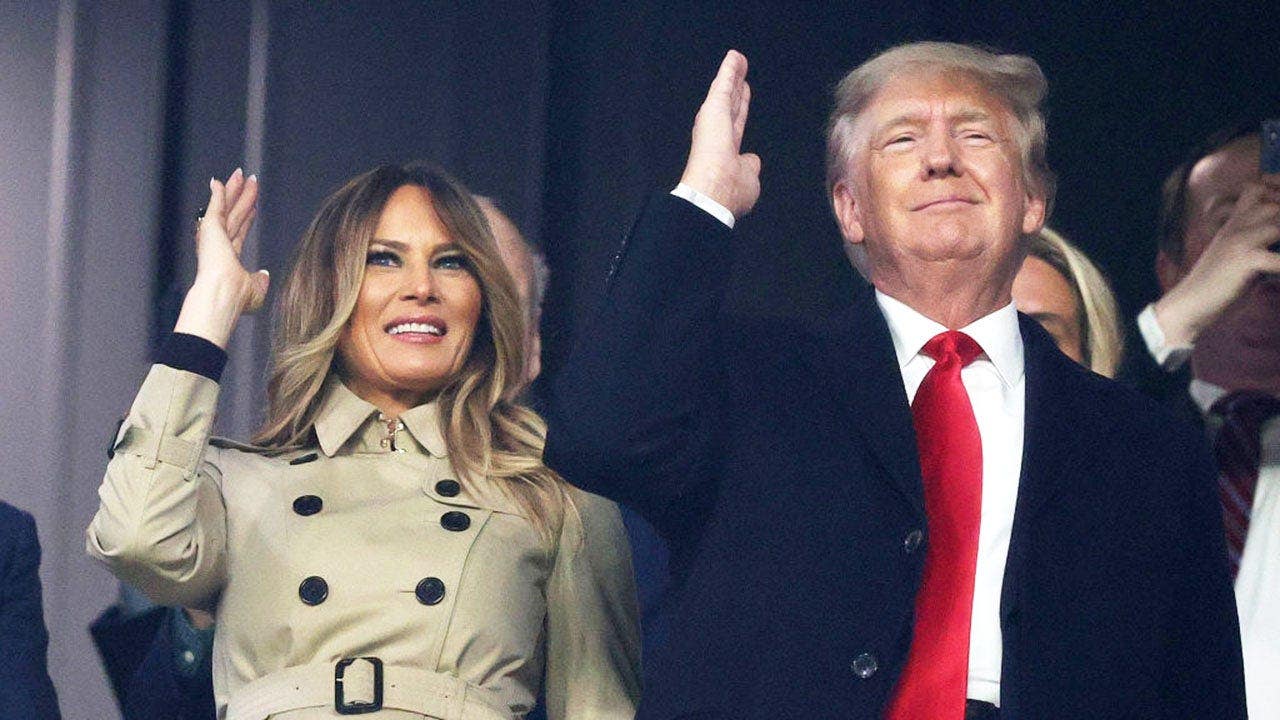
Donald Trump brought fresh attention to the Atlanta Braves’ Tomahawk Chop after speaking at a Cobb County high school event and urging fans to keep doing it at home games. The moment mixed politics, baseball, and a long-running culture fight into one loud scene, with Brian Snitker brought on stage and the crowd quickly picking up the chant.
Trump was in the Atlanta area to talk about economic policy, but the night took a sports-heavy turn once the Braves connection came into view. Former manager Brian Snitker, now with the organization in an executive role, was invited up front, and that was enough to light up the room.
Once fans started into the familiar chant, Trump leaned into it. “Ohhh listen… they say you are not allowed to do that.. do it!” he said, making it clear he wanted the tradition alive and loud.
The Chop has been around Braves games for years, and for plenty of fans it is part of the soundtrack of the team. But in recent seasons, it has also become a target, with critics arguing it should be retired and supporters saying it is simply part of the ballpark experience.
At the event, Trump framed the issue in his usual blunt style and treated the criticism like more proof that the culture police are always looking for something to shut down. That attitude has made him a natural ally for fans who think sports have become too careful, too polished, and too afraid of backlash.
The Braves themselves have walked a careful line. The chant still shows up, but not with the same force or frequency it once had, and the music often feels like it cuts off before the moment fully lands. For longtime fans, that half-step back has changed the whole energy.
That is where the frustration comes in. To supporters, the Chop is a harmless part of the crowd routine, no different than any other team tradition that catches fire in the stands. To critics, it is a symbol loaded with baggage, which is why the debate never really goes away.
Trump’s public push gave the whole thing a new jolt, especially because he did not treat it like a delicate controversy that needed careful wording. He treated it like a simple yes or no, and in his view the answer was obvious.
The scene also fit neatly into a bigger pattern around Trump and sports. He often gets strong reactions at major events, and he tends to use those settings to project energy, confidence, and a sense that ordinary fans are on his side.
That dynamic is part of why the moment stood out. It was not just about a baseball chant, but about the larger fight over who gets to decide what is acceptable in American sports culture. For a lot of fans, that fight feels less like progress and more like people trying to scrub the life out of the game.
Braves supporters have seen this tug-of-war for years, and the result has been a sort of uneasy middle ground. The chant remains, but it is surrounded by hesitation, second-guessing, and the constant buzz of outside criticism.
Trump, though, made his position plain. He wanted the crowd to keep doing it, and he wanted the message to be loud enough that nobody could miss it. In that moment, the old ballpark chant became something bigger, sharper, and a whole lot harder to ignore.
