
Checklist:
- Foreign interference and the risk it poses to American elections
- Why states are being pushed to act faster on election security
- Markwayne Mullin’s warning about vulnerable voting systems
- The Department of Homeland Security’s role in protecting the process
- Donald Trump’s broader concern about voter fraud and election integrity
Foreign adversaries are not just trying to rattle America from the outside. They are also looking for weak spots inside the election system, and that makes the stakes for states much higher than a routine policy fight. The message is simple: if the guardrails are loose, bad actors will test them.
That concern has put renewed pressure on state leaders to tighten election procedures before the next major contest. Lawmakers and officials are being told to treat election security like a real frontline issue, not a talking point that gets dusted off every four years. When confidence in the process slips, the damage spreads fast, and it is hard to rebuild trust after the fact.
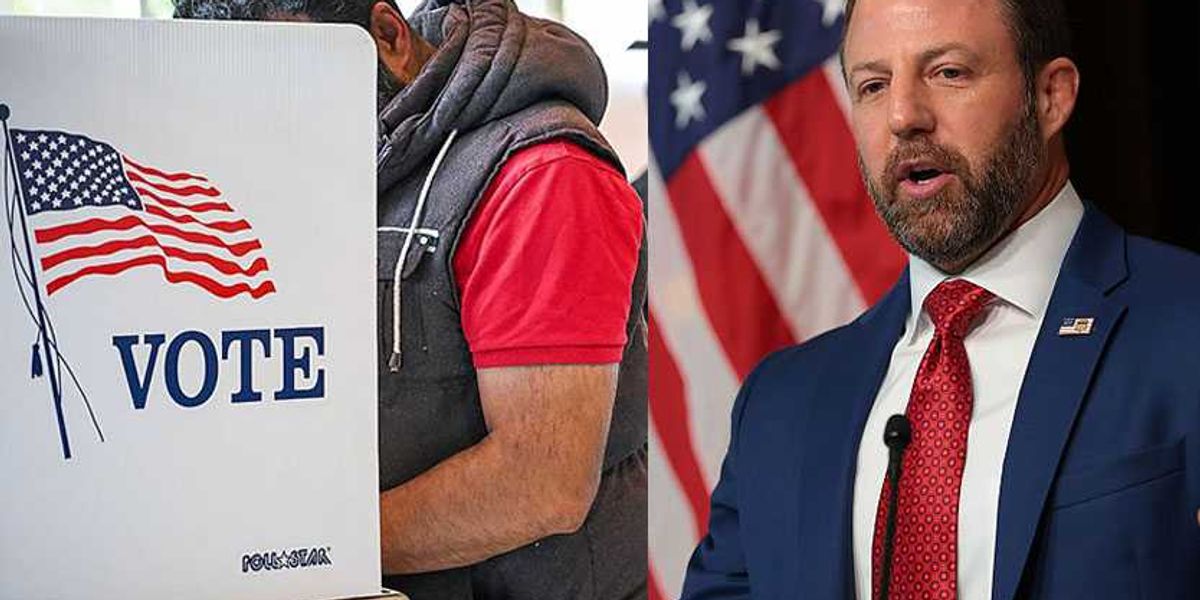
Markwayne Mullin has been among the voices warning that foreign interference is not some abstract threat. He has argued that outside powers can shape outcomes if America stays too relaxed about ballot security, voter verification, and system oversight. That kind of warning lands differently when people are already uneasy about how easy it can be to exploit gaps in the process.
The Department of Homeland Security sits right in the middle of that conversation. Its job is not just to react after a problem shows up, but to help states spot vulnerabilities early and take them seriously before election day chaos begins. In a country with hundreds of local systems and wildly different rules, coordination matters, and so does speed.
Republicans have long argued that election integrity has been treated as an afterthought by too many people in Washington. From that view, the real issue is not whether foreign actors want to meddle. The real issue is whether American officials will admit the threat plainly enough to harden the system and stop pretending every concern is just partisan noise.
Donald Trump has also kept election fraud and outside interference at the center of the national debate. His allies see the issue as one of basic fairness, saying voters deserve a process that is secure, transparent, and resistant to manipulation. That argument continues to resonate because people want to know their vote counts for real, not in theory.
States are now being pushed to look harder at how ballots are handled, how machines are protected, and how much access outside groups should ever have to the process. Those questions are not flashy, but they matter more than most campaign slogans. If a state gets lazy on security, it can create a mess that no post-election speech can clean up.
There is also a bigger cultural problem at work here. Too many Americans have been trained to shrug at warnings about foreign interference until something ugly happens, and by then it is usually too late. That attitude leaves the country open to exactly the kind of pressure campaigns and covert influence operations thrive on.
What makes this fight so tense is that election security touches both trust and power at once. When people suspect the process is soft, they lose faith in the outcome, and that distrust becomes its own kind of political weapon. That is why the push for stronger safeguards keeps growing louder, especially among conservatives who believe the system should be tough enough to withstand attacks without excuses.
The next step will likely come down to whether states choose to move with urgency or wait for another warning sign. Foreign adversaries are not waiting, and they are certainly not pretending the issue is minor. The pressure is on now, and every delay gives the wrong people more room to work.
