
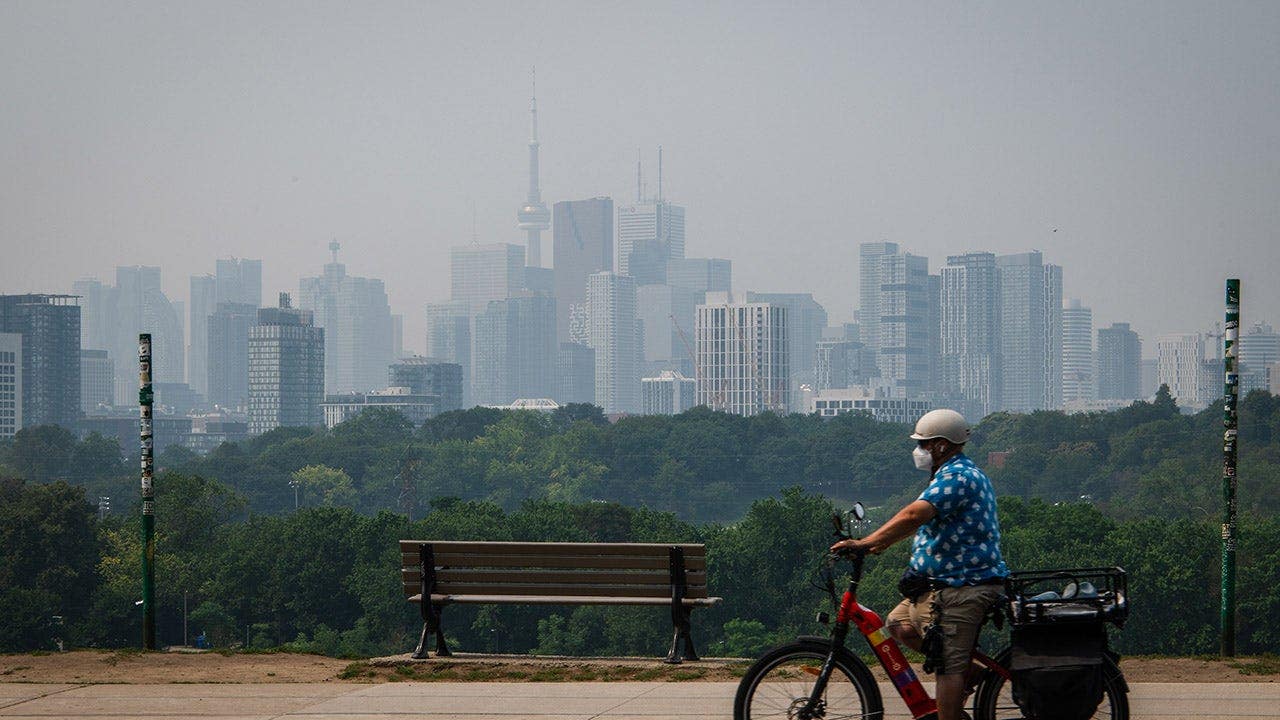
The smoky haze drifting down from Canadian wildfires is now doing more than turning skies orange. It is reshaping the sports calendar, forcing teams and leagues to make uncomfortable calls when the air itself becomes a safety issue.
On Thursday, a quieter sports day got even messier as air quality problems across the Northeast and Midwest started to affect multiple events. The Chicago Fire’s planned match against the Vancouver Whitecaps was postponed, and the Philadelphia Phillies had their game with the New York Mets moved up an hour after officials reviewed conditions.
The scene is a strange one for fans and athletes alike. Instead of talking about lineups, tactics, or playoff races, everyone is talking about visibility, breathing conditions, and whether a game can even be played safely.
Robert Lewandowski was supposed to make his MLS debut in that Chicago match, which only added more buzz to the game before the postponement hit. But with smoke drifting into the region and air quality falling, the schedule took a back seat to basic health concerns.
The Phillies situation showed how quickly teams are having to react. Roughly three hours before first pitch, the club announced the game against the Mets would start earlier than planned, a reminder that these kinds of decisions often happen fast and with limited margin for error.
The issue is not just about one league or one city. The smoke has spread far enough to touch several major markets at once, and that creates a ripple effect across baseball, soccer, and any other outdoor event that depends on clear and reasonably safe conditions.
That concern was on display at Citi Field, where the National Women’s Soccer League game between Gotham FC and the Washington Spirit drew a record crowd of 42,175 for a women’s sports event in New York. Even with the big turnout and the landmark atmosphere, the air quality still became part of the conversation because the match included two hydration breaks in each half.
Trinity Rodman did not sound thrilled about that setup. “If we have to have a hydration break every 15 minutes, then we shouldn’t be playing the game, and that’s my opinion,” she said. “But, at the end of the day, there’s 40,000 people. It’s a whole event, so it’s really tough. It’s just a really hard situation for everyone to work around.”
Her comments cut right to the heart of the matter. Fans may want the event to go on, broadcasters want the program to stay intact, and teams want to avoid disruption, but athletes are the ones out there running hard in air that can feel thick, heavy, and unforgiving.
This is not the first time sports have had to bend around bad air. Three MLB games were postponed in 2023 because of air quality concerns in New York, Philadelphia, and Washington, D.C., so there is already a recent playbook for these kinds of emergencies.
The bigger picture is still unsettled, especially with the tristate area dealing with conditions that have been labeled unhealthy. That adds an extra layer of attention to major upcoming events, including Sunday’s World Cup final at nearby MetLife Stadium, where officials are hoping the air improves in time.
State and local leaders have also been pushed into action. New Jersey Gov. Mikie Sherrill said she directed NJ Transit and the New Jersey Turnpike Authority to make select quantities of masks available to commuters and at rest areas along the Turnpike and Parkway, a sign that the smoke problem is spilling beyond sports into everyday life.
In New York, Mayor Zohran Mamdani urged residents to “stay somewhere cool” and “drink plenty of water.” That kind of advice sounds simple, but it carries real weight when the air itself becomes part of the threat and everyone from players to commuters has to adjust on the fly.
