
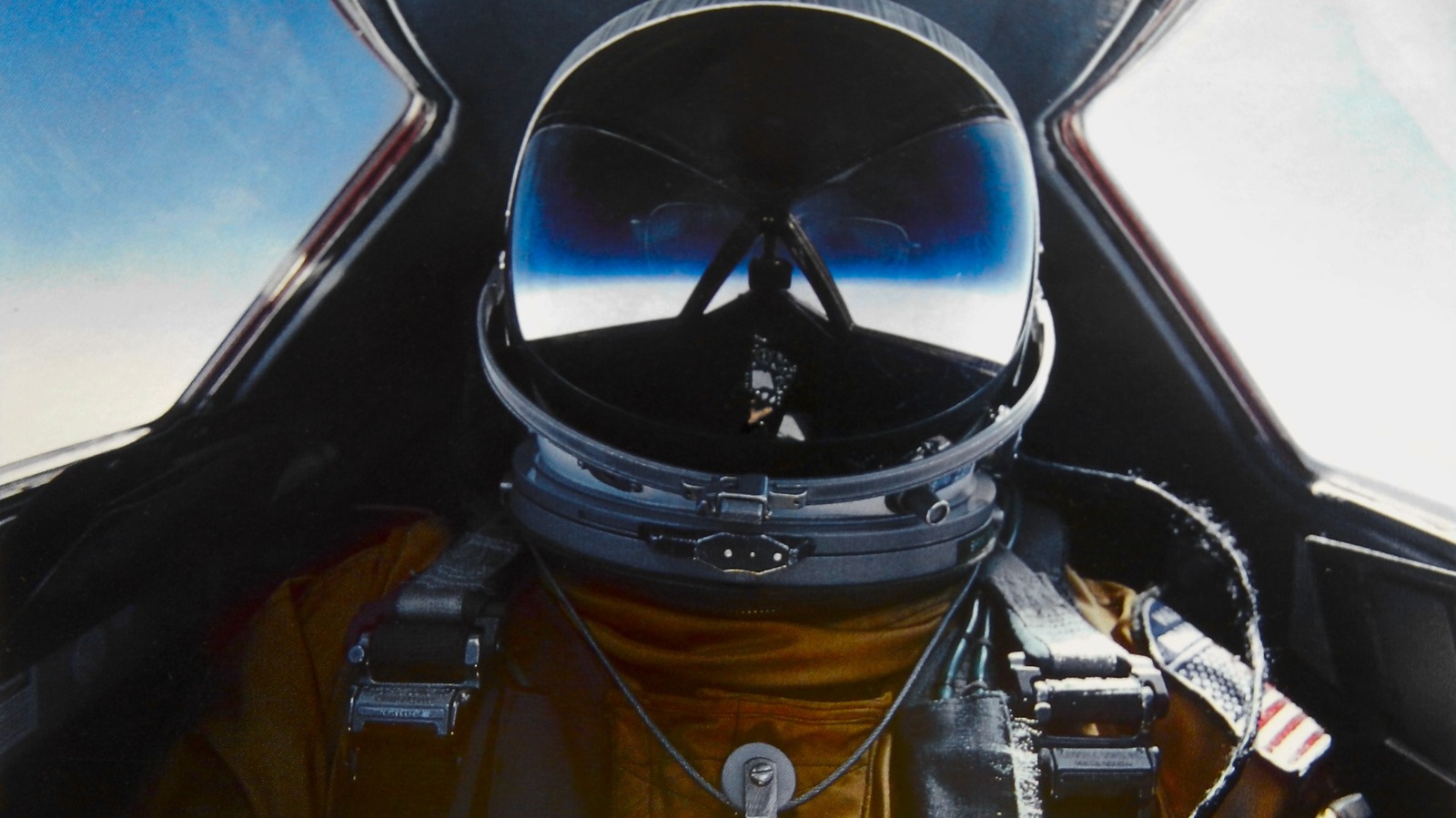
The SR-71 Blackbird was never just a fast airplane. It was a machine that demanded a whole different kind of crew mindset, one that looked far closer to spaceflight than traditional jet aviation.
The jet’s reputation comes from the obvious stuff first: speed, altitude, and a record that still turns heads. Built by Lockheed’s Skunk Works in the 1960s, the SR-71 served the U.S. Air Force for years, later flew under NASA, and eventually earned a permanent place in museums after retirement.
But the real story is what it took to get a pilot ready for one mission. Flying the Blackbird was not treated like hopping into another fighter, and the people chosen for the job had to prove they could handle a level of physical and mental strain that matched the aircraft’s extreme design.
Volunteering was the first hurdle, not the last. Candidates went through an astronaut-style physical, interviews, and test flights before they could even be considered, and even after that, they still faced more training before being trusted with the aircraft.
That’s where the SR-71 started to separate itself from nearly everything else in military aviation. The pilots were not wearing standard flight suits, but pressurized gear that evolved over time as the aircraft’s demands changed, and the look alone made the whole operation feel more like a launch pad than a runway.
One of the best-known versions was the David Clark S1030 Full Pressure suit, first used in 1970. It had multiple layers, oxygen hoses, leather boots, and a design that would not look out of place next to a spacecraft crew getting ready to climb aboard.
Before each mission, the routine was strict and methodical. Pilots ate a high-protein meal from a dedicated dining facility, then went through suit checks, a physical, and the process of getting into a parachute harness, sealed helmet, and all the rest of the gear that came with surviving the flight environment.
Nothing about it was quick or casual. The suit itself had to be inspected carefully because of its layers, including the comfort liner and thermal protection, and once the pilot was fully suited up, they switched to breathing pure oxygen before takeoff.
The aircraft needed special handling too, because even the Blackbird had to be coaxed into the air the right way. Its oil had to be heated before engine start, a reminder that a plane built to outrun threats still came with its own set of very precise demands on the ground.
Once airborne, the cabin environment became its own challenge. Pilots carried a portable cooling unit to keep from overheating, and because missions could drag on for a long time, they also used a urine-collection device to deal with basic human needs at altitude.
Even eating was weird by normal standards. Food was placed against the cockpit window so it could warm up from the intense exterior heat, and that heat was no joke because the SR-71’s quartz windshield could reach 580 degrees Fahrenheit.
That kind of detail says everything about the Blackbird and the people who flew it. It was an aircraft that pushed engineering to the edge, and it needed crews who could live inside that edge without blinking, almost like they were preparing for orbit instead of a routine sortie.
