
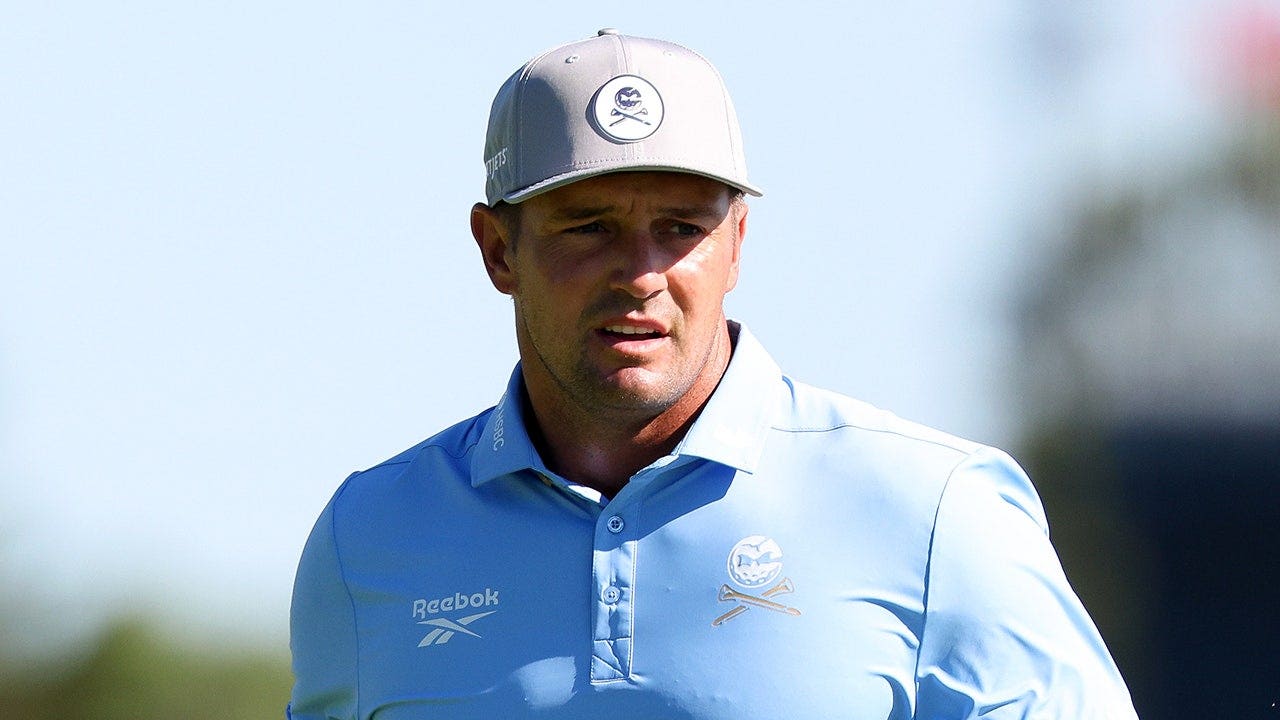
Nick Faldo did not hold back when he sized up Bryson DeChambeau’s game, and his comments landed with the kind of force you expect from a six-time major champion. Faldo’s main complaint was simple: DeChambeau keeps trying to overpower courses instead of playing the smarter shot, and that approach has been especially costly in the toughest events of the year.
Faldo, who knows every wrinkle of major championship golf, aimed his criticism at DeChambeau’s course management ahead of The Open at Royal Birkdale. The LIV Golf star has built a reputation around speed, power, and big numbers off the tee, but Faldo argued that style only gets you so far when the conditions demand control and patience.
“That’s a whole part of the story, how they’re superstars at LIV then come over and can’t do it. So that’s all another story. Then they go back to be superstars. He has — I’d say it to his face — he has zero clue of strategy,” Faldo told
The exchange cut straight to one of the biggest debates in modern golf: whether brute force can outrun smart decision-making. Faldo’s answer was a hard no, especially on links golf where wind, bounces, and awkward lies punish anyone who thinks the course can be bullied.
He pointed back to a remark DeChambeau made a year ago about attacking the links, and Faldo said that mindset misses the point entirely. In his view, links golf is about shaping shots, finding safe angles, and letting the ball work with the terrain instead of fighting it.
“He said it last year I think on TV: ‘I’m going to go out and attack the links.’ Well, I’ve never attacked a links. You thread it, don’t you? You feed it down the fairway,” Faldo said.
https://x.com/SkySportsGolf/status/2076926329153376393?s=20
“You look at humps and bumps and what have you and think, ‘If I send it over and feed it, it nudges back into play.’ You don’t think, ‘I’ll just bomb it down there, can’t see where I’m going, it’s 20 yards wide.’ Oh yeah, good luck.”
That kind of bluntness has always been part of Faldo’s appeal. He is not interested in soft-pedaling what he sees, and in this case he was equally direct about DeChambeau’s stubborn streak, saying the issue is not a lack of talent but a refusal to adjust when the course demands something different.
“I mean, on all this, even if you hit it fantastic, it lands on the corner of a divot, you still miss the fairway. So, you’ve got to think, how do I get it on the short grass? It is so important, and he’ll stand up and just keep bombing away,” Faldo said.
DeChambeau’s recent major results have only made the criticism sting more. He missed the cut at The Masters, the U.S. Open, and the PGA Championship, which is a rough run for any player with his profile and expectations.
The Open still offers him a chance to reset the mood, and his place in the field is not in doubt after he finished in the top 10 at last year’s event. But with another major on the line, he needs to show he can adapt quickly, because major championships rarely care about reputation for very long.
Faldo’s comments also land at a time when DeChambeau’s future remains a hot topic. His name has been tied to a massive contract figure, and if he wants to stay in that conversation, he will need strong play in golf’s final major of the year, not just big drives and highlight reels.
For now, the spotlight is on whether DeChambeau can prove the old-school champion wrong in real time. Royal Birkdale is not the kind of place that rewards stubbornness for long, and every tee shot will ask the same question: power, or precision?
