
Here’s the short version: RV power matters a lot more than most new owners expect, and the gap between 30-amp and 50-amp service can shape how comfortable your rig feels on the road. The plug type tells you how much electricity your RV can safely use, what kind of campground hookup you need, and how much gear you can run at once without tripping a breaker.
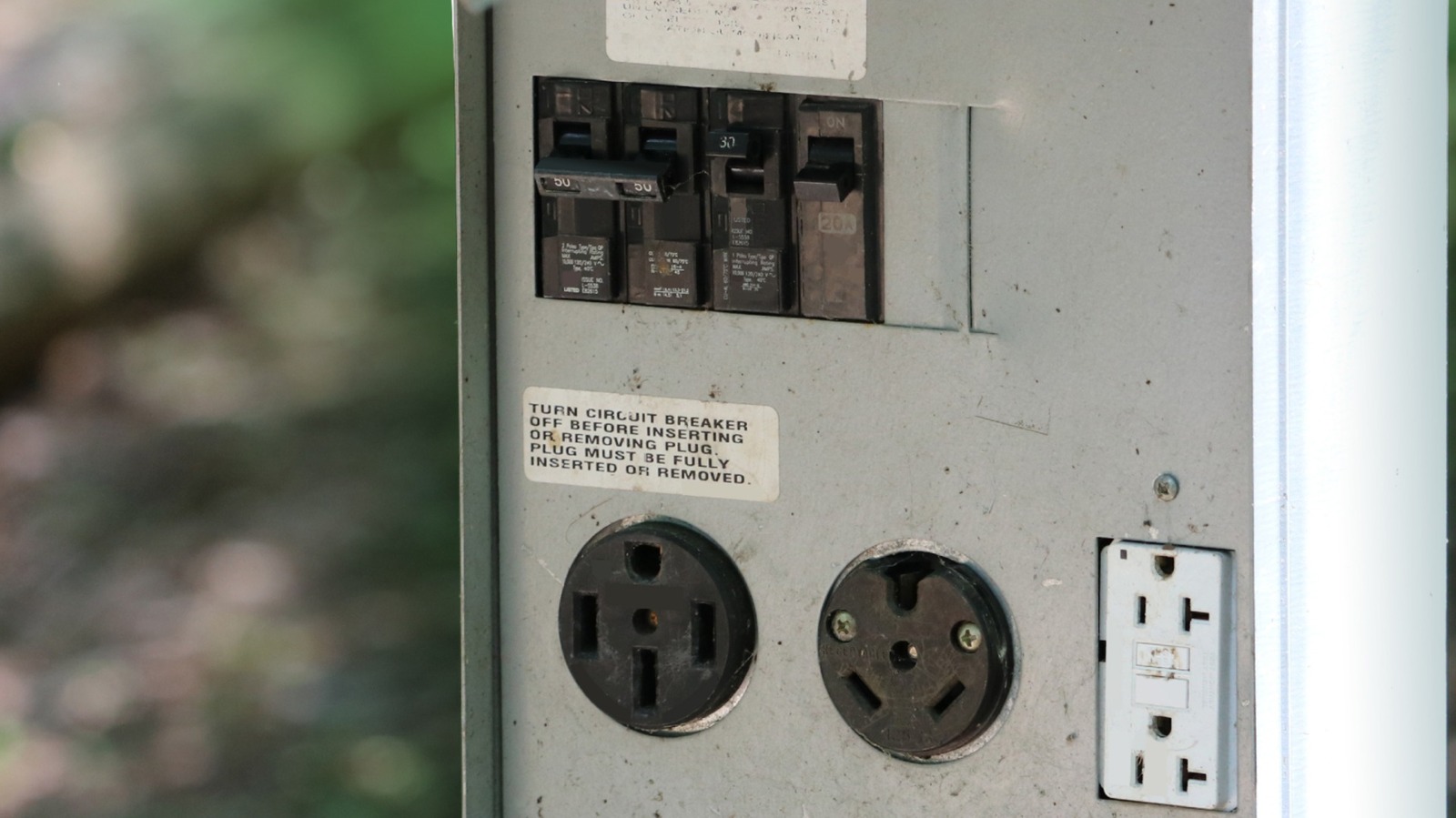
If you’ve ever looked at an RV pedestal and wondered why the sockets are different, the answer starts with the cord end. A 30-amp RV plug has three prongs, while a 50-amp plug has four, and that extra prong reflects a much larger electrical setup. In a campground, the 50-amp connection is usually the bigger receptacle, the 30-amp is the smaller one beside it, and the standard household-style outlet is there for light-duty use.
That difference is more than cosmetic. A 30-amp RV is built to draw up to 3,600 watts, which is enough for basics like an air conditioner, microwave, or coffee maker, but not all of them at the same time. A 50-amp RV can handle far more, because it uses two 120V lines with 50 amps available on each side, giving it much more room to breathe when appliances start piling on.
So, can a 30-amp RV be plugged into a 50-amp outlet? Yes, and that’s where adapters come in handy. The key point is that the adapter does not magically increase the RV’s capacity, it just lets the coach connect to the right source without overloading the system.
That flexibility is a lifesaver when you are camping off-grid, using a generator, or parked at a friend’s house and borrowing their power. RV owners often keep a few of these adapters, sometimes called dog-bones, because real-world travel rarely matches the perfect setup on paper. Having the right one in the storage bay can save a lot of stress when the nearest hookup is not exactly what you expected.
The reverse situation matters too. If a 50-amp RV has to run on a 30-amp outlet, the available power drops hard, and you need to be far more careful about what is turned on. That means less freedom to run multiple heavy-demand appliances at once, and a lot more attention to what is happening inside the rig.
This is where the math gets simple and very real. Watts equals volts multiplied by amps, so a 30-amp, 120V hookup gives you up to 3,600 watts, while a 50-amp RV has access to much more total power because of its split-line design. In plain language, 50-amp service gives you room for bigger rigs and more comfort, while 30-amp service asks you to manage your loads like a hawk.
That extra power is one reason 50-amp RVs are often larger and more loaded with extras. It is common to see multiple air conditioners, electric fireplaces, and other power-hungry features in those setups. The tradeoff is that bigger capability usually comes with a bigger price tag, both when buying the RV and when maintaining it.
Upgrading from 30-amp to 50-amp service is not a casual weekend swap. It involves more than changing the plug or the cord, because the power distribution system and much of the wiring have to be redesigned to handle the load safely. That kind of work belongs in the hands of someone who really understands RV electrical systems, not someone guessing their way through a hardware store project.
There is also the practical side of hauling the equipment itself. A 50-amp cord is thicker, heavier, and stiffer because it uses more copper to carry the extra current safely. That makes it harder to coil, store, and wrestle into tight compartments, which is a small annoyance until you are packing up in the rain and everything suddenly feels twice as bulky.
