
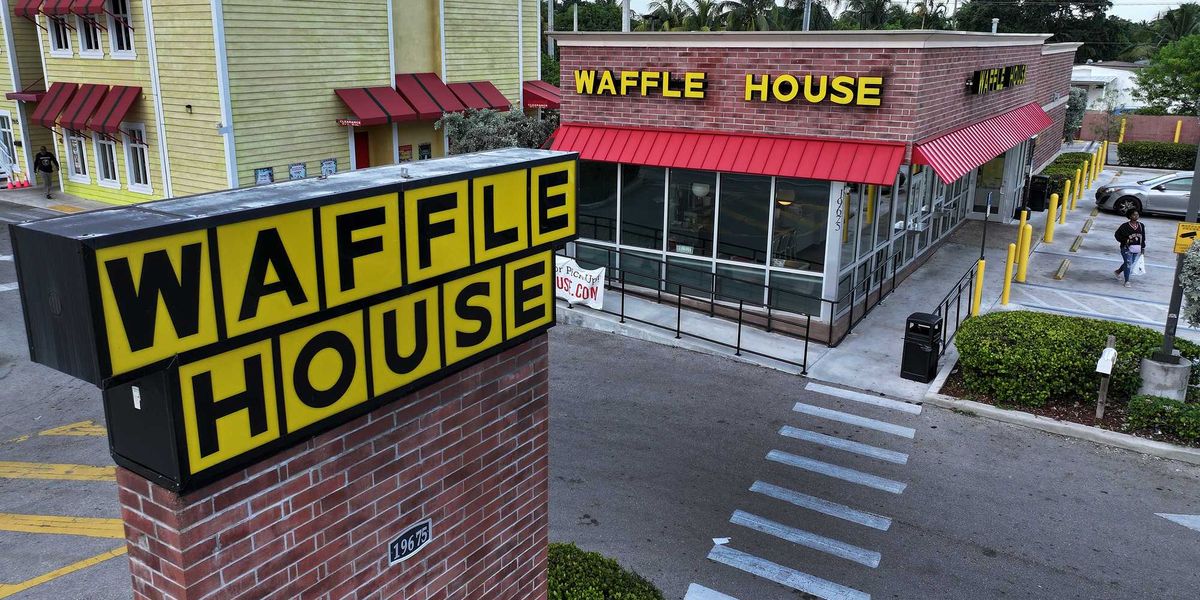
An 84-year-old man from Bartow, Florida says he fell in a Waffle House parking lot after a window ad for a strawberry shortcake waffle caught his eye, and now he has sued the chain claiming the display distracted him and hid an unmarked, unusually high curb that caused the injury.
Edward Bowlds and his wife were crossing a parking lot on April 17, 2025 when he says a promotional display stopped him in his tracks. Instead of watching his feet he says he was fixed on the image of a limited-edition waffle, and next thing he knew his foot hit a curb that had no paint or warning markers and he went down hard. The suit argues the curb was “abnormally high” and that the lack of markings made the stumble unavoidable once his attention was drawn elsewhere.
The complaint does not hold back about the ad itself, claiming the marketing was deliberately placed and sized to grab the attention of customers who had just parked. According to the filing, the display was positioned to catch people stepping out of their cars, effectively creating a visual lure in the path of foot traffic. The language in the legal papers paints it as a preventable hazard once the company chose to put something so tempting in a sightline where people would be walking.
It would be ‘disingenuous for Waffle House to suggest that Mr. Bowlds should have been watching where he was walking,’ letter claims.
The demand language gets more specific in the pre-suit correspondence, repeating the charge that the restaurant distracted Bowlds at precisely the moment when he needed to notice the curb. It would be “disingenuous for Waffle House to suggest that Mr. Bowlds should have been watching where he was walking when it was Waffle House who distracted his attention away from where he was walking.” That passage is central to the argument that Waffle House bore responsibility for creating the conditions that led to the fall.
The physical toll from the tumble is laid out plainly in the lawsuit: Bowlds allegedly suffered a fractured nose and a torn rotator cuff. His lawyer says those injuries have dramatically reduced his mobility, leaving him mostly in a recliner and unable to help with day-to-day tasks like carrying groceries or doing yard work. The suit frames those losses as both painful and practical, describing a shift in household routines and independence that the injury supposedly caused.
Before filing the lawsuit, Bowlds and his wife reportedly sought a $300,000 settlement to cover medical bills and other damages, an offer the suit says Waffle House declined. With negotiations stalled, the case has moved into the legal arena where a jury will be asked to weigh in on whether an eye-catching advertisement can be treated as a proximate cause of an accidental injury. The company has not publicly agreed to a settlement, and the next step is for a court to sort through the competing versions of events.
This case raises questions about how far responsibility extends when a business uses bold, attention-grabbing marketing near areas where customers walk. It also spotlights the particular vulnerability of older pedestrians when visual distractions meet uneven surfaces. Ultimately the jury will be asked to decide whether a strawberry-frosted picture in a window is mere advertising or a foreseeable hazard once a business places it where people are moving through a parking area.
