
After the British defeat at Yorktown, General Charles Cornwallis left the battlefield under a cloud of humiliation but did not vanish from history. This piece traces his immediate parole, the fate of his men, and how Cornwallis rebuilt his reputation back in Britain, eventually serving in high office overseas.
When Cornwallis surrendered at Yorktown in October 1781, the moment felt like the end of a long fight. His army was cornered by combined American and French forces and a French naval blockade, leaving little hope for resupply or escape. He avoided personal surrender and passed the task to his deputy, a move that rankled both opponents and observers.
‘He refused, however, to surrender in person and delegated the humiliating duty to his second in command.’
The siege itself unfolded quickly once Washington and his allies closed in, and the British position deteriorated with dramatic speed. Sustained artillery and a successful attack on forward defenses convinced Cornwallis his position could not be held. On October 19, 1781, the formal surrender took place, marking the collapse of major British resistance on American soil.
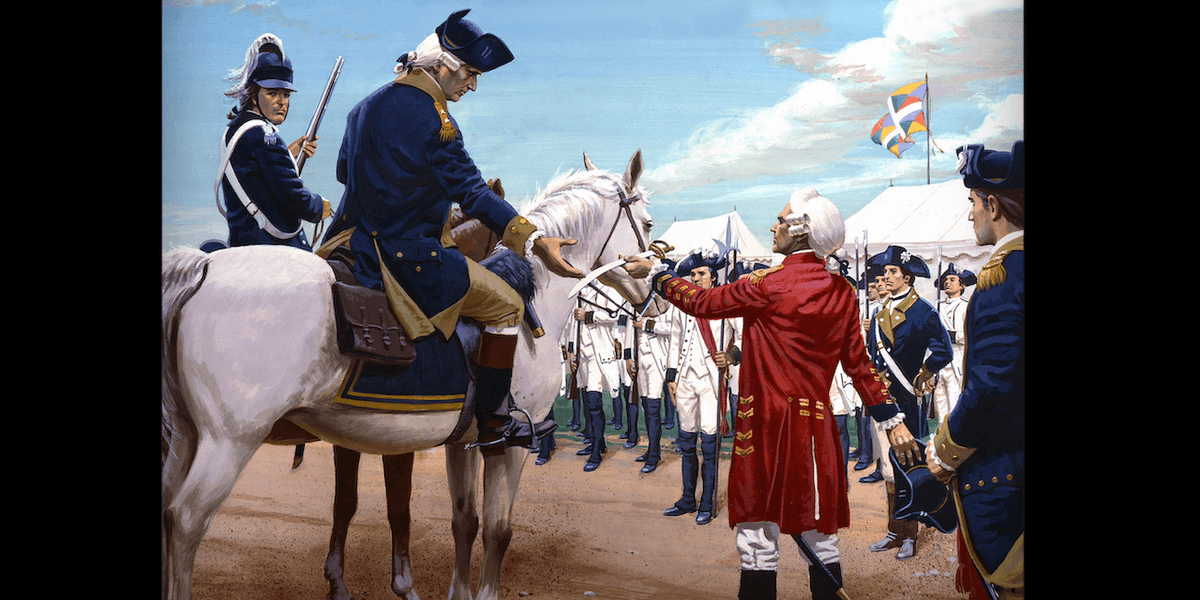
The siege began on October 6, 1781, as the Americans and French formed a semicircle outside of the town and began an artillery bombardment. A successful storming of two British redoubts, or small temporary defensive enclosures, convinced Cornwallis that his position was untenable, and he surrendered his army to the combined American and French forces on October 19. He refused, however, to surrender in person and delegated the humiliating duty to his second in command. Washington consequently directed his second in command to receive the surrender.
Nine days after the surrender, Cornwallis signed a parole that allowed him to return to Britain on condition he would not take up arms again against the United States. The terms were standard for the era and more practical than punitive, designed to stabilize the transition rather than inflict personal ruin. Meanwhile, rank-and-file soldiers remained in captivity until formal exchanges could be arranged.
Back in Britain, Cornwallis did not remain sidelined. Despite the stigma of Yorktown, contemporaries still regarded him as a skilled commander, and political life in London offered routes to rehabilitation. His career shifted away from European battlefields and toward imperial administration, where experience and steadiness mattered more than a single defeat.
In the years after the war, Cornwallis accepted significant responsibilities within the British Empire, culminating in his appointment as governor-general of India in the mid-1780s. In that role he tackled reform and governance challenges that required diplomacy and administrative skill rather than battlefield glory. His time in India helped refocus his legacy from a battlefield setback to effective colonial leadership.
Cornwallis’ personal reputation recovered enough that he remained a respected figure until his death in 1805. The formal peace treaty with the United States arrived almost two years after Yorktown, and that diplomatic closure reframed many wartime failures as part of a larger strategic story. King George III’s recognition of American independence marked the end of the conflict that had defined Cornwallis’ most infamous moment.
Popular culture has also kept the Yorktown episode in view, often dramatizing Cornwallis’ reaction to defeat and the idea that a professional British army could be bested by irregular forces and allied support. Film and fiction amplify the human elements of pride, surprise, and the awkward ritual of surrender, but the historical record shows a more complex aftermath. Cornwallis left America under parole, returned to public life, and found a second act that historians continue to debate.
For Americans remembering Yorktown, the focus naturally stays on the victory and the coalition that achieved it. For Cornwallis, the story is about recovery and service in a very different setting, a reminder that military careers can bend and change direction after a public setback.
