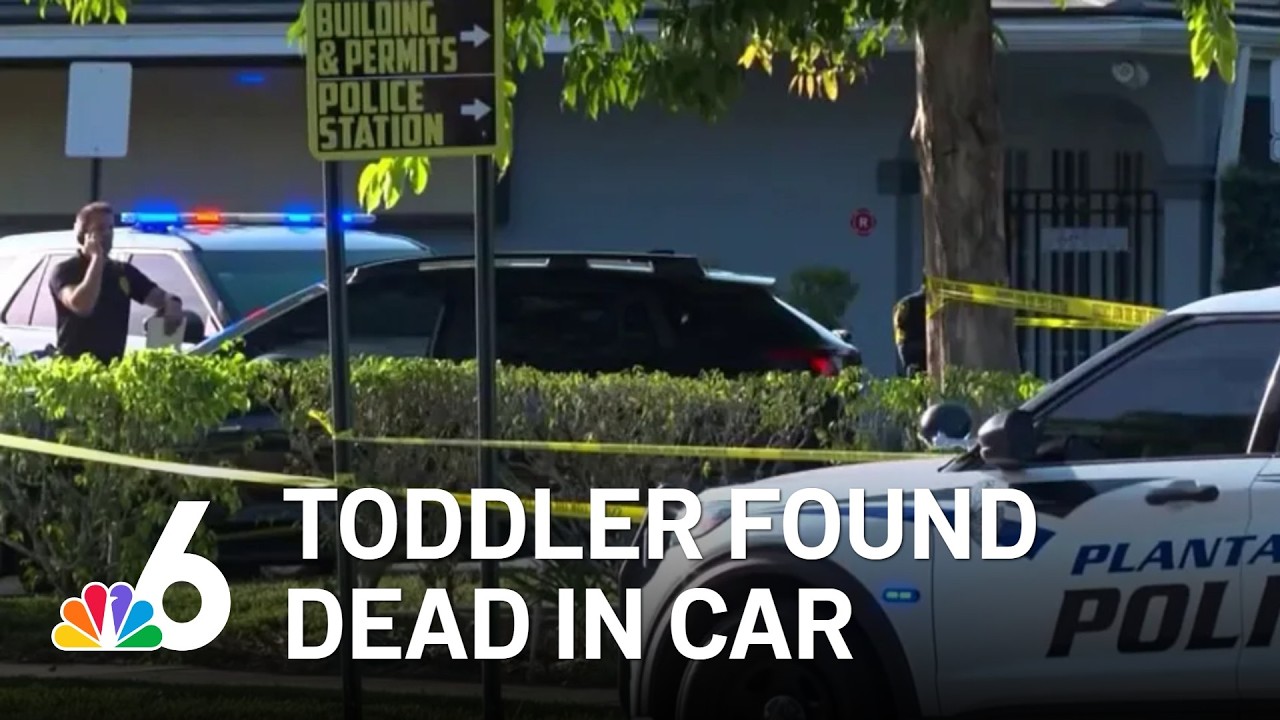
The family of an 18-month-old in Plantation, Florida, is grieving after a father discovered his child unresponsive in the back seat at pickup time, a mistake that ended in tragedy and has reignited warnings about children left in vehicles. Day care staff say the parents normally alternated drop-offs and had called to skip one child that morning, and emergency responders confirmed the child had died after being found in the vehicle. The incident has renewed attention on the stubbornly persistent problem of hot-car deaths and how they happen even to careful parents.
The father told staff he believed he had dropped the toddler off that morning, went to work, and returned that evening to collect the child. When he opened the car at the day care his reaction broke the quiet room, and people nearby will remember the sound for a long time. The director described the moment and the family’s immediate devastation.
‘He opened the door, then slammed it shut. … And he let out this scream.’ Those words replay in any account of this kind of accident, the raw human response to a thing no parent expects to face. The scene underlines how quickly a routine day can turn into life-shattering news.
The owner and director of A World of Discovery Academy said the parents customarily alternated drop-offs for two children, and that the couple had called earlier to say they would not be bringing the older child that morning. Staff did not find anything unusual when no one arrived, and that lack of alarm meant the child remained in the car unnoticed. Small miscommunications can cascade into catastrophic results.
“This is a tragedy that happened to them and to all of us,” the director said, remembering the family she had known as caring and engaged. The words reflect a community stunned and struggling to process how such a mistake unfolded in a familiar setting. Grief is immediate, and questions follow close behind.
Plantation Police reported they were called to the day care after employees found a deceased child in a vehicle, and firefighters who responded confirmed the tragic outcome. First responders described a scene that emergency crews unfortunately see all too often during hot months. An investigation will determine the sequence of events, but the core facts are painfully clear.
National groups track this type of death and the numbers are sobering: about 37 children under the age of 15 die each year on average after being left in a vehicle. “Nearly every state has experienced at least one death since 1998,” the group added, and “In both 2018 and 2019, a record number of 53 children died after being left in a hot vehicle.” Those statistics put this isolated family tragedy into a broader, heartbreaking pattern.
Authorities note that about half of hot-car deaths lead to charges against a parent, and of those prosecuted roughly 80 percent end in convictions. Legal consequences are one part of the aftermath, but the human toll is what resonates most loudly for neighbors, caregivers, and first responders. Prevention efforts try to address the root causes, from memory lapses to schedule changes that can throw off a routine.
Day care operators and safety groups urge simple steps to reduce the risk: make a habit of checking the back seat, place a personal item like a phone or purse in the rear with the child, and communicate clearly about drop-off plans whenever routines change. Technology can help too, with in-car alarms and phone reminders becoming more common, yet nothing replaces an extra moment of attention. Still, even the best systems can fail when a single human error slips through.
For this family, the focus now is mourning and facing questions that have no quick answers, while the community grapples with how to prevent another similar loss. The incident is a reminder that vigilance around children and cars is not optional and that awareness must be constant, not sporadic. As agencies and families talk about prevention, the immediate need is support for those left to pick up the pieces.