
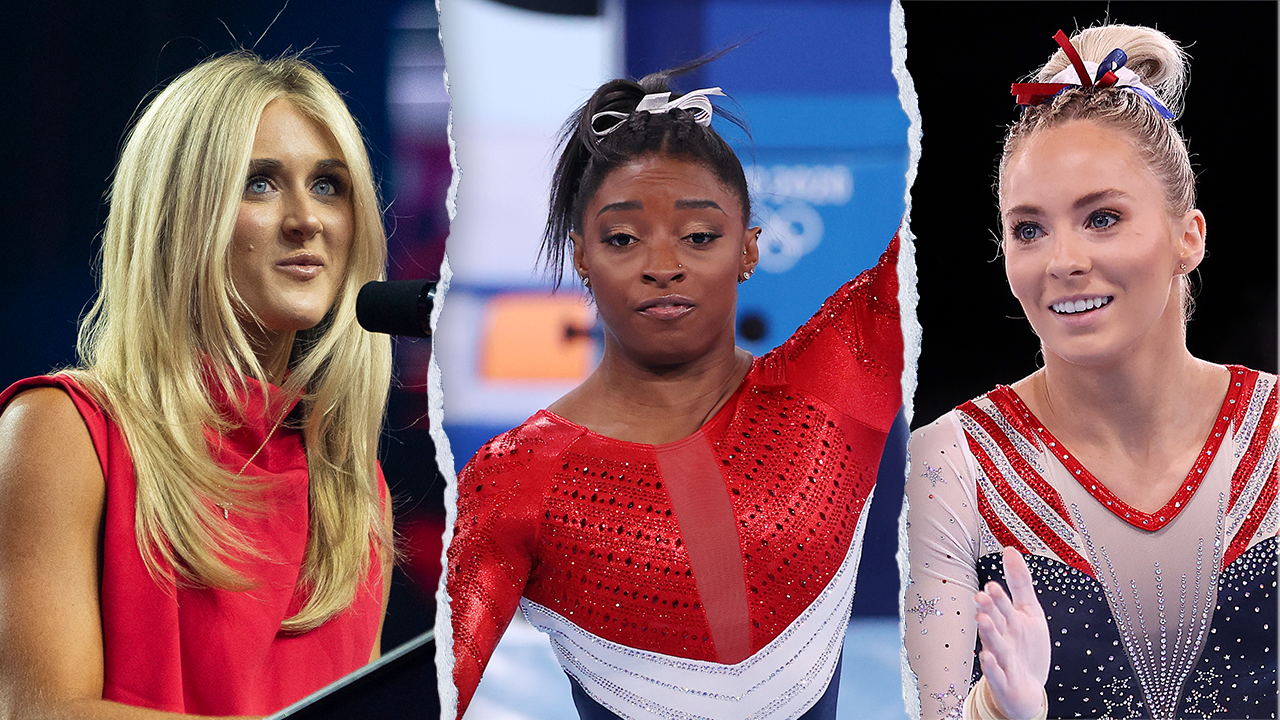
The Supreme Court decision on transgender athletes has lit a fire under conservative sports advocates, and two veteran voices are already turning that spark into a movement. This piece tracks how Riley Gaines and MyKayla Skinner reacted to the ruling, explains why they think it matters for women’s sports, and lays out their effort to bring high-profile athletes into the conversation. Expect direct language, a focus on fairness, and a clear call to action aimed at athletes who can move public opinion.
“Riley Gaines and MyKayla Skinner celebrate the Supreme Court transgender athletes ruling and call on Simone Biles to join their movement.” That line captures the moment: two former elite gymnasts stepping from the sidelines into a cause that mixes athletic credibility with political resolve. They’re framing the court’s decision as a win for objective competition and an affirmation that biological sex matters when it comes to fairness in sport.
Gaines and Skinner are not asking for drama; they’re asking for rules that protect women’s opportunities. From a Republican viewpoint, this is about preserving the integrity of competitions that were built on female participation and hard-earned records. Their message is simple: you can support inclusion while also insisting on level playing fields that honor physiological differences.
Their approach combines testimony and visibility. They’ve both seen elite competition up close and can speak to the physical realities that separate male and female bodies after puberty. That lived experience gives their arguments more weight than abstract policy debates, and they’re using it to press for clear lines where necessary in sports governance.
Calling on Simone Biles is a strategic move rather than a personal slight. Biles is one of the most recognizable athletes on the planet, and her voice carries enormous cultural weight. Gaines and Skinner want influential athletes to lend credibility to rule changes that protect women’s sports, believing that when iconic figures speak up, policy and public sentiment follow.
The reaction from the left has been predictably defensive, framing dissenting views as exclusionary. But Gaines and Skinner push back with a different frame: protecting women’s sports is about fairness, not hatred. That distinction matters politically because it makes the conversation about rules, records, and responsibility, rather than identity politics.
Organizing around a court ruling is practical politics. The decision gives conservatives an opening to craft legislation and pressuring governing bodies to adopt standards that reflect biological reality. Instead of relying solely on rhetoric, Gaines and Skinner are trying to build momentum that can translate into policy change at state and national athletic associations.
This effort is also a test of conservative outreach to the broader sporting public. If mainstream stars join the cause, the message moves from niche culture-war talk to mainstream sports reform. That’s why the call to Simone Biles matters: it’s not about targeting a person; it’s about inviting a leader to help protect competitive fairness for female athletes everywhere.
The debate will stay heated, but the stakes are clear to those who follow competitive sport closely. Advocates like Gaines and Skinner plan to keep pushing the conversation into locker rooms, legislatures, and athletic boards. Their campaign will measure success not by applause but by rule changes that keep women’s competitions fair and meaningful.
