
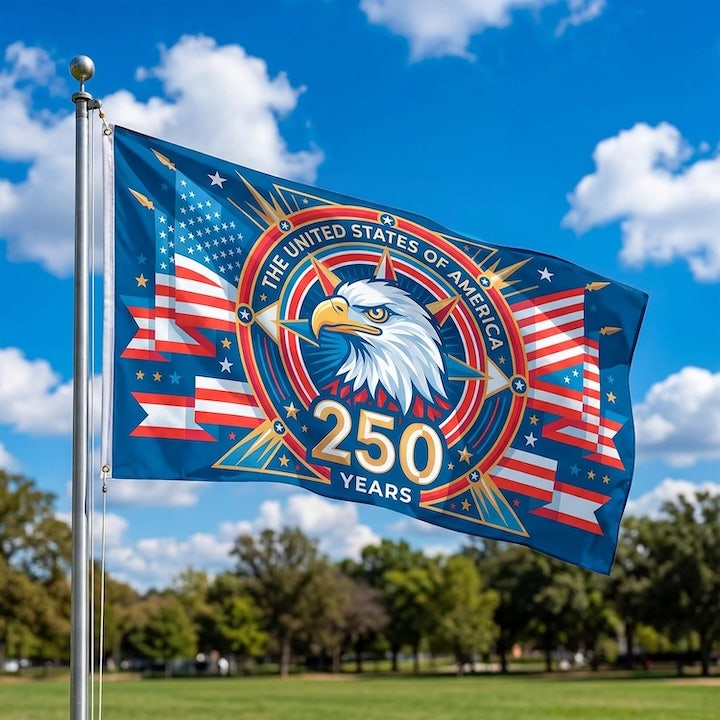
This piece follows a small Appalachian town’s America 250 parade, tracking local organizers, longtime residents, college activists, and the quiet patriotism that binds them despite national divisions.
The square was a patchwork of flags, T-shirts and folding chairs, the kind of scene that looks simple until you think about how rare it is these days. I found Melinda Kelleher, the Main Street manager, in the middle of it all, handing out instructions and calming frayed nerves. Before I had even finished asking whether pulling off a unifying event felt difficult in polarized times, she answered, “Yes.”
Kelleher didn’t stop at admitting the challenge; she explained the payoff. “We wanted an event that could really bring the community together,” she said, adding that there has been a revitalization of downtown Cumberland. “We have had 30 new shops open.”
Her team stretched the celebration beyond a single day, with Thursday and Saturday night events planned through the summer to attract locals and visitors alike. The town sits in lovely foothills that reward the drive, and the effort to draw people back into Main Street felt deliberate and real. You could tell the organizers were betting on small, steady civic pride rather than flashy national headlines.
The crowd held faces from decades of town life, including Al Fieldstein, a man in his 70s who knows the place like a history book. Al told me “President Benjamin Harrison walked this parade route to celebrate the 100th anniversary of Allegheny County in 1889, and I remember the parades here when I was kid, seeing the World War I veterans,” he said, glancing skyward. “They’re all gone now.”
Kids ran near our feet while older hands watched with a mix of nostalgia and approval, the kind of scene that shows how continuity lives beyond politics. I jabbed at the idea gently, pointing at the children and saying, “That was you, once.” He smiled in that steady way the town teaches you, then reminded me of Cumberland’s old role.
I asked what Cumberland’s place was in the nation’s 250-year sweep, and Al answered plainly: “We had the first national road, the first railroads. We have always been a crossroads for America.” That kind of practical pride is less showy than rhetoric, but it binds people across viewpoints.
Politics still edged the festival in small ways. A lifelong resident named Terry laughed and sighed at the same time when I brought it up, saying, “It’s complicated with that man in the White House.” But even Terry added, “I’m glad to be here, though, I really do love this place.” The push and pull between local affection and national frustration felt oddly balanced in the sun of the parade route.
On the route, a student from Frostburg University ran a booth for a campus chapter, carrying a clear message. I asked Jalen Grimm what they were trying to send, and she said, “Just that we love America. We have buttons and pocket constitutions for people, and some stuff for Charlie,” referring to the late TPUSA founder Charlie Kirk.” She admitted starting a conservative group on campus had been nerve wracking at first.
“I was nervous at first, but it’s been great,” she said. “We haven’t had many issues.” That level of civic engagement—students taking to the street with pocket Constitutions—felt like a return to confidence in public life rather than retreat from it.
When the drums rolled in and the announcer signaled the parade, everything looked familiar: bands, Army vehicles, the mayor tossing candy. The nostalgia wasn’t retro for the sake of being retro; it showed a community deciding to stand together for one afternoon. Main Street managers like Kelleher rarely make headlines, but they hold the rope when it comes to local unity.
Across small towns from Cumberland to Frostburg, the patriotism on display can be stubborn and quietly fierce, even from people who admit they’re frustrated by national politics. The America 250 parades happening coast to coast are modest, messy, and full of hope. If your town has a celebration, go, sit in a lawn chair, listen to the band, eat funnel cake and watch neighbors choose togetherness for a few hours.
