
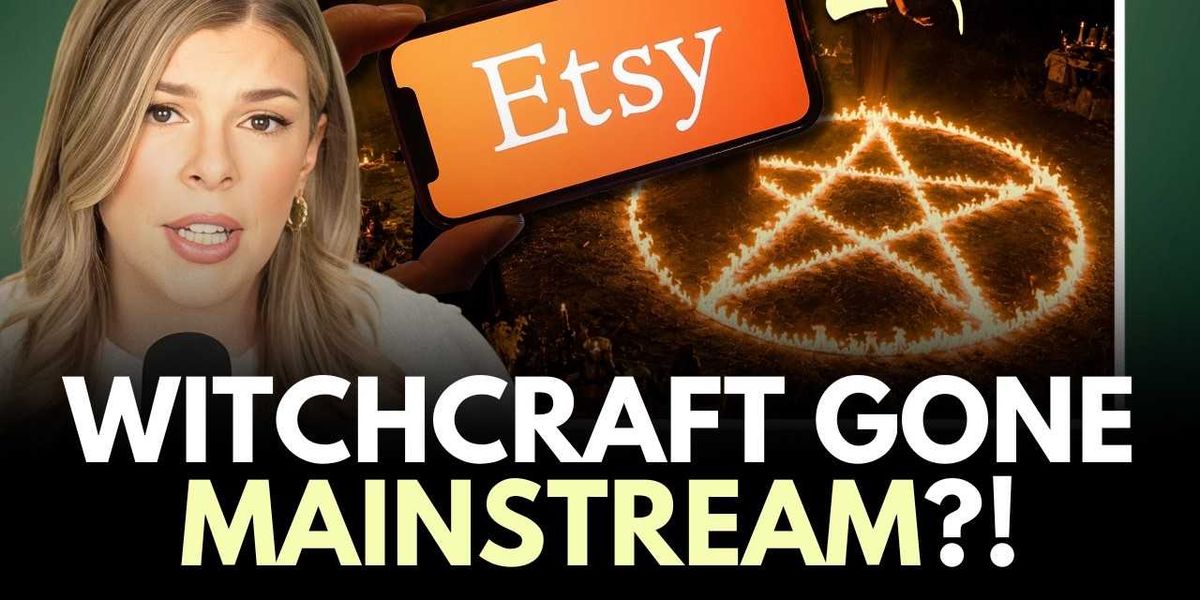
Etsy finally started enforcing a policy it wrote years ago after sellers who offer spell-casting and other metaphysical services became a booming corner of its marketplace, stirring religious and cultural pushback and a high-profile PR incident that forced the company to act.
Etsy banned metaphysical listings in 2015, but the rule mostly gathered dust while “Etsy witches” turned custom spell work into a profitable cottage industry. For years people bought promises of luck, love, curses, and blessings the same way they buy artwork or handcrafted jewelry.
In September 2025 a Jezebel article satirically described writers hiring Etsy witches to target conservative activist Charlie Kirk, and the story blew up into controversy after he was assassinated just two days later. That moment turned casual tolerance into a serious reputation problem for the platform.
The backlash pushed Etsy to stop looking the other way and start removing shops and listings tied to spell work. Enforcement has been sudden and strict, and that has conservative commentators and religious leaders taking notice.
BlazeTV host Allie Beth Stuckey welcomed the change, arguing the issue is more than PR or fraud; it’s spiritual danger. “Christians know that demonic activity is real and that witchcraft is real because Satan is real, and he works through these means that might just seem silly and superstitious but actually are vectors and vessels of his workings and of his power,” Allie explains.
She also pointed to Christian assurance: “witchcraft doesn’t have any dominion over the Christian” because Christians are “indwelt by the Holy Spirit.” That is her theological core: fear the practice but know your standing.
Allie worries most about cultural normalization. “When it’s becoming popularized, when it’s becoming normalized, when it’s becoming commercialized, when billions and billions of dollars are being made by people casting spells on others through a seemingly innocuous site like Etsy, we’ve got a problem.”
There is a pragmatic side to her critique, too. “When you’re selling intangible things and you’re kind of commercializing these spiritual, abstract practices, it’s obviously rife with the potential for fraud and all different kinds of things and can also be very damaging if people don’t feel like they got their money’s worth,” says Allie.
But beyond scams, there’s the moral and emotional fallout. Sellers have offered everything from wealth-enhancing rituals to love spells promising to turn an “avoidant” crush into an “obsessed” partner, and even hexes meant to curse enemies, pulling vulnerable people into darker thinking.
She laments the human cost. “It actually is very sad when you think about the desperation that someone has to have and just the longing, the unrequited love that someone has to feel, the purposelessness, the lostness that someone is embroiled in to believe this kind of advertisement and then to pay money for it,” she sighs.
For Allie, those purchases are spiritually corrosive, not just silly buys. She calls the trend “just another manifestation of exchanging the God of Scripture for the God of self,” a cultural swap that leaves people worse off even if a spell seems to work in the short term.
She allows that many of these listings are probably scams, but warns some may have a darker origin. “I actually don’t put it past Satan to use this means to get people to have faith in things like witchcraft, even if it gives you something that you want temporarily, as long as he can win the long-term war for your soul,” she warns.
Allie is skeptical that moral outrage drove Etsy’s enforcement. “I don’t think that the people at Etsy, who are very anti-pro-life and who are very pro-trans and pro-abortion, I don’t think they have moral qualms with witchcraft,” says Allie. “I think they don’t want to be on the hook for the potential of fraud. They don’t want to deal with the customer service issues of people not getting the outcome that they want. They don’t want to deal with another negative PR campaign [like the Charlie Kirk scandal] … so they’re like, ‘It’s just not worth it.”’
To hear more, watch the episode above.
For regular conservative takes on culture, faith, and current events, Allie Beth Stuckey continues to cover these stories with a mix of spiritual concern and cultural analysis on her shows and platforms.
