
I was recently stopped in a mountain town by a man who had spent years chasing reports along Florida’s Space Coast, and our conversation reminded me how easy it is to slip from careful inquiry into confident certainty when the topic is unidentified aerial phenomena.
He told me about a lifetime of chasing sightings, investigating more than a hundred reports tied to rocket launches and coastal operations. Most of those experiences turned out to be perfectly ordinary — sensor quirks, misidentified aircraft, or atmospheric oddities — but a handful resisted easy explanation. That ratio matters more than the sensational exceptions people rush to embrace.
He also described a retired U.S. Navy officer who once worked as a military mortician and claimed to have examined bodies he believed were non-human. I didn’t accept the story on faith; I asked the questions any disciplined analyst would ask: Where are the photographs? Where are the lab reports? Who secured the chain of custody and can anything be independently corroborated?
I asked him to reconnect with the officer and push for evidence. Until that happens, the tale stays in the same place it started — an interesting assertion, not proof. Public certainty without documentation is a hazard, especially when national security is on the line.
That’s the core risk in this debate: certainty before evidence. Some in the public already assume extraterrestrial visitors, while others dismiss every report as nonsense. Both reactions short-circuit the only reliable approach: gather evidence, test it, and let conclusions follow the facts rather than lead them.
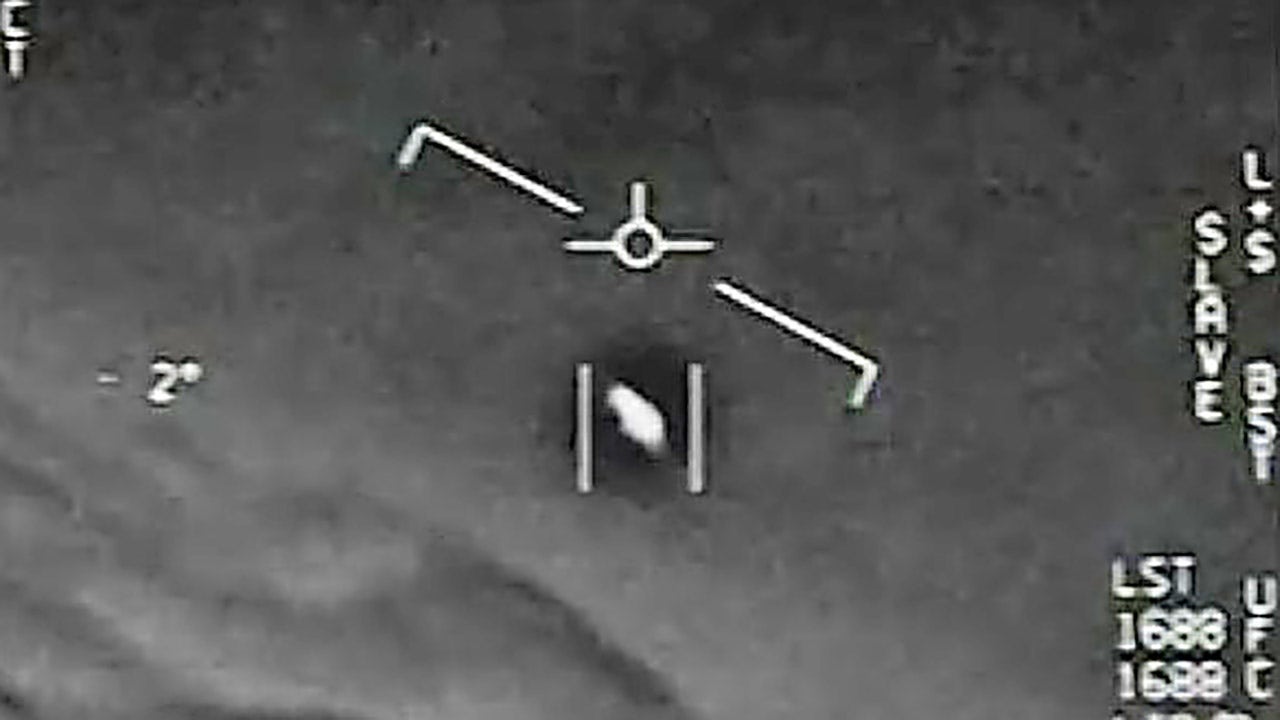
Washington has shifted its posture on this. The Pentagon’s All-domain Anomaly Resolution Office released multiple batches of declassified case files this year and acknowledged unresolved incidents. One report signed by AARO Director Jon Kosloski documents an event where observers described an orange “mother orb” releasing smaller red orbs, and the office listed unrecognized technology among possible explanations.
Pop culture and politics have pushed the conversation into the mainstream. The documentary “The Age of Disclosure,” drew rapid attention, but even featured participants have urged caution. Senator Marco Rubio has been quoted saying he doesn’t “have any independent way to verify the things they said,” which is the right humility for public officials to express.
A sensible Republican view treats this first as a national security matter. If unknown objects are operating in sensitive airspace, that demands rigorous, well-resourced investigation. The military should collect the data; scientists should model hypotheses; Congress should exercise oversight consistent with protecting classified sources when necessary.
Investigation is not interpretation. Radar tracks, infrared signatures, pilot testimony and sensor logs are valuable, but they don’t automatically explain origin or intent. Good intelligence practice recognizes the difference between what is classified and what is unexplained, and it resists the temptation to fill gaps with ideology or wishful thinking.
I spent years in uniform and in strategy roles watching how governments classify information and how the public responds. Classification protects sources and methods; it is not itself evidence of cover-up. Testimony, even sincere testimony, is not the same as corroborated physical proof. The standard should always be evidence that can be examined and challenged.
My interest in this topic led me to research widely for “Out of This World.” I looked through archives, military testimony, scientific literature and even theology to ask a simple analytic question: which explanation best fits the available evidence? That’s the skill set the nation needs now — rigorous comparison of competing hypotheses, not shouting matches.
For those of faith, the conversation has an added layer. Scripture teaches that reality includes more than the material, and the Bible speaks of spiritual beings and deception. At the same time Christians are commanded to “test everything; hold fast what is good” (1 Thessalonians 5:21, ESV), which is a disciplined injunction that applies perfectly here.
Support for thorough, transparent investigation should be bipartisan, but Republicans can lead by insisting on both national security and evidentiary rigor. Demand transparency when it can be had without endangering operations, require credible reporting standards, and resist sensational claims until they survive independent, forensic scrutiny.
Until the retired mortician produces verifiable documentation or the AARO files yield incontrovertible proof, the right posture is curiosity married to skepticism. Keep asking for chain of custody, lab results and independent corroboration. That discipline protects the public, preserves credibility, and increases the chance we’ll find real answers rather than comfortable certainties.
