
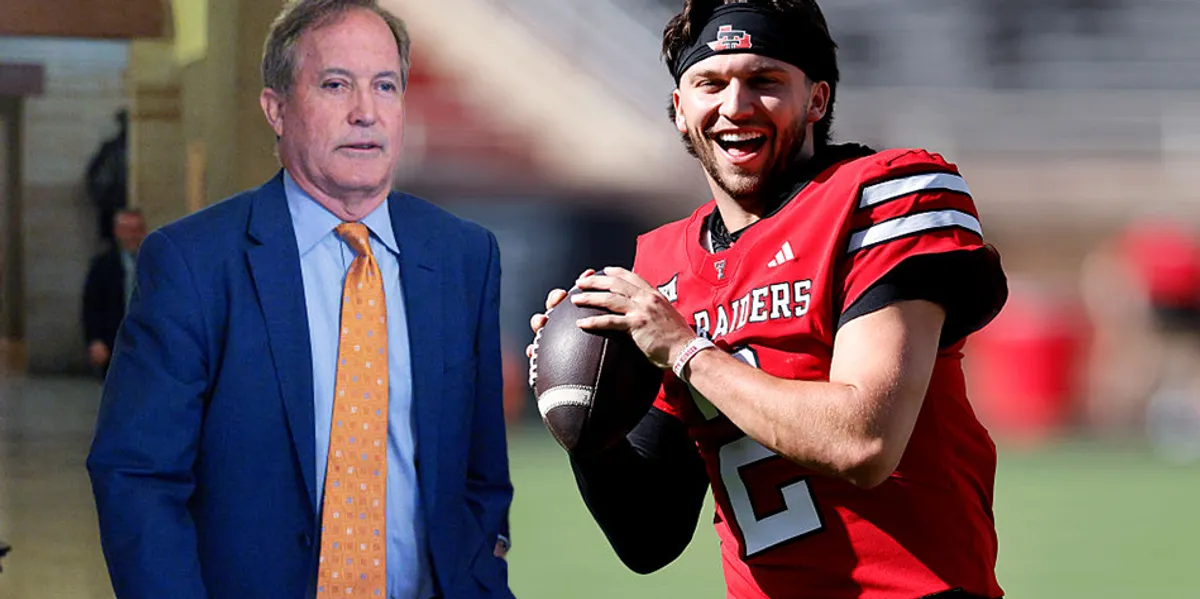
Ken Paxton waded into the row over Texas Tech quarterback Brendan Sorsby’s gambling case and warned the Big 12 that any broad boycott of the Red Raiders could cost the conference and its members dearly, with threats of massive antitrust damages and contract claims if schools try to cut Texas Tech off after a court blocked the NCAA from enforcing a permanent ban.
The core of the fight is simple: Brendan Sorsby admitted to betting on games, including wagers on his own team over several years, and a judge in Lubbock temporarily prevented the NCAA from enforcing a permanent eligibility ban, allowing him to play this season aside from the first two games. The facts about his betting — including reports that he wagered approximately $90,000 over four years and that some accounts may have been registered to others — have driven outrage around college sports. The legal patchwork that followed the judge’s order created a courtroom-versus-regulator standoff that has spilled over into conference politics.
Conference leaders reportedly weighed an extraordinary response, with some athletic directors privately acknowledging they had “serious conversations” about refusing to play Texas Tech until the eligibility issue was fully resolved. That kind of collective decision among rivals is exactly what state lawyers say could trigger antitrust exposure, because it looks like competitors banding together to penalize a single member school. The chatter about boycotts and scheduling bans went from rumor to a real legal risk almost overnight.
Texas Attorney General Paxton’s office pushed back in a letter that put the Big 12 on notice, even suggesting the state could seek “substantially more than $200 million” in damages if a coordinated cutoff went forward. Reporter Pete Nakos posted the AG’s , which said Texas is aware of the attempted sanctioning of Texas Tech for “continuing its support of Mr. Sorsby as a student-athlete.” “This letter serves to notify the Big 12 that any such action would be unlawful and would expose the Conference to substantial liability,” Paxton’s antitrust chief, Thomas York, wrote. ‘Any such action would be unlawful and would expose the Conference to substantial liability.’
The letter described the contemplated boycott as “a naked horizontal agreement among competitors to disadvantage Texas Tech by cutting off access to the resources it needs to compete,” framing the issue squarely as an antitrust problem rather than merely a sports-administration dispute. That language is meant to signal serious legal consequences, not just a public rebuke. By highlighting potential anticompetitive behavior, the state is asking courts to treat a scheduling boycott like any collusive business practice that harms a market participant.
Paxton’s team spelled out the kinds of harm the state believes could flow from a coordinated boycott, pointing to “lost football revenues, damages to its alumni contributions, and damages to its recruitment, plus attorneys’ fees.” The letter also raised contract-based claims and what it called “tortious antitrust,” defined as “any sanction that disrupts or interferes with Texas Tech’s existing or potential contracts associated with its football team.” Those are precise legal hooks meant to make conference officials think twice before acting on impulse.
Not everyone agrees with Paxton. Oklahoma Attorney General Gentner Drummond fired back, calling the Texas claims ‘meritless’ and ‘facially absurd’ and openly supporting the idea of conference sanctions against Texas Tech for the Sorsby matter. Drummond argued the school sought a favorable ruling and that other schools have a duty to protect the integrity of competition. “If Texas Tech will not do the right thing, the Big 12 should,” he wrote, according to images of the letter shared by ESPN college football reporter .
Beyond Texas and Oklahoma, whispers from the Big Ten and the SEC pushed the controversy wider, with some figures reportedly considering a refusal to play Texas Tech as a punitive response. Thamel three unnamed Big Ten sources on Monday night who said they planned on discussing the possible sanction, while one Power Five athletic department circulated internal guidance cautioning schools about scheduling the Red Raiders without conference sign-off. Those moves would not just be symbolic — they would have real economic and contractual ripple effects.
The collision of court orders, NCAA rules, and conference politics has put a hard question in front of college sports: will enforcement of eligibility be driven by legal rulings or by collective judgment calls among rival schools? Whatever happens next, the episode shows how quickly a disciplinary matter can become a legal and commercial battlefield, with colleges, conferences, and state attorneys general all staking competitive and legal claims that will echo beyond a single season.
https://x.com/PeteNakos/status/2065099401396195348
