
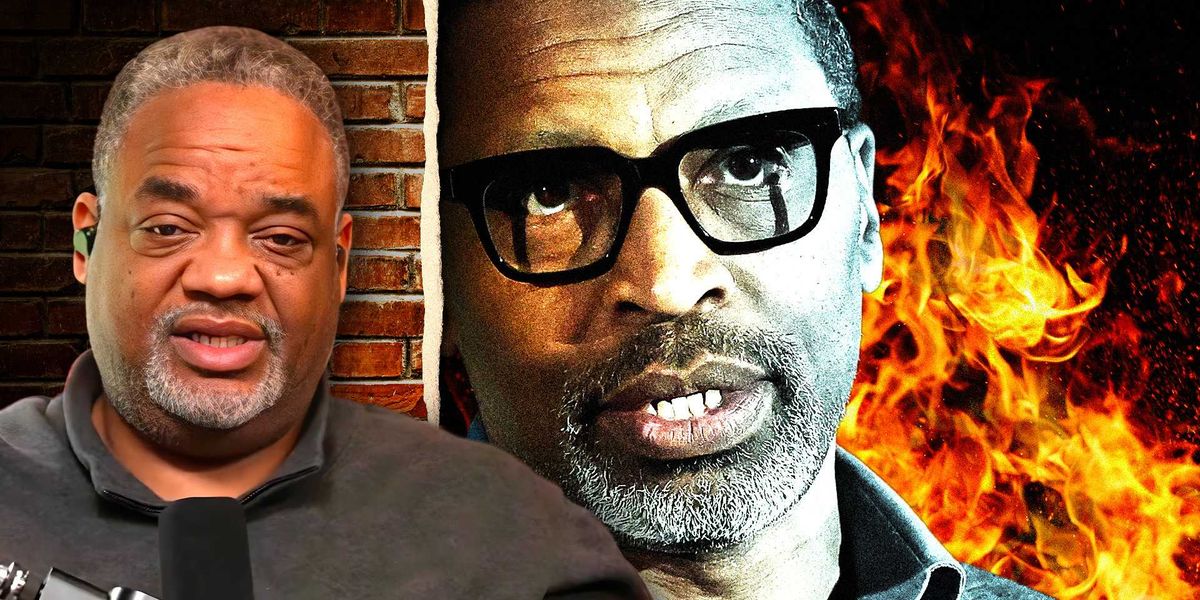
The NAACP has urged young Black athletes to boycott Southern sports programs over redistricting, and BlazeTV host Jason Whitlock and Virgil Walker push back hard, arguing the group is promoting a victim narrative that harms the very people it claims to help. This piece lays out their case, quotes their critiques directly, and frames the debate from a perspective that spotlights personal responsibility, opportunity, and skepticism toward established civil rights institutions. The goal is to make the argument clear, blunt, and impossible to ignore.
The call for a boycott landed like a grenade in college sports, and Whitlock didn’t flinch. “The NAACP has been set up as an institutional leader for black people, and they continue to promote the message that we’re owed something, we’re victims, and that young black people, you need to make these incredible sacrifices,” Whitlock tells Virgil Walker. He paints the organization as clinging to a politics of grievance at the exact moment kids are moving into opportunity.
Walker agrees and tightens the point with a plain-spoken pushback. “The idea that blacks are being marginalized … is absolutely inaccurate and false,” Walker agrees. For him this isn’t nitpicking; it’s about protecting young people from a narrative that convinces them to trade real advancement for symbolic protest.
They drill into voting and access to show the contrast between rhetoric and reality. “No black person is now not able to vote that was voting. No black person is marginalized. There are no tests that are going to be in place at voting booths. … Nothing is going to change. But they’ve leveraged that to an audience for whom they’ve preached victimology,” he says. That line is meant to expose how claims of disenfranchisement are being used to rally an audience rather than solve measurable problems.
The criticism gets sharper when Walker talks about athletes and timing. “They want to leverage young black players at the very moment in their lives when they’re actually coming into opportunity, education, and money,” Walker says, pointing out that the organization is “nowhere to be found” when those kids are struggling during their youth. The point is brutal but simple: why parade in front of someone at the door and tell them not to walk through?
That messaging, they argue, actively discourages self-advancement. “And the moment at which these kids are about to walk through a door of opportunity, the NAACP says, ‘Oh, hold up, hold up. Before you go there, we need to take all of that opportunity away from you, because you need to spend that equity, that sweat equity, with us,” he continues. For Whitlock and Walker the organization’s timing looks less like stewardship and more like opportunism.
They do not stop at theory; they issue a warning to parents and communities. “That kind of messaging should scream so loud in the ears of parents that they begin to see organizations like the NAACP for the fraudulent organizations that they are,” he adds. It is a call to question authority, to check motives, and to prioritize the immediate welfare and prospects of kids over institutional theater.
If you want more of this line of critique and conversation, Jason Whitlock keeps pressing the same themes — faith, culture, sports, and personal responsibility — and he does it with a no-nonsense attitude. For readers who follow these debates, his work is a steady source of blunt commentary that favors opportunity over grievance and accountability over ritual. There is plenty of room for disagreement, but the argument Whitlock and Walker make here is clear: stop telling kids to sacrifice their future on the altar of an outdated narrative.
