
This piece rips open the empty slogan “fair share” and shows what rich Americans actually pay across income, sales, property, investment and estate taxes, why vague calls for higher levies ignore incentives, and why the real problem is runaway Washington spending, not unnamed scapegoats.
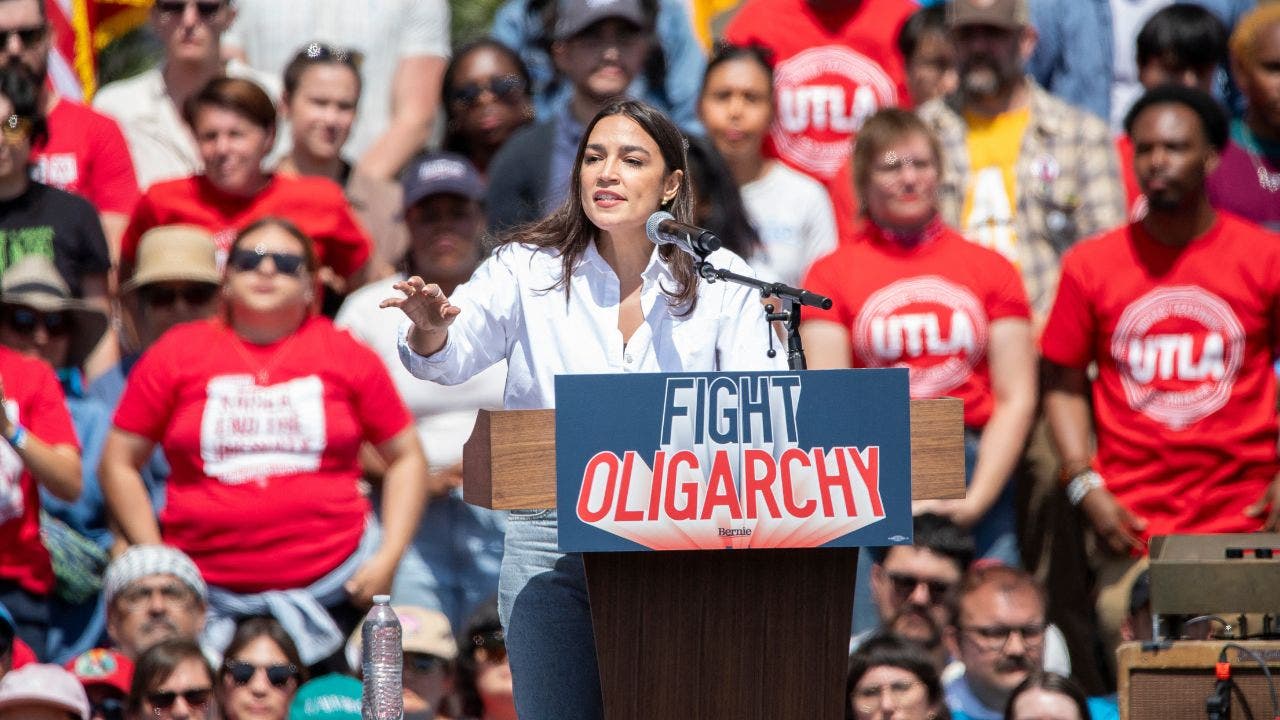
Politicians like Vermont Independent Sen. Bernie Sanders and New York Democrat Rep. Alexandria Ocasio-Cortez repeatedly lob the same charge: the rich don’t pay their “fair share.” Those lines work as rallying cries, but they dodge the hard fiscal questions that matter to families and job creators.
So let’s ask the basic question everyone pretends they answered: what exactly is “fair?” That word gets thrown around like a bumper sticker, but it’s meaningless without numbers, consequences and a plan for government restraint.
Look at the facts instead of feelings. Federal data show the top 1% of earners already cover roughly 40% or more of federal income taxes, and the top 10% approach 70%, while almost half of households pay little to no federal income tax each year.
BILL MAHER CALLS OUT BERNIE SANDERS, SAYS HE’S TIRED OF HEARING THE RICH DON’T PAY THEIR FAIR SHARE OF TAXES When people demand that the wealthy pay even more, what they often mean is that a lot of Americans should keep paying little while a smaller slice of taxpayers covers a larger share. That redistribution-by-slogan ignores how tax burdens stack up in real life.
Federal income tax rates are only the opening number in this math problem. Marginal rates top out around 37%, before any surtaxes, and that’s not counting state-level levies. DOGE REVEALS WHAT YOU GET FOR THE HALF MILLION YOU’LL PAY IN TAXES OVER YOUR LIFETIME
State taxes make the total bill even worse for many. Live in high-tax states and you can easily tack on another 10% to 14% through income and local taxes, pushing combined rates toward levels seen in parts of Europe. Property taxes for higher-value homes can be an additional $10,000 to $30,000 or more annually, a steady drag on middle- and upper-income households alike.
STEVE FORBES: DON’T CRUSH HOMEOWNERS TO PAY FOR NYC’S OUT-OF-CONTROL BUDGET Sales taxes hit spending after income has already been taxed, so the same dollar gets taxed multiple times as it flows through the economy. In some states, combined sales taxes near 10%, which is effectively another layer of compulsory savings taken at the register.
Investment income faces its own penalties, too. Capital gains taxes plus the Net Investment Income Tax can nudge the tax on gains above 23.8% before state taxes bite, meaning you often pay taxes on money you already paid tax on once. That hits business owners, founders and long-term investors who risk capital to build companies and jobs.
Generational wealth is not immune; the estate tax can carve up family assets when transferred to heirs and affect planning decisions for those who built businesses over decades. JONATHAN TURLEY: SANDERS’ WEALTH TAX DANGLES CHECKS WHILE TORCHING THE CONSTITUTION These are real costs with real behavioral effects, not abstract lines on a campaign poster.
So when is it enough? Is it fair when the top 1% pays 50% of all taxes, 60% or 80%? No leading politician with a megaphone offers a clear threshold tied to economic outcomes, because the math gets ugly fast. WASHINGTON POST ARGUES THERE’S ‘LITTLE TO GAIN BY RAISING TAXES ON THE RICH,’ RATES ALREADY HIGH ENOUGH
Ratcheting up burdens on productive people changes incentives: less investment, slower hiring and fewer entrepreneurial risks. This isn’t a defense of billionaires; it’s a defense of math, incentives and the system that grows wages and opportunity over time.
America does face a revenue shortfall as debt climbs, but the other side of the ledger is spending. AMERICA’S $39 TRILLION DEBT BOMB COULD BE MORE PAINFUL THAN YOU THINK Before policymakers demand more from taxpayers, ask them to define what “fair share” means in explicit dollars, percentages and outcomes, and then force Washington to live by the same standards.
