
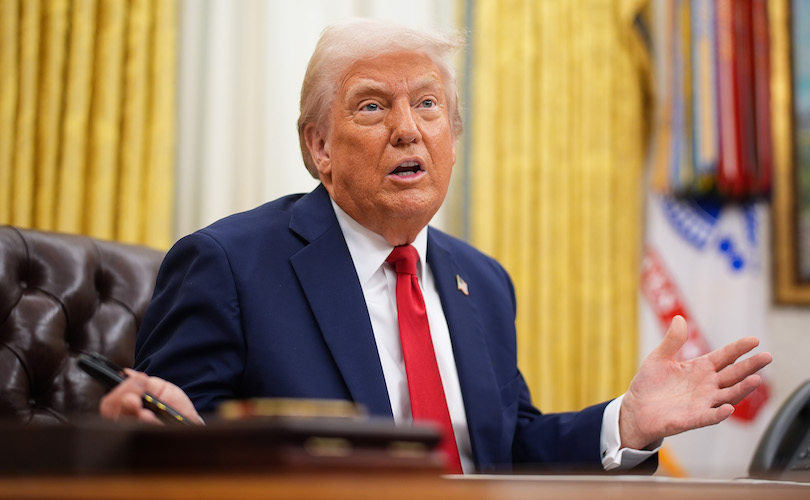
President Trump sparked a debate when he balanced support for vaccines with a vivid concern about what infants receive, saying “I believe in vaccines” but also lamenting that “beautiful little babies” have a “big glass of stuff pumped into their bodies.” The remark landed in the middle of a broader conversation about parental choice, public health, and how we talk about science without scaring parents away from life-saving measures.
That contrast matters because it captures a real instinct among many Americans: support for medical progress paired with suspicion of overreach. Saying “I believe in vaccines” signals trust in the technology that eradicated smallpox and crushed polio, and it reassures conservatives who value practical solutions to health threats. At the same time, the image of “beautiful little babies” receiving a “big glass of stuff” taps into a protective impulse that demands transparency and sensible pacing in pediatric care.
From a Republican viewpoint, you can hold both positions at once. We can honor vaccine science while insisting that parents get clear, honest information and that schedules are continually reviewed against current data. Trust is earned, not assumed, and government agencies should be scrutinized when their communication strategies push anxiety instead of confidence. Common-sense oversight keeps the needle moving in the right direction without politicizing a public health tool.
Policy should aim for two goals: robust vaccine uptake and parental empowerment. Encouraging vaccination through education, incentives, and local leadership often beats blunt mandates that provoke backlash. When people feel respected and informed, uptake rises; when they feel coerced, resistance grows. Republicans prefer incentives and transparency because they work with freedom, not against it.
Science never stops, and neither should the search for safer, clearer protocols. Funding for independent studies, better post-market surveillance, and stronger systems to investigate adverse events are practical steps we can take today. A health system that learns and adapts reassures parents and undercuts conspiracy-mongering. That breeds durable confidence that benefits everyone, from working families to local doctors.
State-level control over public health decisions has long been a conservative principle, and it fits this debate too. States should have the flexibility to tailor programs that respect community values while protecting children. Local doctors and pediatricians are often the most trusted voices, so empowering them with data, time, and resources makes vaccination campaigns more effective and less heavy-handed. Let the people closest to families lead the conversation.
Communication matters as much as the science itself. When leaders use plain language and share both benefits and risks honestly, they win credibility. Avoiding alarm while not sugarcoating uncertainty creates the kind of mature public dialogue our country needs. That balance would honor the good work vaccines have done and the real concerns parents bring to pediatric visits.
Parents want clear answers, not political fights. A constructive Republican approach is to defend vaccine innovation, demand accountability from regulators, and expand options for families who seek different schedules or exemptions on medical grounds. Making room for sound debate without demonizing dissenters helps keep vaccination rates high and civic trust intact.
Trump’s statement, with both reassurance and a stark image, pushed this discussion into the open. It’s an opportunity to build systems that respect parental instincts, support medical advances, and strengthen public confidence in one of medicine’s greatest tools. The goal should be practical policy that protects children while defending freedom of choice and honest government communication.
