
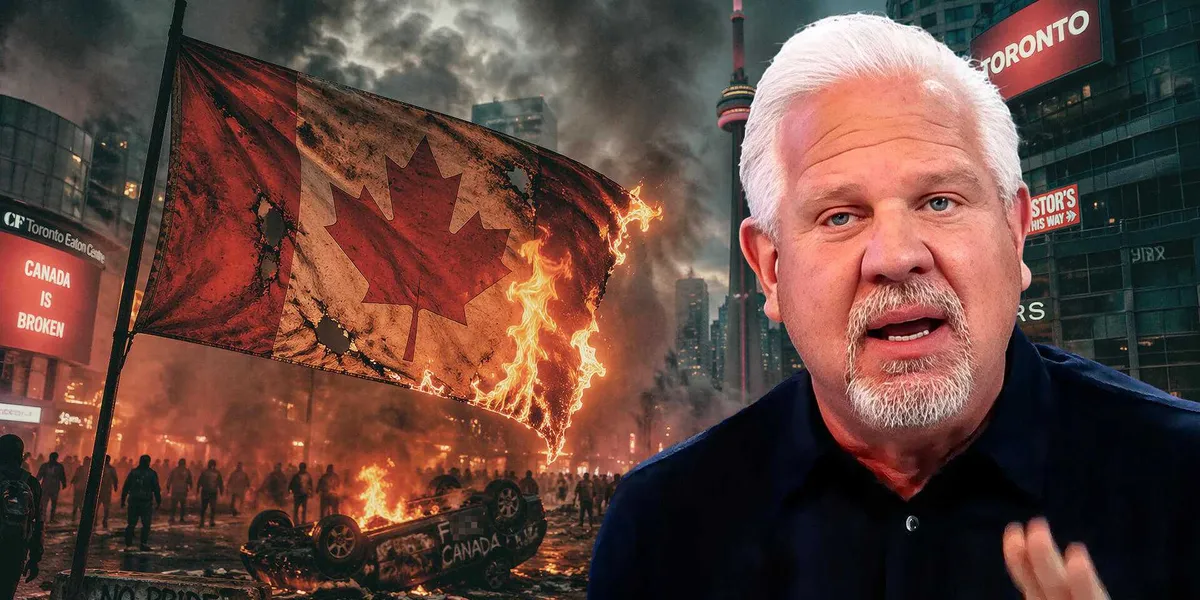
Glenn Beck lays out a blunt yardstick for liberty and then uses it to judge Canada, arguing the country has abandoned those core pillars. He recites what a truly free nation needs — “rule of law,” “free, fair, and regular elections,” “protection of individual rights,” “separation of powers,” “independent judiciary,” “a free press and open information,” “civilian control of the military,” “protection of minority rights,” “economic freedom and property rights,” and “a culture that values freedom.” Beck then lists twenty recent examples he says prove Canada is moving away from freedom and toward centralized control.
To make his point, Beck dives into scandals, starting with a lab controversy and moves into financial corruption that followed. He points to a security scientist who sent live samples to Wuhan and alleged cooperation with the Chinese military, and claims Parliament repeatedly blocked scrutiny and delayed disclosure. “That’s rule of law being violated and separation of powers being violated,” says Glenn. He follows that with reports of roughly $400 million in corrupt spending that were swiftly shut down by the government, and he notes, “Accountability, independent oversight — violated,” Glenn notes.
Beck argues the crisis deepened when power consolidated at the top and normal checks vanished. After a 2025 leadership change, he says an elite slice of the population installed a new prime minister while the House of Commons sat idle for months and executive orders ruled without debate. “No oversight, no debate, no votes. Where’s your representation? Separation of powers? That’s not a democracy. That’s ruled by fiat,” Glenn warns, and he ties that to allegations of foreign meddling in past elections.
The claim of foreign interference is paired with stories of uneven justice and election flaws that, Beck says, erode trust. He highlights cases where candidates allegedly benefited from foreign backing and where postal or ballot errors shifted outcomes in close races. A Liberal MP allegedly encouraged claims on a bounty against an opponent with no consequence, and Beck underscores the point: “Equal application of the law — violated,” says Glenn. He asks whether close results and party switching amount to “Democracy by design, or is it democracy by manipulation?” he asks.
When protest met government force, Beck sees a dangerous pattern of chilling dissent. He points to the Emergencies Act actions against protestors, freezing bank accounts and targeting supporters, then notes courts later called the use unjustified. “That’s a silencing of free speech and assembly and property rights” as well as an abandonment of “judicial authority and rule of law,” Glenn emphasizes, arguing that punishing citizens for peaceful dissent is a clear slide away from liberty.
Information flow and cultural control are next in Beck’s tally, with laws that reshape news and streaming rules. He criticizes legislation forcing big platforms to compensate news outlets and another law that imposes content quotas on streaming services, arguing these measures let the state nudge what people see and hear. “Free press, information flow — controlled,” he asserts, and he adds that these moves infringe on expression: “That’s [violating] speech” and “cultural expression influenced by the state,” Glenn declares.
On economic freedom and property rights, Beck catalogues taxes, mandates, and land seizures that bite into private ownership. He notes the carbon tax changes disguised as consumer relief while hidden regulations drove prices up and controversial EV rules were floated before being masked as indirect emissions targets. “Transparency? There’s none there,” he observes, and when governments push fast-track bills to override local bylaws or quietly acquire farmland, Beck warns: “Property rights? Optional.”
Specific expropriations and secret deals crystallize that warning in Beck’s telling. He points to a confidential takeover of hundreds of acres of farmland under NDA pressure and threats of forced expropriation, with local owners blindsided after the fact. Glenn calls it yet another violation of property rights and repeats the charge plainly: “No property rights,” Glenn reiterates. Those cases, he argues, show an appetite for converting private land to state-directed projects at citizens’ expense.
Beck also flags examples where public institutions compete with private citizens and where local governance imposes heavy burdens. He highlights municipal grocery stores that would undercut private competitors while avoiding the same tax rules, and he points to forced municipal mergers that left homeowners facing sudden 50 to 60 percent tax hikes. In his view, these moves turn government into a competitor and strip ordinary people of fair-market protections.
Regulatory overreach, Beck says, now bubbles down into ordinary life, with provinces moving toward permission-based rules for everyday activities. He points to proposals that would force approvals for simple trades and services and levy crushing fines for noncompliance, arguing this makes entrepreneurship a bureaucratic maze. “Economic freedom? Gone,” Glenn concludes, and on firearms bans he asks sharply, “[Are] there any property rights?” he asks, noting buyback programs that were called voluntary while penalties loomed.
Health policy and speech laws round out Beck’s catalogue, and here his tone grows urgent. He describes the expansion of Medical Assistance in Dying and the rise in cases since safeguards were eased, warning about a system that treats death as a solution when care is lacking. “When the state controls your health care and offers death as a solution to its own failures, you’re no longer a citizen. You’re a cost center,” Glenn warns, tying medical policy to the broader loss of dignity and rights.
Finally, Beck warns that criminalizing dissent and even taxing exit could seal the drift toward managed rule. He calls out proposed hate-crime expansions as vague tools that could silence religious belief and peaceful protest, and he notes talk of a hefty “exit tax” for citizens who leave. “There’s no freedom of speech there,” he stresses, and he asks, “Isn’t that a Berlin wall of sorts?” asks Glenn. “Now recognize America, this is your future,” says Glenn. “We are already letting unelected bureaucrats and activists and judges rewrite the rules.” “If we allow and tolerate foreign interference and media capture; if we accept that the government can freeze your bank account for protesting, seize your farm for progress; if we trade liberty for equity, safety, and Canadian content, we’re going to wake up in the morning in exactly the same place.”
