
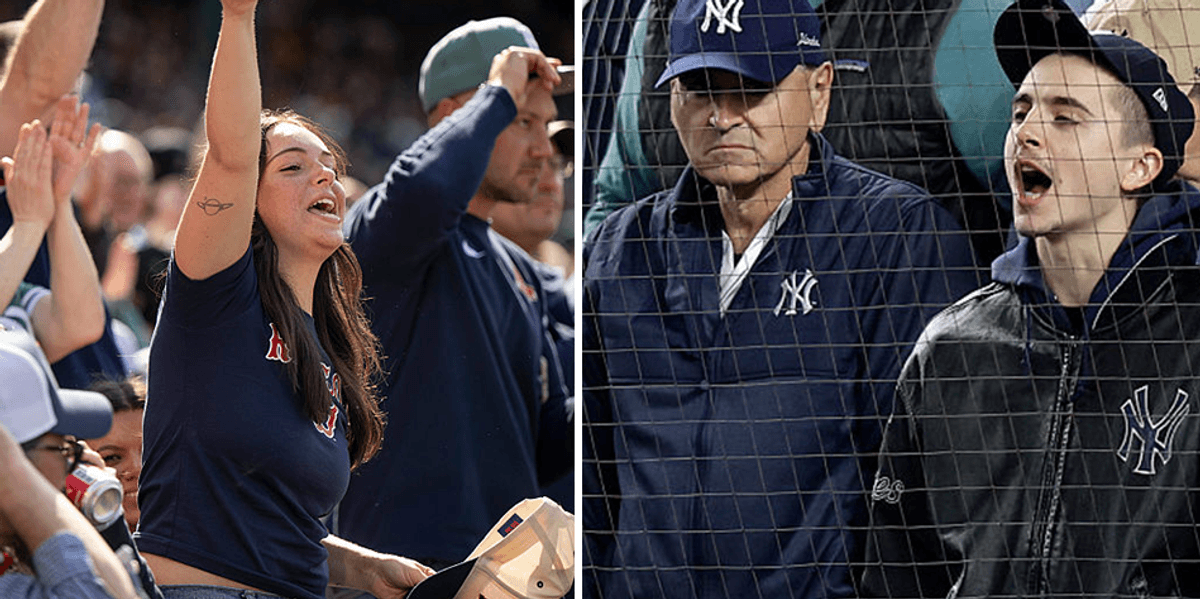
This piece walks through a large analysis of MLB fandom on social media, showing which fanbases leaned hardest into negativity and who kept conversations mostly upbeat. It summarizes findings from a study of over one million fan comments on team pages, laying out where curse words and negative sentiment clustered. The results are surprising in places and obvious in others, and they reveal how team size, moves, and local passions shape online tone.
Fans often assume the loudest city voices equal the foulest language, but that proved only partially true. New York Yankees supporters ranked fourth for comments containing swear words and third for overall negativity rather than sitting at the very top. That nuance matters when judging a fanbase based solely on reputation.
The highest share of negative comments came from Boston, where Red Sox chatter showed 27.6 percent negativity in the sampled threads. Reddit discussions were raw and unfiltered, with the top thread titled “The F**kin Lineup” producing remarks like “The lineup f**king sucks and we can only win when the starting pitchers go deep.” Those kinds of posts pushed Boston to the top of the negativity chart.
Athletics fans landed second in negativity, a result that tracks with the team’s upheaval and departing fanbase in Oakland. Relocation drama and uncertainty stiffened the tone, and more than 6 percent of Athletics comments contained explicit curse words. On the curse-word frequency list, Oakland led with “f**k” as the most common expletive, with Boston close behind.
“The Colorado Rockies turned out to be the most positive fandom since 46.45% of their comments had a positive sentiment, followed by the St. Louis Cardinals and the Washington Nationals,” a Vegas Insider spokesman told Fearless. That result pushed Colorado into the unexpected role of the most upbeat community in the dataset. The Rockies’ subreddit showed a higher ratio of supportive, optimistic messages than most other teams.
St. Louis stood out for having the fewest negative comments overall, making Cardinals threads noticeably calmer than many rivals. Cardinals supporters were the only group with under 20 percent negative sentiment in the sample, which is a meaningful gap from the top negative squads. That steadier tone surfaced even during tense game stretches.
Toronto Blue Jays fans did not dominate the politeness rankings despite Canadian stereotypes about courtesy. In the analysis, Jays commenters landed 20th in positive comments and 13th when ranked by least negative comments. So national reputation did not automatically translate to friendlier online behavior for that fanbase.
The Yankees still topped several raw-volume metrics, posting the most comments that contained swear words in absolute numbers. About five out of every 100 Yankees-related posts included swear language, and the team also produced the highest total number of negative comments. Those totals reflect how sheer size of a fanbase can inflate absolute counts even when rates are middling.
Volume matters: larger fan communities create more content, which raises the chance of both fiery and friendly posts. A team with millions of followers will naturally register more curse-containing comments than a smaller market even if the relative share is lower. That distinction helps explain why some clubs rank differently by rate versus raw count.
The study used sentiment analysis across team forums, filtering more than a million posts for negativity markers and explicit swears to build comparative percentages. That approach captures tone but can miss context like sarcasm, quoted insults, or heated rival banter that isn’t sincere. Still, the scale gives a strong snapshot of where fans lean conversationally.
Local events and franchise decisions clearly shift online mood: relocation announcements, losing streaks, and roster controversies all spike negativity. Oakland’s relocation fallout and Boston’s passionate expectations are examples where off-field stories shaped on-field chatter. The timing of the sample matters when interpreting these rankings.
Metrics separated curse frequency from sentiment so a fanbase could be high on one list and middling on another. A group might use colorful language often yet maintain an overall supportive tone, or it could be quietly negative without many swear words. Distinguishing those signals paints a clearer picture than a single headline stat.
For readers curious where to hang out if you want calmer threads, St. Louis and Colorado surfaced as safer bets in this dataset. If fiery, take-no-prisoners discussion is your thing, Boston and Oakland still deliver heated exchanges. Either way, the online fan landscape is diverse and driven by more than hometown manners.
These rankings are a snapshot, not a permanent label; forums evolve with seasons, trades, and cultural moments. A dramatic win streak, a divisive trade, or a stadium move can flip sentiment quickly. Fans who check back in a few months may find a very different tone on their team pages.
Mindful readers can use these findings to choose their online baseball communities, whether they want competition, comic relief, or steady support. The data shows surprising pockets of positivity and predictable hotbeds of heat, but it also reminds us that online fandom is noisy, fluid, and always subject to the next big play.
