
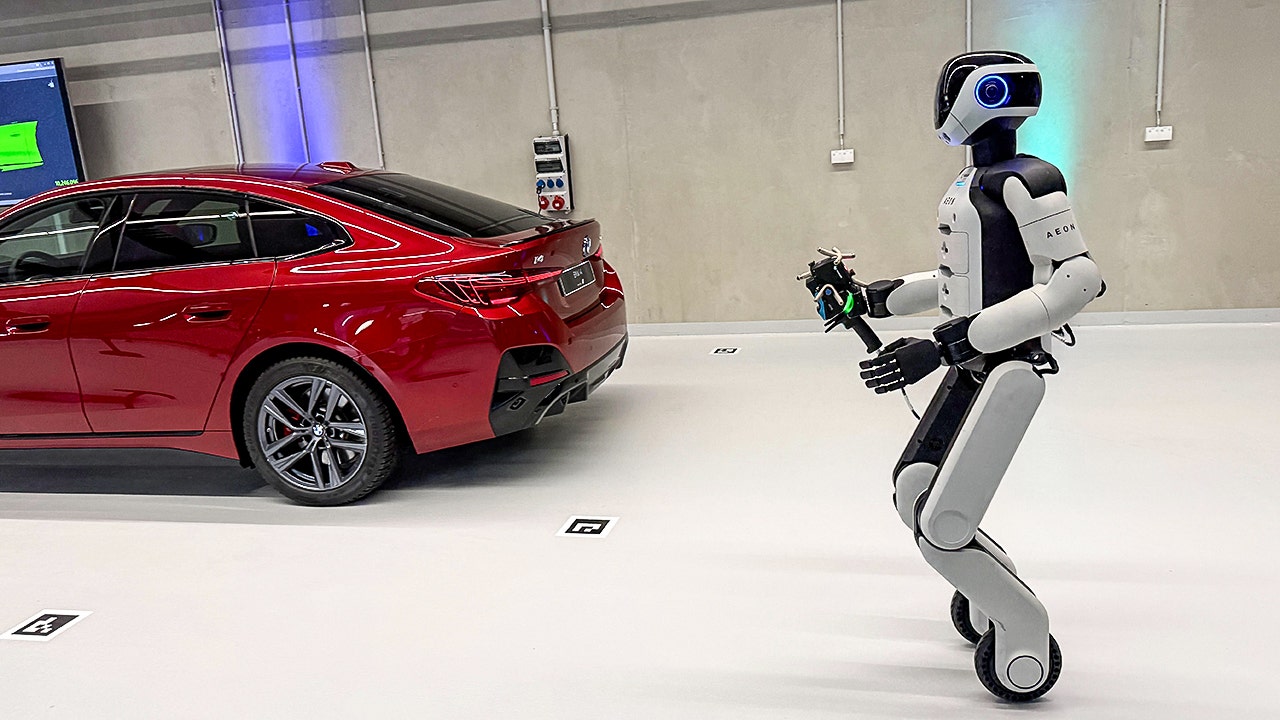
BMW is expanding a bold experiment: humanoid, AI-driven robots are moving out of cages and into working factories, following a successful pilot in Spartanburg and new testing in Leipzig. These machines, built by Hexagon Robotics and dubbed AEON, navigate real production floors using AI-based motion control and sensors that let them adapt on the fly. The shift tests whether robots that behave more like people can smooth bottlenecks, speed up production, and slot into spaces already designed for human workers. The result could reshape how cars are built and what factory work looks like.
For decades auto plants relied on rigid robotic arms that needed controlled conditions and fenced-off areas. The new approach places humanoid machines into the same spaces humans use, so they can reach tools, move between stations, and handle tasks without a full line redesign. BMW moved from demonstration videos to live production pilots, showing these robots can operate where products are actually made. That real-world context is the big change here.
Earlier trials used a model known as Figure 02 to position sheet metal precisely for welding on the X3 line, a detail work that keeps an assembly sequence from stalling. Those precise tasks may sound small, but they are critical: a slight misalign can halt a station and ripple delays through the whole line. Reports say those robots contributed to the production of more than 30,000 vehicles, which gave BMW confidence to expand beyond a single plant. Success on repetitive, high-precision jobs opened the door to wider tests in the Leipzig iFACTORY environment focused on electric vehicle production.
The new AEON units arrive from Hexagon Robotics with a different design philosophy: situational awareness plus autonomous motion control. Built-in sensors feed real-time data so the robot can adjust trajectories, avoid people, and compensate when parts shift or arrive out of place. Hexagon calls this capability “Physical AI,” a label that captures both sensing and on-the-spot decision making. That combination means the machine keeps working when the unexpected happens rather than stopping for human recalibration.
BMW executives stress the point that this rollout is about learning what actually works on the line and not about wholesale, overnight layoffs. Michael Nikolaides, who oversees BMW’s production network, says: “Digitalization improves the competitiveness of our production, here in Europe and worldwide. The symbiosis of engineering expertise and artificial intelligence opens up entirely new possibilities in production.” The humanoid shape is practical too: factories are already set up for humans, so a robot that fits the existing footprint avoids expensive rebuilds.
Manufacturing spaces are messy and dynamic: workers move, fixtures shift, and parts arrive at slightly different orientations. Traditional automation demands tightly controlled conditions or expensive jigs to remove that variability. By contrast, AI-driven humanoids are built to handle the mess, adjusting grip, path, and timing without calling a supervisor for every deviation. That resilience makes them a better match for complex assembly lines than earlier generations of robots.
The implications reach beyond factory floors. Faster, more flexible production can lower costs over time and change the economics of building electric and gasoline cars alike. Routine or physically demanding steps are likely to migrate to machines, while human roles tilt toward oversight, maintenance, and more skilled work. Training and workforce planning will matter more than ever as plants evolve into hybrid teams of people and adaptive machines.
We are at a crossroads in industrial robotics: hardware that looked futuristic in demo clips is now being judged where it counts—inside operating assembly lines. If AEON-style units prove reliable and scalable, expect a steady increase in humanoid deployments at factories and warehouses. Would you feel comfortable trusting a humanoid robot to help assemble your next car, or should people keep the most critical tasks?
