
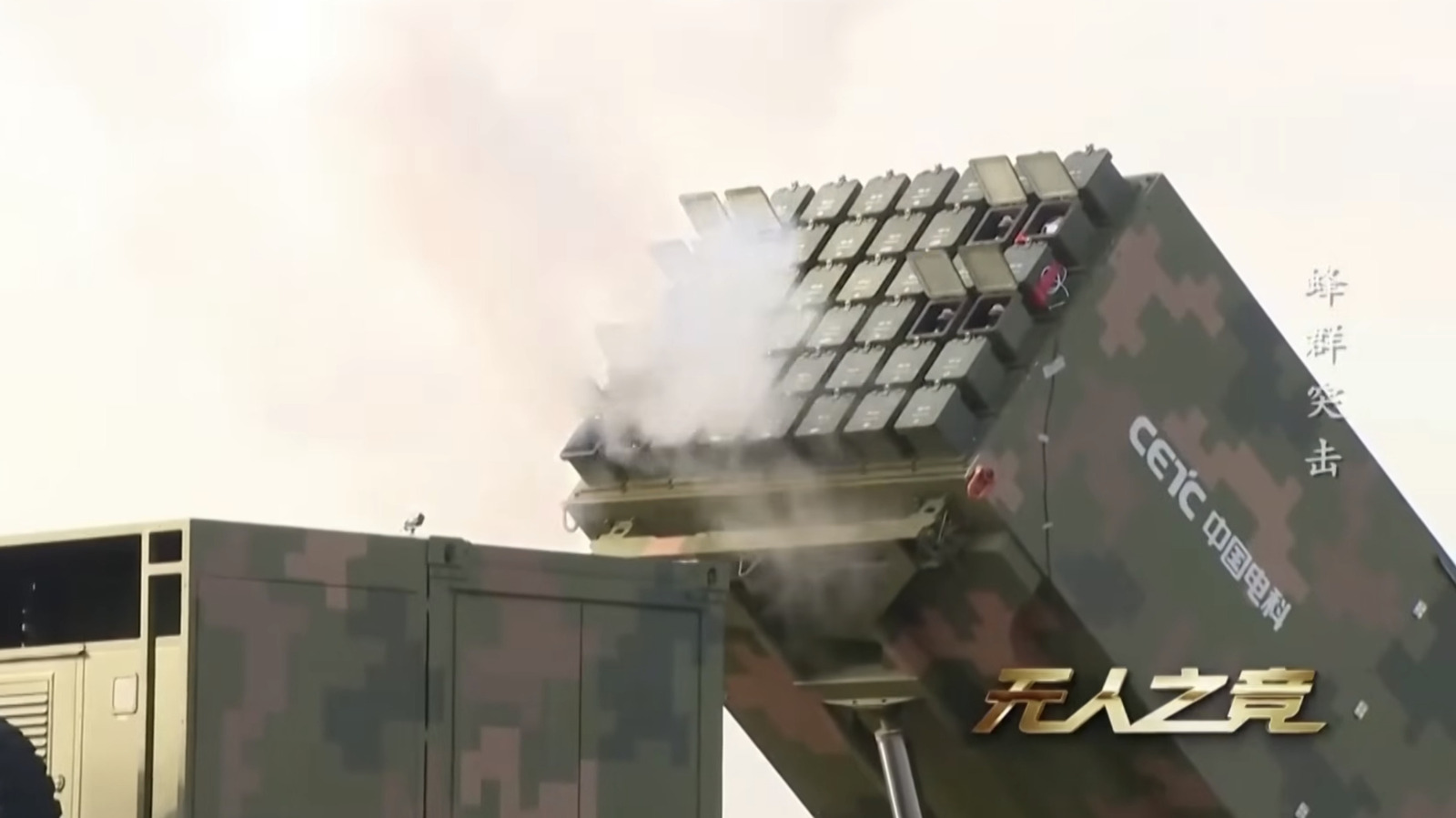
China’s state-run TV recently showcased an AI-driven drone swarm system claimed to control up to 90 aircraft at once, and this article breaks down what that demonstration likely showed, how the technology operates, what it can do, and the kinds of risks and responses it raises.
The broadcast focused on a coordinated flight display that highlighted numbers, formations, and apparent autonomy rather than a single remotely piloted craft. The footage featured tight timing and synchronized maneuvers that suggested centralized choreography combined with on-board decision making. That mix is what makes modern swarms both impressive and complicated.
At the heart of systems like this are algorithms that let many drones share a mission and adapt in real time. They rely on a mix of GPS, inertial sensors, and visual or lidar inputs to keep spacing and orientation, while machine learning models help predict and smooth group behavior. Those layers of sensing and computation let the group act as one without micromanaging each unit.
Swarm control can be centralized, decentralized, or hybrid, and the demonstration appeared to use elements of all three. A central planner can assign formations and targets, while local controllers handle collision avoidance and immediate reactions. Hybrid setups combine the robustness of local autonomy with the strategic oversight of a central brain.
Hardware is relatively simple in appearance: small rotary drones with cameras, radios, and compact compute modules. The real complexity is power management and payload tradeoffs, because batteries and processors limit endurance and the weight they can carry. Lightweight frames and efficient flight controllers make the coordinated choreography possible within those constraints.
Communication is the glue for large numbers of drones, and resilient links matter more than raw bandwidth. Mesh networking lets units relay commands and telemetry, so the swarm keeps working even if some nodes drop out. Techniques like frequency hopping, encrypted channels, and redundant pathways help resist interference, though none are foolproof against sophisticated jamming.
On-board autonomy is increasingly doing the heavy lift, with edge AI handling perception and immediate decision making. That reduces latency and the need for constant uplink control, which is important if the swarm operates beyond line of sight. It also raises questions about verification, because emergent behaviors can be hard to predict and test exhaustively.
Demonstrated capabilities tend to be broad: tight formations for display, area sweeps for surveillance, and coordinated delivery routes for goods or sensors. The same choreography that makes a light show mesmerizing can be adapted for mapping, search and rescue, or persistent monitoring. The dual-use nature of those capabilities is one reason these demos draw attention.
Countermeasures exist and are evolving alongside swarm tech, including directed energy, kinetic interceptors, and electronic warfare aimed at breaking links or spoofing navigation. Physical capture and safe-down protocols for errant drones are used in some places to reduce hazard. Regulation, geofencing, and airspace management will play big roles in keeping crowded skies safe as swarm use grows.
From a systems perspective, scaling from tens to hundreds of drones brings both diminishing returns and new challenges in coordination, spectrum use, and safety assurance. Incremental improvements in battery energy, compute per watt, and robust networking will make larger swarms more practical over time. Observers should expect steady refinement rather than overnight leaps.
What to watch next are public tests that reveal operational range, persistence, and how gracefully systems handle failures in the real world. Manufacturers will push for commercial applications while militaries explore tactical uses, so transparency and standards will matter more than ever. The technology is here and progressing, and how societies adapt will shape whether it is mostly useful, mostly risky, or some of both.
