
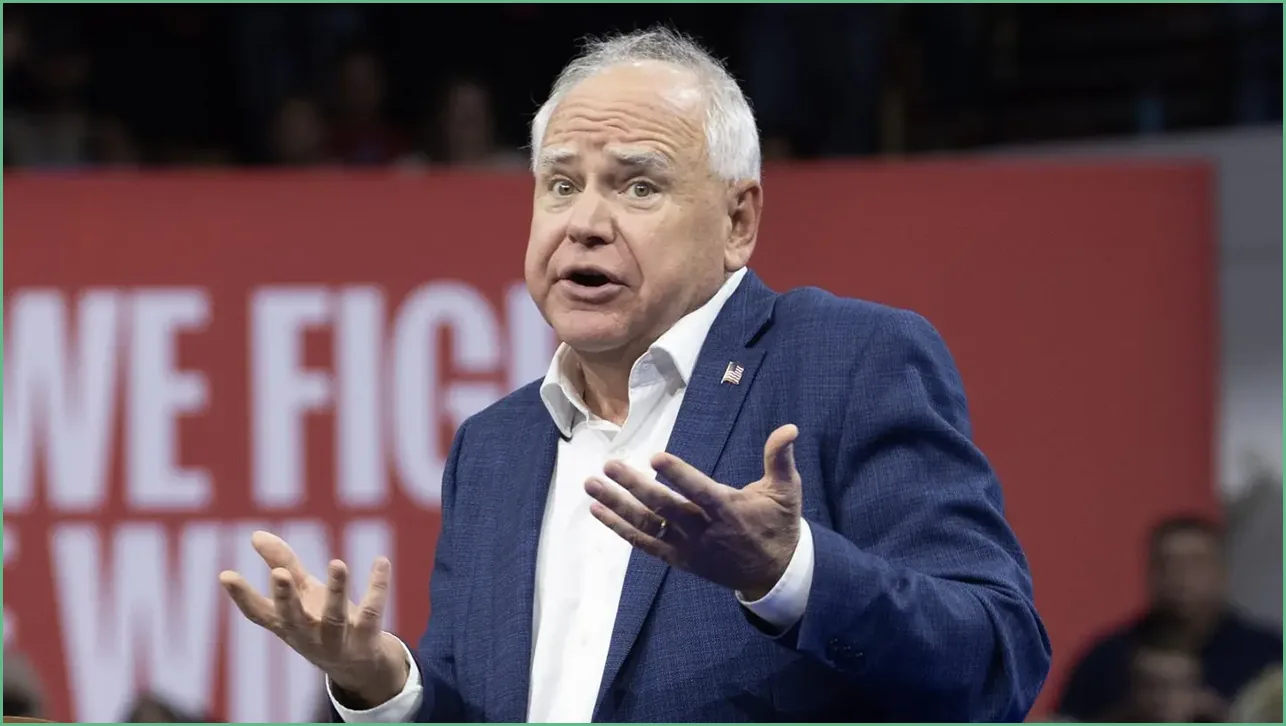
This piece examines the widening Minnesota fraud scandal tied to Gov. Tim Walz, the mounting federal probe, and the legal theories that could turn political failure into criminal exposure. It argues from a Republican perspective that the governor’s pattern of inaction and political calculations may amount to criminally actionable conduct, and it outlines the statutes and facts investigators will likely focus on as they sort through evidence and sworn testimony.
“I hereby plead incompetence and stupidity.” That line captures the defensive posture Walz might adopt if federal prosecutors come calling. Political theater only goes so far when nine federal agencies are sorting through years of client records, contracts and whistleblower reports.
What started as isolated reports about program abuse has metastasized into a vast, multi-program scandal touching child nutrition, daycare, housing, healthcare and autism services. The allegations are that fraudsters exploited federal dollars with alarming ease while state leadership failed to clamp down. The scale and persistence make this look less like negligence and more like a political choice to tolerate corruption.
Whistleblowers and internal state employees say repeated warnings were ignored for years, and that some officials who raised alarms faced retaliation. If true, those are the sorts of patterns prosecutors look for when assessing intent and cover-up. A pattern of discouraging investigations and sidelining critics can convert incompetence into something far worse in the eyes of the law.
Nine federal agencies, including the FBI and the Department of Justice, have mobilized resources to peel back the layers of the scheme and determine who profited and who enabled the thefts. Investigators are not just tallying losses; they are following the chain of decisions inside state government. That means evaluating whether officials deliberately impeded inquiries or misled auditors and investigators.
From a criminal-law standpoint there are clear pathways to charges beyond the raw thefts. 18 USC 371 addresses conspiracy to defraud the government, and 18 USC 2 covers aiding and abetting, which can attach liability to those who knowingly assist or ignore criminal schemes. 18 USC 3 targets those who conceal crimes and hinder apprehension, trial or punishment, and it becomes relevant the moment evidence suggests active concealment.
Prosecutors will be looking for signs that Walz or his allies knowingly obstructed investigations, destroyed or withheld documents, or interfered with whistleblowers. Those acts can convert a political scandal into an obstruction case that stands on its own. Intent is hard to prove, but a trail of retaliatory conduct and suppressed evidence is persuasive to a grand jury.
Politics provides motive. Officials who prioritize votes over law enforcement create perverse incentives that can explain prolonged inaction. When a voting bloc becomes politically indispensable, tough enforcement can be treated as a risk rather than a duty, and the temptation to look the other way is obvious. That motive is political reality, and prosecutors will weigh it alongside the documentary record.
Audio recordings and internal communications that have surfaced add fuel to investigators’ work. Conversations that suggest pressure to protect alleged perpetrators or to return ill-gotten gains in ways that avoid scrutiny are precisely the sort of evidence prosecutors use to show corrupt intent. Such materials may be pivotal if they corroborate whistleblower testimony about interference.
The governor’s public missteps and gaffes, while not criminal by themselves, have narrowed his political cushion and made accountability more likely. When a leader’s credibility is already damaged, allegations of selective enforcement look less like conspiracy theories and more like plausible explanations. Political vulnerability makes rigorous investigation more politically feasible.
Defense strategies will likely center on incompetence and poor management rather than deliberate wrongdoing, arguing misfeasance rather than malfeasance. That is a familiar playbook: claim mistakes were bureaucratic, not criminal, and hope jurors accept a narrative of clumsy governance. But repeated warnings, retaliatory behavior and a pattern of obstructive moves can overwhelm that defense.
As the DOJ and U.S. attorney sift through documents, subpoenas and testimony, the legal calculus will harden. Investigators will decide whether to seek indictments for conspiracy, aiding and abetting, obstruction or accessory after the fact. For voters and observers, the question is whether political considerations were allowed to trump the obligation to enforce the law.
Whatever the final outcome, the scandal exposes a deeper problem: when political convenience trumps enforcement, the public pays and trust erodes. If prosecutors conclude that state leadership chose politics over policing, they will have a choice: treat this as a tragic case of mismanagement or hold accountable those who turned public programs into a slush fund for fraud and political gain.

3 Comments
Walz should be one of the first to hang at GITMO for Sedition, Treachery, Mutiny and Treason!
Under the US Constitution he FULLY qualifies and has allowed so many enemies of America to gain a foothold and do real damage while he became the “Pied Piper Enemy Within” to gather all of the Vicious RATS that want to destroy America from within; that he should be apprehended immediately with all of them for GITMO!
Arrest him now.!
We’ve gotten tiered of hearing about his working with the Samali Muslims to steal taxpayers money and go after the Communist Bitch while your at it.
I also heard that the Communist Bitch in Maine is involved in working with tampon Tim and Muslim Illhan, on the Samali theft.
I wonder how much money she got out of it.
True and these are absolute egregious Criminals and Traitors! What the hell is up with the DOJ AG filing such charges against these Enemies Within!