
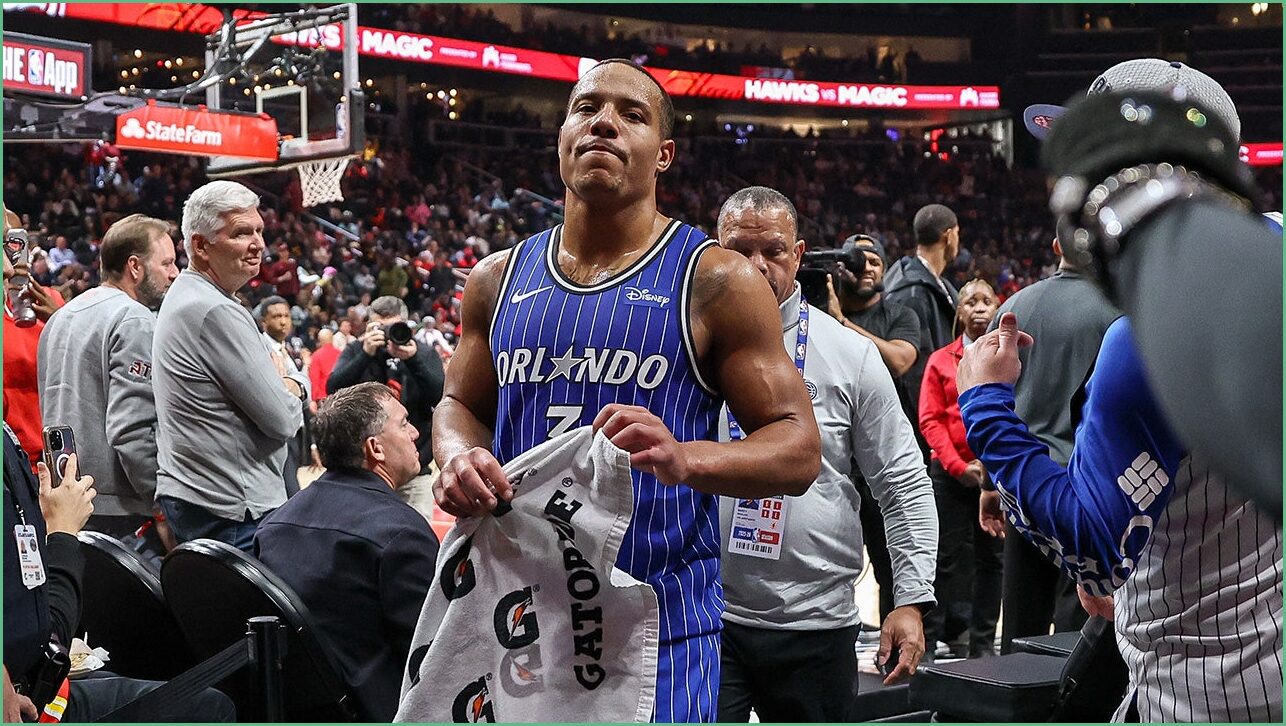
Desmond Bane’s Tuesday ejection became the focal point of a messy night for the Orlando Magic and a talking point across the league. The moment — a bat-away that struck an opponent’s head — changed the flow of the game and left plenty of questions about intent, officiating, and the ripple effects on both teams. This article walks through what happened, how the league responded, and what it could mean for each roster involved.
“Orlando Magic guard Desmond Bane was ejected after swatting a ball off Atlanta Hawks players Onyeka Okongwu’s head during the team’s loss on Tuesday.” The call came after a heated sequence late in the contest, and the ejection shifted momentum immediately. Players on both benches reacted in real time, and the arena buzzed with uncertainty about whether it was intentional or just a split-second basketball play.
The play itself looked like a quick defensive swipe gone wrong, but context matters in these moments. Bane has a reputation as a high-effort guard who pressures passing lanes and contests touchy plays, yet knocking the ball off a player’s head crosses a line in how officials evaluate player safety. Referees ruled it worthy of an ejection, and the team had to scramble to adjust rotations on the fly.
From Orlando’s perspective, losing a key guard in that moment forced immediate substitutions and strategy shifts that the Magic could ill afford. Coaches value composure, and when one of your lead perimeter defenders is removed, it changes matchups and late-game planning. The team tried to regroup, but the disruption was visible in defensive coverage and offensive rhythm.
For the Atlanta Hawks, the incident spotlighted Onyeka Okongwu, who has been a rising presence in the paint and on the boards. His role in the sequence was incidental, and the focus instead zeroed in on how the franchise and its medical staff handled the aftermath. Hawks players and coaches called for clarity from the officials while avoiding inflammatory language in public comments after the game.
League disciplinarians typically review ejections like this one for potential fines or suspensions, and the NBA has been firm on protecting players from dangerous contact. The Department of Player Safety will likely examine the replay to determine whether additional discipline is warranted beyond the in-game punishment. Both teams and the player involved will receive notice if the league decides further action is needed, and that process can affect availability for upcoming matchups.
Fans and analysts split on intent versus accident, with social feeds filling instantly after the whistle. Some argued it was a basketball play that accidentally hit a head, while others viewed the movement as reckless. Either way, the optics matter; when a play looks dangerous, the reaction can escalate quickly and bring further scrutiny from commentators and league offices.
Coaches now have to weigh repercussions when planning rotations and minutes for the next few games, especially if the league hands down any additional penalties. Teams are also accountable for maintaining discipline to avoid giving opponents easy advantages through ejections or technicals. This incident will be cited in meetings about situational awareness and how players handle contested plays under pressure.
Beyond punishment and strategy, moments like this test locker room culture and player leadership. Veterans often step up to calm tensions and refocus the group after disruptive events, and how the Magic respond in public and behind closed doors will be telling. The remainder of the schedule offers opportunities for both teams to move past the episode or let it simmer into a narrative that follows them through the season.
