
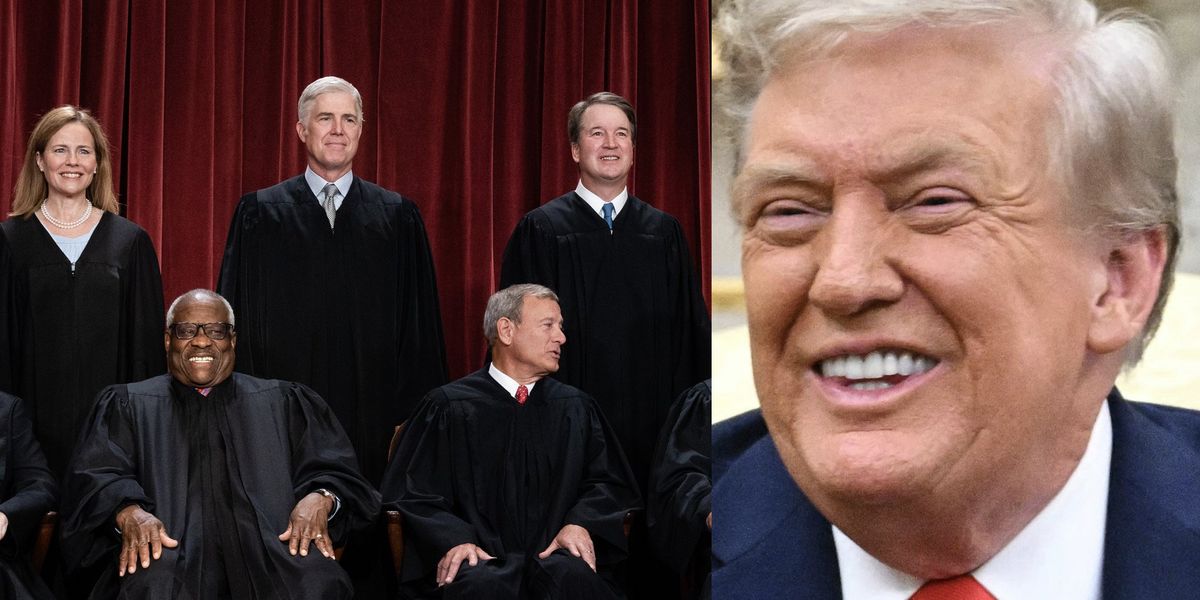
The Trump administration recently celebrated a significant win at the U.S. Supreme Court. The court’s decision, coming in at a close 5-4, overturned a previous ruling that had blocked the defunding of $783 million from the National Institutes of Health (NIH). Interestingly, Chief Justice John Roberts sided with the liberal justices, dissenting from the majority.
The decision only impacts a fraction of the planned $12 billion cuts to the NIH, but it’s a clear victory for the administration. The Trump team argued that certain NIH studies, particularly those concerning minority, gay, and transgender groups, lacked scientific merit and weren’t a good use of taxpayer dollars. This aligns with President Trump’s firm stance on gender, as he declared in his inauguration speech that “there are only two genders, male and female.”
Chief Justice Roberts’ dissent was brief, focusing on whether the lower court had the authority to stop the funding cuts. He stated, “This relief — which has prospective and generally applicable implications beyond the reinstatement of specific grants — falls well within the scope of the District Court’s jurisdiction.” Meanwhile, Justice Ketanji Brown Jackson was more vocal in her 21-page dissent.
Justice Jackson likened the decision to a game of Calvinball, a reference to a comic strip where the only rule is that there are no fixed rules. She noted, “We seem to have two: that one, and this Administration always wins.” Her words reflect the frustration of those opposing the administration’s actions.
The petitioners, including a union and 16 Democratic state attorneys, expressed concern over the potential impact of the funding cuts. They argued that even a temporary halt would disrupt multi-year projects, already funded by Congress, and cause significant setbacks in public health advancements. These concerns were highlighted in their lawsuit.
In June, U.S. District Judge William Young had ruled against the funding cuts, describing them as “arbitrary and capricious.” Young, a Reagan appointee, stated that the administration’s motivations were clearly rooted in racism and homophobia. “I’ve never seen government racial discrimination like this,” he remarked, questioning the lack of shame in such actions.
This ruling follows the administration’s decision to end a Carter-era decree on government hiring, a move that could bring about major changes. Critics argue that the administration’s policies are regressive, while supporters believe they restore traditional values. The debate continues to stir emotions across the nation.
The Supreme Court’s decision underscores the ongoing ideological battles within the U.S. judicial system. As the Trump administration continues to push its agenda, the court’s role in shaping national policy becomes ever more apparent. This case is just one example of the broader political landscape.
Supporters of the administration see this as a step towards greater fiscal responsibility and accountability. They argue that taxpayer money should be used effectively and not wasted on studies they deem unnecessary. This perspective aligns with the conservative view of limited government intervention.
On the other hand, opponents fear that these funding cuts will harm marginalized communities. They argue that research into minority and LGBTQ+ health issues is vital for addressing health disparities. The divide between these views highlights the complexity of the issues at hand.
As the nation watches the unfolding events, the question of how to balance scientific research with fiscal responsibility remains. The Trump administration’s approach reflects a prioritization of traditional values over progressive policies. This decision is a testament to the administration’s influence on national policy.
The Supreme Court’s ruling will likely have lasting implications for future funding decisions. It sets a precedent for how similar cases might be handled in the future. The outcome of this case is a reminder of the power dynamics at play in the U.S. government.
While the administration celebrates its victory, the opposing side continues to voice its discontent. The legal challenges and public debates serve as a microcosm of the larger cultural and political divides in America. These tensions are likely to persist as the nation grapples with its identity.
The case also raises questions about the role of the judiciary in shaping societal norms. As the courts make decisions that affect national policy, their influence extends beyond the legal realm. The implications of this ruling will be felt across various sectors of society.
Amidst the controversy, the Trump administration remains steadfast in its vision for America. Its policies reflect a commitment to conservative principles and a rejection of progressive ideologies. This approach continues to resonate with a significant portion of the American populace.
The Supreme Court’s decision is a testament to the influence of conservative thought in today’s political climate. It demonstrates the administration’s ability to navigate the legal system to achieve its goals. The ruling is a victory for those who support the administration’s agenda.
As the nation moves forward, the debate over NIH funding and related issues will likely continue. The court’s decision is just one chapter in a larger story of political and social change. The future of these policies remains uncertain, but their impact will be felt for years to come.
For now, the Trump administration can count this as another win in its ongoing effort to reshape America. The Supreme Court’s ruling is a clear indication of the administration’s ability to achieve its objectives despite opposition. The battle over the nation’s values and priorities continues.
