
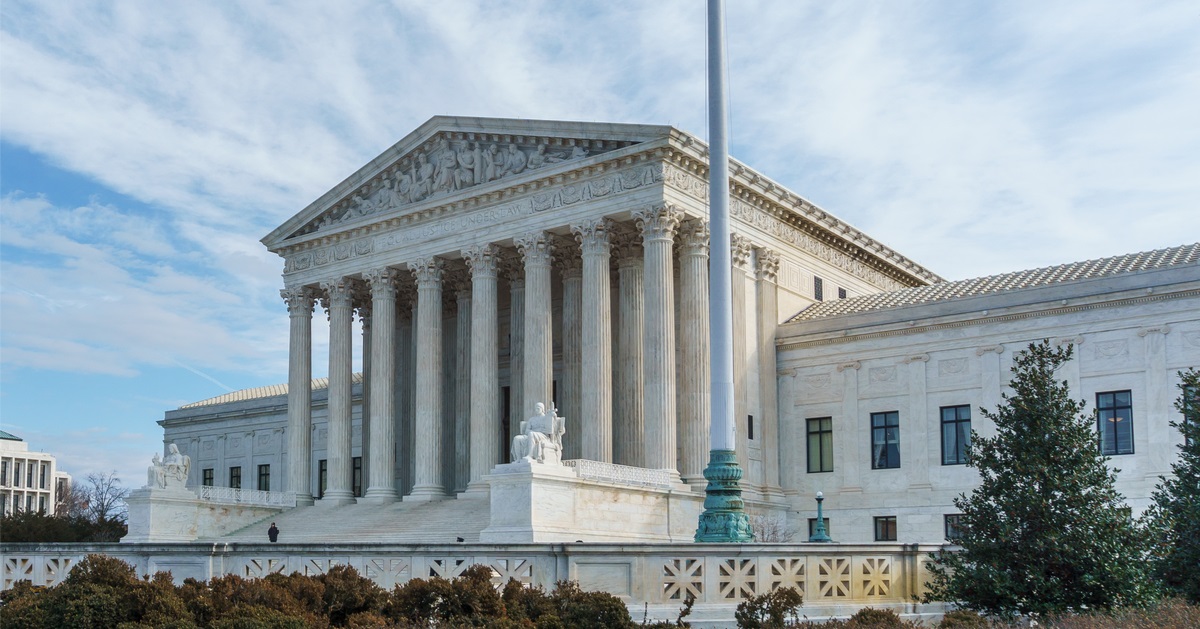
The battle over same-sex marriage rights is heating up once again as a former county clerk, Kim Davis, seeks to overturn the landmark Supreme Court decision in Obergefell v. Hodges. This case, decided over a decade ago, established a constitutional right to same-sex marriage across the United States. While celebrated by many, including former President Barack Obama, Davis is challenging its validity based on her religious convictions.
Kim Davis, who served as the Rowan County Clerk, made headlines in 2015 when she was jailed for six days. Her imprisonment came after she refused to issue marriage licenses to same-sex couples, citing her religious beliefs. The legal fallout from her actions resulted in a hefty financial penalty, with a jury awarding $100,000 in damages to the plaintiffs, plus $260,000 in attorney fees.
Davis has now filed a writ of certiorari with the Supreme Court, arguing that the 14th Amendment’s religious freedom protections should invalidate the judgment against her. She contends that using the amendment’s due process clause to justify Obergefell was “egregiously wrong.” Her legal fight is backed by Mathew Staver, a notable figure from Liberty University and current chair of Liberty Counsel.
Staver, representing Davis, has been vocal in his criticism of the Obergefell decision. He described former Justice Anthony Kennedy’s majority opinion as a piece of “legal fiction.” Staver’s petition emphasizes the significance of Davis’s case, noting that she is the first American jailed for acting on her religious convictions about marriage.
This marks the first instance where the Supreme Court has been directly asked to reconsider the Obergefell decision. ABC News highlighted that Davis might be among the few individuals with standing to request such a reversal. The case has reignited debates about religious freedom and the rights of same-sex couples under U.S. law.
Despite Davis’s efforts, there is skepticism about the likelihood of success in overturning Obergefell. William Powell, who represented the plaintiffs in the original case, doubts that Davis’s arguments will gain traction in the higher courts. He pointed out that judges on the U.S. Court of Appeals showed no interest in revisiting her petition.
ABC News analyst Sarah Isgur echoed similar sentiments regarding the current Supreme Court’s stance. She mentioned that Justices Brett Kavanaugh and Amy Coney Barrett appear uninterested in reopening the case. Justice Neil Gorsuch’s position also seems aligned with maintaining the status quo on same-sex marriage rights.
The public’s attitude towards same-sex marriage has also undergone subtle shifts. Gallup’s polling data shows a slight decline in support, dropping from 71% in 2022 to 68% this year. This downward trend suggests a changing landscape of public opinion, though support remains relatively high.
Conservative voices argue that the Obergefell decision overstepped by redefining marriage, a view championed by figures like Ronald Reagan and Barry Goldwater. They emphasize that marriage has historically been a religious institution. This perspective aligns with Davis’s contention that her religious beliefs should be respected under the Constitution.
Davis’s legal battle is more than just a personal vendetta; it speaks to broader concerns about religious liberty in America. Many conservatives see her case as a pivotal moment to reassert traditional values in the face of modern judicial interpretations. This ongoing debate underscores the tension between personal beliefs and legal mandates in a diverse society.
For those who support Davis, her case represents a stand for religious individuals who feel marginalized by recent legal trends. They argue that the government should not compel individuals to act against their deeply held beliefs. This viewpoint resonates with those who prioritize religious freedom as a fundamental American right.
As the case progresses, it will undoubtedly draw attention from both supporters and opponents of same-sex marriage. The Supreme Court’s response to Davis’s petition could set a significant precedent for future cases. Until then, the nation watches closely as these legal and ideological battles unfold.
