
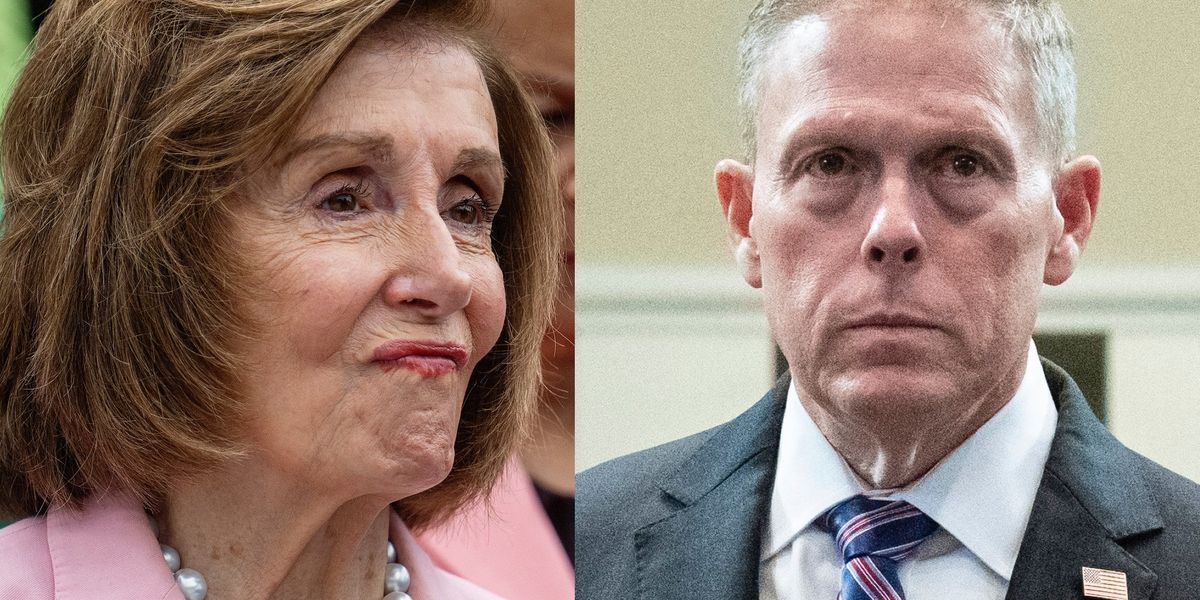
A former Capitol Police chief has expressed strong criticism towards Democratic Rep. Nancy Pelosi following her comments on President Donald Trump’s actions in Washington, D.C. Pelosi accused Trump of using federal power to divert attention from his administration’s shortcomings, particularly in deploying the National Guard. “When I needed assistance, it was denied. Yet when it suited you, you ordered fencing topped with concertina wire and surrounded the Capitol with thousands of armed National Guard troops,” she stated.
Steven Sund, the former Capitol Police chief during the January 6 events, responded assertively to Pelosi’s claims. “Ma’am, it is long past time to be honest with the American people,” Sund wrote, explaining his request for assistance was denied by the Sergeant at Arms on January 3. Despite an offer from the Pentagon, Sund noted he was legally prevented from calling in the National Guard without specific approval.
Sund recounted the dire situation on January 6, emphasizing that his urgent requests were denied for over an hour. “While the Capitol was under attack and despite my repeated calls, your Sergeant at Arms again denied my urgent requests for over 70 agonizing minutes, ‘running it up the chain’ for your approval,” he added. His response quickly gained traction online, with over 16,000 likes in a few hours.
Sund’s remarks challenge Pelosi’s narrative of the January 6 events, as he previously told Blaze News. This comes amid broader discussions about the Capitol’s security and the role of federal authorities. In a related context, D.C.’s mayor faced pressure to remove a Black Lives Matter mural and plaza, highlighting the complex political tensions in the capital.
President Trump, during a recent speech, declared it “Liberation Day in D.C.” and vowed to reclaim the capital. “We’re taking it back under the authorities vested in me as the president of the United States,” Trump asserted, invoking section 740 of the District of Columbia Home Rule Act. He emphasized his commitment to ending crime in the city with every power available.
U.S. Attorney General Pam Bondi echoed Trump’s sentiment at the same briefing, stating, “Crime in D.C. is ending and tending today.” The administration’s focus on combating crime reflects a broader strategy to address public safety concerns. This aligns with the conservative viewpoint that prioritizes law and order.
The events surrounding January 6 continue to be a point of contention between political figures. Conservatives argue for transparency and accountability, particularly regarding the decisions made around Capitol security. The discourse highlights the differing interpretations of responsibility and action during critical moments.
Sund’s detailed account raises questions about the decision-making processes within Capitol security. His insistence on transparency underscores the importance of clear communication and decisive action in crisis situations. This reflects a broader conservative principle of accountability in government operations.
The response from Pelosi and other Democrats following the events of January 6 remains a focal point for conservative criticism. The emphasis on law enforcement and federal intervention aligns with the values of leaders like Ronald Reagan and Richard Nixon. Ensuring safety and order in the nation’s capital is seen as a paramount responsibility.
As the political landscape continues to evolve, the discussions around January 6 serve as a reminder of the complexities of governance. The emphasis on clear, decisive leadership is a cornerstone of conservative ideology. The ongoing debates highlight the challenges and responsibilities faced by those in positions of power.
Sund’s response to Pelosi is emblematic of the broader conservative criticism of Democratic leadership. The narrative of accountability and transparency is central to the conservative critique. As discussions progress, these themes will likely continue to influence political discourse.
The conversation around federal intervention in D.C. reflects ongoing tensions between state and federal authorities. The emphasis on law and order resonates with conservative values, prioritizing public safety and security. These discussions are pivotal in shaping the future of governance in the capital.
The events of January 6 and the subsequent responses underscore the complexities of political leadership. The importance of clear communication and decisive action remains a focal point for conservative criticism. As the nation moves forward, these themes will continue to shape political narratives.
The emphasis on transparency and accountability in government is a key tenet of conservative ideology. This perspective prioritizes the importance of clear decision-making processes and responsible leadership. As political debates continue, these values will likely remain central to conservative discourse.
The discussions surrounding Capitol security highlight the ongoing challenges in balancing safety and governance. The conservative emphasis on law and order reflects a commitment to ensuring public safety. These debates serve as a reminder of the complexities involved in managing national security.
The response to January 6 continues to be a topic of significant political debate. The emphasis on accountability and transparency in leadership is a cornerstone of conservative ideology. As discussions evolve, these themes will likely continue to influence political discourse.
The focus on law and order in the nation’s capital aligns with conservative values of safety and security. The narrative of accountability and transparency remains central to the conservative critique of Democratic leadership. These discussions will continue to shape the political landscape as the nation moves forward.
The ongoing debates around federal intervention in D.C. underscore the complexities of governance. The emphasis on clear, decisive leadership reflects conservative principles of accountability and responsibility. As political discussions progress, these themes will likely remain influential in shaping policy and governance.
