
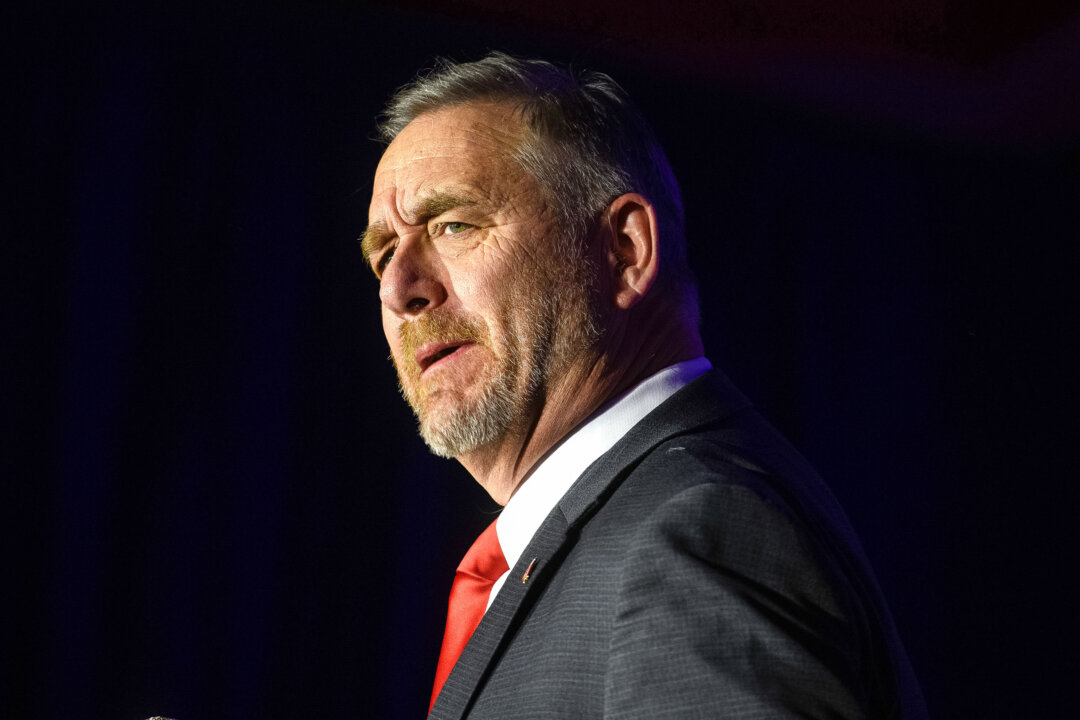
Ohio’s political landscape is stirring up quite a bit of excitement these days. With the Republican primary coming up, there’s a lot of buzz around Vivek Ramaswamy, who recently received a nod of approval from the Ohio Republican Party. This has led to some significant shifts in the race, including Ohio Attorney General Dave Yost stepping back from his gubernatorial ambitions.
Yost, known for his no-nonsense approach, announced his decision to halt his campaign through an email to supporters. While he remains committed to serving as attorney general until his term ends in January 2027, he hasn’t thrown his support behind Ramaswamy just yet. Yost had previously remarked on what he considered to be the state GOP’s hasty endorsement, calling it a “premature coronation.”
Still, the political arena in Ohio is far from settled. With Governor Mike DeWine’s term coming to an end, he reminds us that in politics, a year can feel like a lifetime. Yost, reflecting on the difficulty of the campaign, described the path to nomination as a “vertical cliff,” acknowledging the challenges ahead.
Yost’s focus now seems to be on preserving party unity rather than engaging in a contentious fight over minor differences. He emphasized his desire not to be a divisive figure, stating, “I am simply not that important.” Meanwhile, the Democratic side is also heating up with Amy Acton and potential candidate Sherrod Brown eyeing their chances.
Sherrod Brown, a familiar face in Ohio politics, is stirring concerns among Republicans. Having lost his Senate seat to Trump-endorsed Bernie Moreno, Brown’s possible comeback is seen as a threat by some. Yost voiced his apprehensions, suggesting that Brown’s progressive ideas could unravel years of Republican leadership.
Ramaswamy, on the other hand, had only kind words for Yost, commending his thoughtful campaign and dedication to Ohio. Having launched his own bid for governor in February, Ramaswamy is no stranger to the political spotlight. His background, from Harvard and Yale to founding successful companies, paints him as a formidable contender.
Ramaswamy isn’t just relying on his business acumen; he’s also made waves with his writing. His book “Woke Inc.” criticized corporate America’s embrace of social justice, and his presidential campaign platform outlined ten core beliefs, including “God is real” and “there are two genders.” His straightforward approach has earned him both support and scrutiny.
The political chessboard in Ohio is complex, with Jon Husted being a significant player. Initially seen as a frontrunner for governor, Husted’s trajectory shifted when he was appointed to the U.S. Senate by DeWine, filling JD Vance’s vacancy. Now, Husted faces a special election in 2026 to keep his Senate seat.
Ohio’s Republican Party isn’t just focused on gubernatorial races. The state has been a stronghold for Trump in past elections, with Republicans holding a supermajority in the legislature. Entrepreneur Heather Hill stands as Ramaswamy’s only competition in the primary, and she’s determined to make her voice heard.
Hill expressed her frustration over what she perceives as the GOP’s favoritism towards certain candidates. Despite the challenges, she is committed to fighting for Ohioans’ interests, ensuring her campaign remains active and vocal. The political dynamics could shift even more if Jim Tressel decides to enter the race.
Tressel, a respected figure in Ohio for his coaching success, was recently appointed lieutenant governor. Although he hasn’t confirmed a gubernatorial run, Tressel isn’t ruling it out either. With the filing deadline approaching in February 2026, all eyes are on Tressel as he weighs his options.
As the political machinations continue, Ohio remains a fascinating battleground. With various candidates and potential contenders in the mix, the stage is set for an intriguing primary season. Each player, from Ramaswamy to Tressel, brings their unique perspective and history, shaping what promises to be a riveting contest.
