
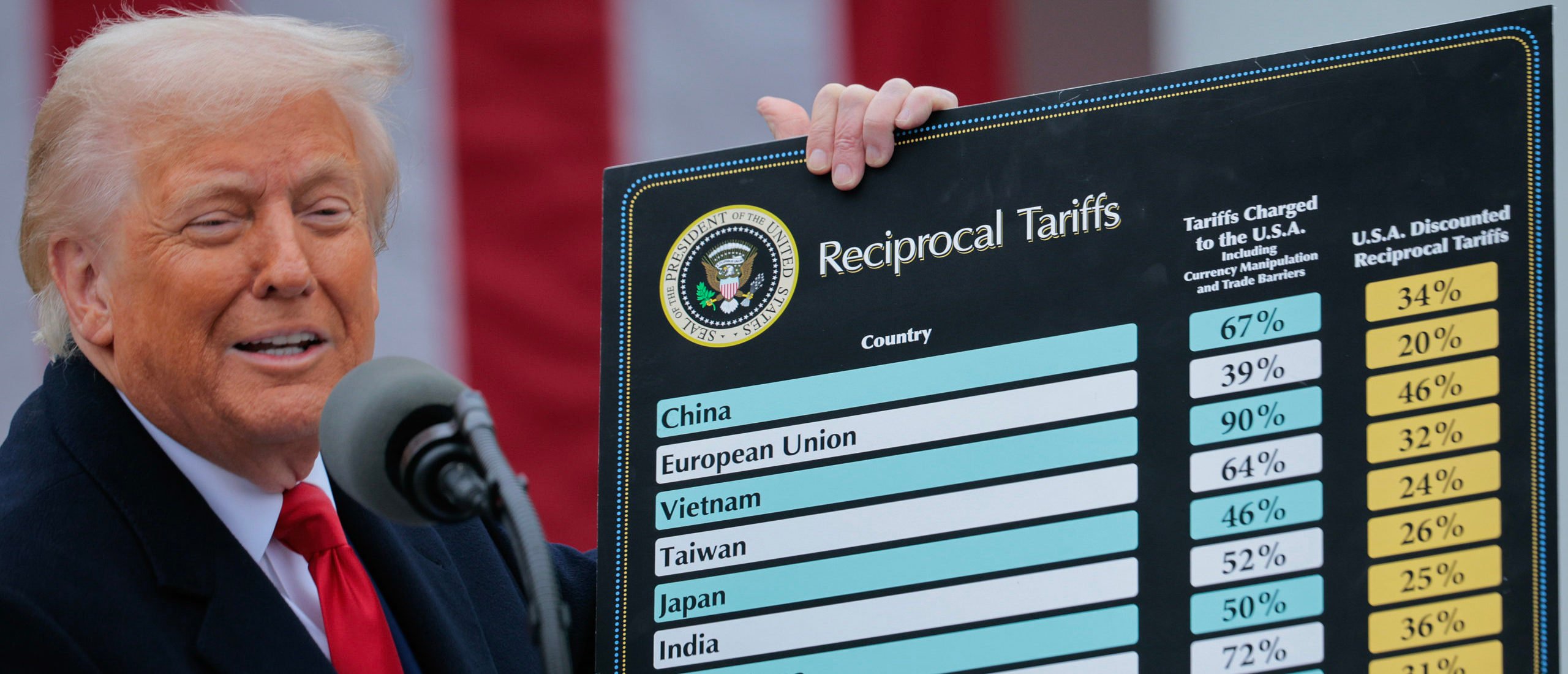
U.S. stocks faced a significant downturn as President Donald Trump’s tariffs on imports stirred global markets. The Dow Jones Industrial Average saw a sharp drop of 2,200 points, marking a 5.5% decline. Meanwhile, both the Nasdaq Composite and S&P 500 experienced their largest declines since June 2020.
President Trump’s tariffs, labeled as “Liberation Day,” aim to bolster the U.S. economy and protect American workers. According to a White House fact sheet, the current global trading system is unfair to nations adhering to the rules. This move is intended to level the playing field for the United States.
In the wake of these tariffs, global markets, including those in Europe and Asia, felt the impact. While foreign leaders have expressed willingness to negotiate, they have also threatened counter-tariffs. Despite this, the White House remains confident in America’s economic resilience.
China responded swiftly to Trump’s tariffs, declaring a 34% tariff on U.S. imports. This measure, set to start on April 10, signals China’s readiness to challenge the U.S. trade policy. President Trump, however, believes China has miscalculated its response.
Writing on Truth Social, Trump stated, “CHINA PLAYED IT WRONG, THEY PANICKED – THE ONE THING THEY CANNOT AFFORD TO DO!” This reflects his confidence in the U.S. strategy. The administration remains optimistic about the long-term benefits of these policies.
Despite the confidence from the White House, public opinion seems divided. An NBC News poll shows 54% of voters disapprove of Trump’s economic management. Meanwhile, 44% still support his approach.
The stock market’s reaction has sparked concerns among many Americans. While some believe in the potential for economic growth, others are wary of the immediate consequences. These mixed sentiments highlight the uncertainty surrounding the current economic climate.
In the broader context, these tariffs are part of Trump’s strategy to prioritize American interests. The administration argues this approach will ultimately benefit American workers. By challenging unfair trade practices, the U.S. seeks to establish a more equitable global trade environment.
The impact of these tariffs extends beyond just economic figures. They represent a significant shift in U.S. trade policy. As countries respond, the global market landscape is set to undergo further changes.
Fox News and other conservative outlets have reported on the administration’s unwavering stance. They highlight the potential for economic revitalization. This perspective aligns with the administration’s goals of fostering national prosperity.
Some analysts suggest that the market’s initial reaction could be temporary. They argue that the long-term effects of these tariffs could be positive. However, this remains a point of debate among experts.
Supporters of Trump’s policies emphasize the importance of national sovereignty. They argue that protecting American interests should be a priority. This sentiment resonates with many who favor a strong national economy.
Newsmax has covered the administration’s efforts to communicate the benefits of these policies. The focus is on ensuring Americans understand the rationale behind these moves. By doing so, the administration aims to maintain public support.
The New York Post has echoed similar sentiments, emphasizing economic strength. Their coverage aligns with the administration’s narrative of resilience. This reinforces the belief in America’s ability to thrive despite challenges.
As the situation develops, the global economic landscape will be closely monitored. The United States remains steadfast in its approach. The ongoing dialogue between nations will likely shape future trade dynamics.
