
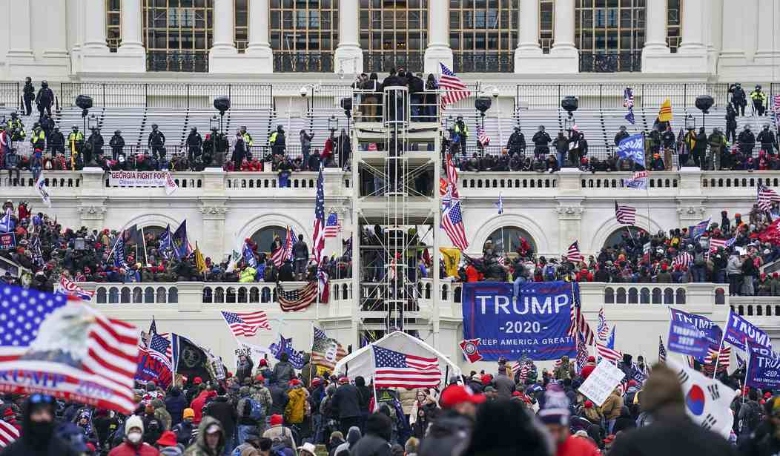
The January 6 Capitol events have been dissected and debated, but a new Congressional Oversight Subcommittee Report has uncovered explosive findings that cast a dark shadow over the federal government’s role in that fateful day. Among the revelations: the Pentagon ignored former President Donald Trump’s explicit request to deploy the National Guard, the Department of Defense (DoD) Inspector General mischaracterized critical timelines to obscure accountability, and key decisions were made to appease political narratives rather than prioritize public safety. These findings, paired with allegations against former Congresswoman Liz Cheney for manipulating witnesses, paint a damning picture of federal mismanagement and political machinations.
Three days before January 6, Trump met with top military leaders, including Joint Chiefs of Staff Chairman Mark Milley and Acting Secretary of Defense Christopher Miller. In this meeting, Trump emphasized the need to ensure safety during the planned demonstrations. According to the report, Milley told the DoD Inspector General (IG) that Trump’s directive was clear: “Make sure it’s a safe event.” Trump even proposed deploying up to 10,000 National Guard troops if necessary. Milley confirmed that Miller assured Trump that “we’ve got a plan, and we’ve got it covered.”
However, these assurances were hollow. Despite Trump’s explicit instructions, the Pentagon failed to act. On January 6, as chaos unfolded, National Guard troops sat idle less than two miles from the Capitol, awaiting orders that would come hours too late. The report highlights that Miller and Secretary of the Army Ryan McCarthy deliberately delayed authorizing the Guard’s deployment, leaving Capitol Police overwhelmed.
The report reveals that Acting Secretary Miller established restrictive Rules of Engagement that severely limited the National Guard’s ability to respond swiftly. These measures, described as “explicit control mechanisms,” stemmed from poor judgment and a desire to avoid political backlash. Miller later admitted that fears of being labeled a “Trump crony” influenced his decisions, prioritizing optics over public safety.
This hesitation, fueled by political considerations, proved disastrous. As Barry Loudermilk, the subcommittee chair, noted, “The DCNG, also known as the ‘Capital Guardians,’ were ready to go but sat on buses just 1.8 miles away, waiting for the Pentagon’s green light. That order didn’t come until after 5:00 PM, nearly three hours after Capitol Police’s first request for assistance at 2:30 PM.”
The report also scrutinizes the actions of Liz Cheney, a prominent figure in the January 6 Committee. Cheney allegedly co-signed a letter discouraging National Guard deployment, further complicating the Pentagon’s decision-making. Moreover, she has been accused of manipulating a witness to frame Trump, an allegation that could lead to criminal referrals.
The subcommittee’s findings suggest that Cheney’s actions contributed to the perception of January 6 as an “insurrection,” a narrative planted in the media before the events unfolded. This narrative, coupled with the Pentagon’s restrictive measures, created a volatile situation that could have been mitigated with proper planning and coordination.
Evidence Manipulation and Pelosi’s Involvement
Adding to the controversy, the report alleges that crucial evidence was destroyed or concealed by the January 6 Committee, led by Cheney and Bennie Thompson. Videos obtained by the subcommittee from an HBO documentary produced by Nancy Pelosi’s daughter provide a behind-the-scenes look at congressional leaders’ frantic efforts to secure National Guard assistance. In one clip, Pelosi can be heard criticizing the absence of troops, calling it “stupidity” and taking “complete responsibility” for the security failures.
Despite these public statements, Pelosi’s own command structure, which included the House Sergeant at Arms, failed to ensure adequate security. Meanwhile, Pentagon officials refused to deploy even a Quick Reaction Force, further exacerbating the crisis.
Steven Sund, the former Chief of Capitol Police, emerges as one of the few figures who consistently advocated for a robust response. Sund repeatedly requested National Guard support as the situation deteriorated, only to be met with resistance from Pentagon officials. The report describes Sund’s efforts as a stark contrast to the inaction and indecision displayed by military leaders.
The Department of Defense Inspector General’s report on January 6 has also come under fire. The subcommittee’s findings accuse the IG of omitting critical details and mischaracterizing events to shield the Pentagon from accountability. This manipulation of the timeline and facts further eroded public trust in federal institutions.
The report’s harshest criticism is reserved for the pervasive political biases that influenced decision-making at the highest levels. Acting Secretary Miller’s fear of being perceived as a “Trump crony” led to paralysis, while other leaders prioritized political narratives over their duty to protect the Capitol. The subcommittee described this phenomenon as “Trump Derangement Syndrome” within the Pentagon, where officials’ personal biases clouded their judgment and compromised public safety.
Here’s where the House and Senate leaders are lied to about the National Guard being on the way to secure the Capitol. Pelosi asks if “instead of blocking the National Guard” he could deploy them.
Loudermilk report pic.twitter.com/Vg0F53svKQ— Victoria Taft, The Adult in the Room, FITF Squad (@VictoriaTaft) December 18, 2024
The failures and coverups surrounding January 6 have deepened public distrust in Washington, D.C. Loudermilk emphasized that the subcommittee’s findings are just the beginning, with additional reports promised on topics such as the pipe bombs discovered near the Capitol that day. These investigations aim to provide a clearer picture of the events and hold accountable those responsible for the failures.
The Congressional Oversight Subcommittee Report sheds new light on the systemic failures and political manipulation that characterized January 6. From the Pentagon’s inaction to Liz Cheney’s role in shaping the narrative, the findings highlight a disturbing pattern of prioritizing optics over public safety. As the subcommittee continues its investigations, the public awaits answers and accountability for one of the most contentious days in recent American history.
