
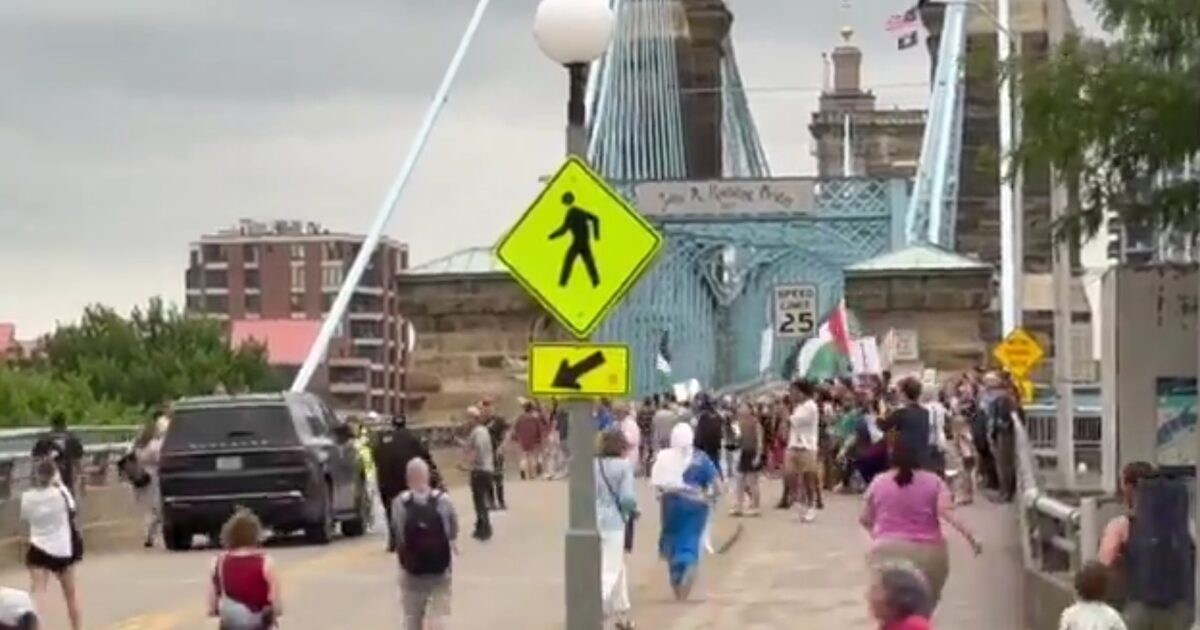
Thirteen individuals, including two reporters, found themselves in the clutches of Covington police on Thursday night over a protest backing an Egyptian Imam facing deportation. This demonstration led to the temporary blockade of the John A. Roebling Suspension Bridge, a vital link between Covington and Cincinnati. Each arrested individual was later granted a bail of $2,500 during a Friday court session in Kenton County.
Footage captured from the protest revealed officers subduing some protestors who appeared to resist arrest. The charges varied, including Riot 1st Degree, Unlawful Assembly, and Obstructing a Highway, among others. The protestors were motivated by the unfolding situation regarding Imam Ayman Soliman’s asylum and deportation case.
Ayman Soliman, previously granted asylum in 2018, was detained last week after his asylum status was revoked due to alleged connections to a Muslim Brotherhood-affiliated group, Al-Jameya al Shareya. The case gained significant attention, with Soliman’s legal team emphasizing his innocence. They argue that Al-Jameya al Shareya is merely a non-governmental organization focused on community services.
In a turn of events, a federal judge granted Soliman a temporary restraining order to prevent his deportation until his immigration hearing. This move offers Soliman a brief reprieve, allowing him to remain in Ohio. His legal team is working tirelessly to challenge the claims against him, emphasizing the non-terrorist nature of the organization he was allegedly linked to.
Despite allegations from immigration officials, both the U.S. and Egypt have not designated the group Soliman was associated with as a terrorist organization. Soliman’s attorneys remain steadfast, denying any malicious affiliations. They underscore the unjust labeling of the group as a Tier III terrorist organization by an asylum officer last year.
The protest underscored the heightened tensions surrounding Soliman’s case, drawing attention from various media outlets. Two CityBeat journalists, Madeline Fening and Lucas Griffith, were among those arrested. They face charges of first-degree rioting, a serious felony, alongside several misdemeanors.
CityBeat publisher Tony Frank confirmed the arrests, expressing concern for his staff. Fening, an investigative reporter, has previously covered significant issues such as fentanyl overdoses and police misconduct. The arrests highlight the challenges faced by journalists in volatile situations.
Most of the defendants appeared in court without legal representation. With felony charges looming, they face potential penalties of up to five years in prison. The judge ordered them to return for their next hearing on July 23, setting their bonds at $2,500.
The Covington Police Department released a statement regarding the arrests, emphasizing the need to maintain public safety. They pointed out that the protest obstructed a major bridge, posing risks to both the public and the protestors. The police reiterated the importance of lawful and peaceful demonstrations.
Chief Brian Valenti of the Covington Police stated that while the department respects the right to protest, public safety remains a priority. The temporary closure of the Roebling Suspension Bridge was a necessary measure to address the situation. The department’s actions were supported by officers from across Kenton and Campbell Counties.
Images and videos from the protest and court hearing quickly circulated online, capturing the intensity of the situation. Prior to the bridge protest, a rally for Soliman highlighted the influence of the Red-Green alliance. This alliance has been criticized for allegedly promoting ideologies contrary to American values.
The protest also saw moments of tension, with a vehicle attempting to cross the bridge being harassed by demonstrators. Organizers encouraged protestors to cross the bridge, initially occupying both lanes. Such actions drew criticism for disrupting public order and safety.
As the situation unfolded, the police moved to subdue those who refused to disperse. The incident has sparked a broader conversation about the right to protest and the responsibilities that come with it. The Covington Police Department aims to balance these rights with the need to maintain public order.
The protest and subsequent arrests have drawn national attention, with many closely following Soliman’s case. The events serve as a reminder of the complex intersections between immigration, law enforcement, and freedom of expression. As legal proceedings continue, many await the outcomes of the upcoming hearings.
