
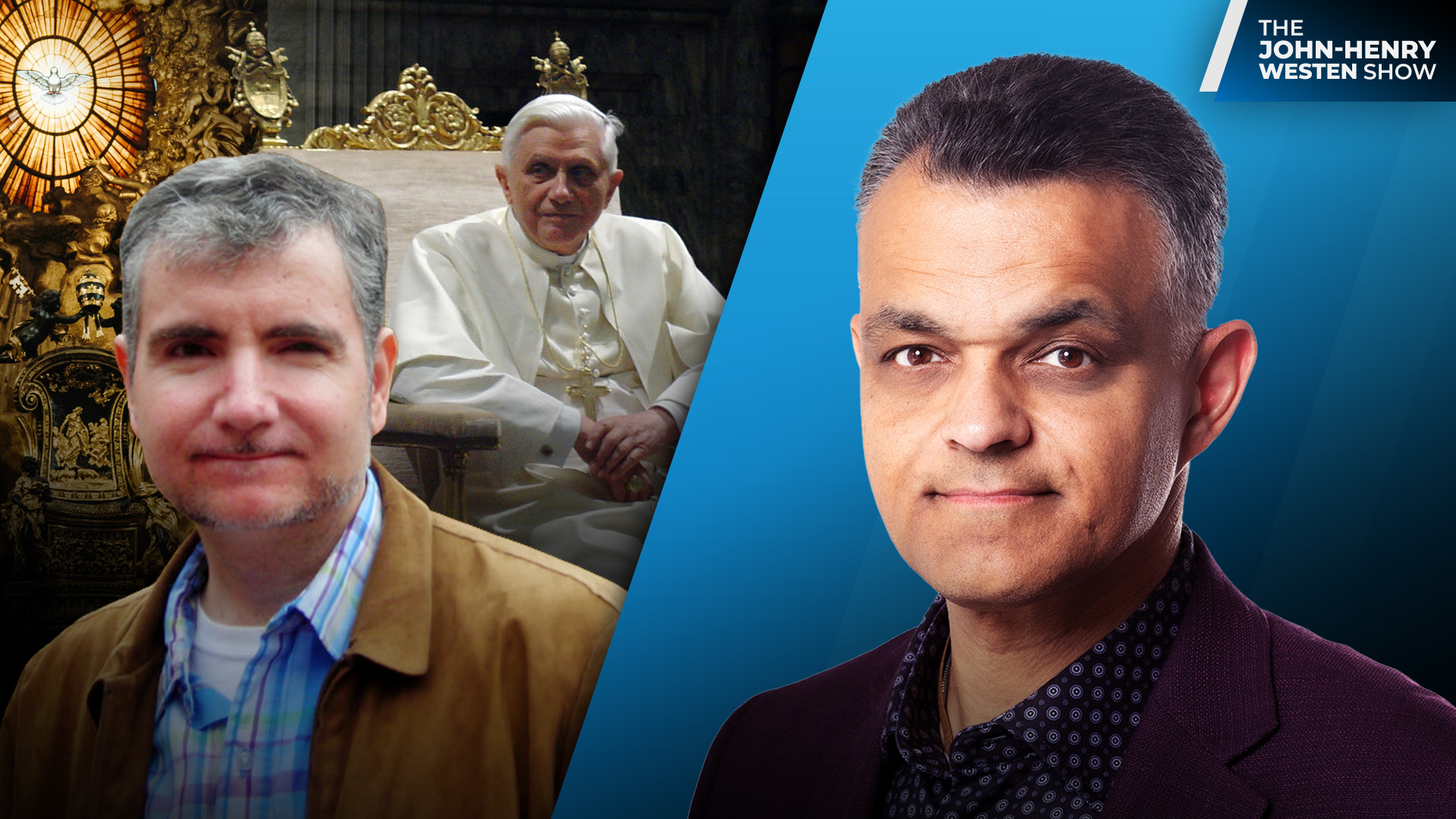
Pope Benedict XVI’s 2013 resignation has been reexamined with fresh, pointed questions: did he truly give up the papal office or did he adopt an “expanded Petrine ministry” that kept him spiritually tied to the role? Writers John-Henry Westen and Ed Mazza unpack claims that Benedict and those close to him believed he could be both active and contemplative, and they explore what that belief might mean for the legal and pastoral standing of subsequent popes. This article lays out the argument, the canonical questions it raises, and the possible consequences for the Church without taking a side.
The starting point is simple but bold: Benedict’s own words and the commentary of Archbishop Georg Gänswein suggest he conceived his post-resignation life not as a complete severing from the Petrine office but as a change in function. That phrase, “expanded Petrine ministry”, appears in discussions that try to reconcile retirement with an ongoing spiritual bond to the papacy. Those who advance this view argue Benedict intended to become a contemplative presence while leaving governance to a successor.
Critics insist a resignation must be clear and free of conditions to be canonically valid, and that anything implying he retained papal authority or identity could muddy the waters. Canon law expects a voluntary and unconditional renunciation of the office; if Benedict framed his departure as merely a shift in style rather than a full handover, some say the act could be legally shaky. The debate hinges on interpreting words, intentions, and the documents that accompanied his decision.
Archbishop Gänswein’s public remarks and Benedict’s own explanations fuel the discussion because they offer more than private reflection; they provide material for legal and theological analysis. Supporters of Benedict’s clarity point to his explicit resignation statement in 2013, while skeptics focus on later commentary suggesting continued spiritual linkage. Parsing those statements is tricky, and scholars are divided on whether the language used creates a canonical problem or simply reflects a complex pastoral posture.
If the resignation were somehow invalid, the implications would be seismic: questions about succession, the legitimacy of Pope Francis, and the standing of anyone claiming the chair after Benedict. That is the crux of why this topic keeps resurfacing. It is not merely an academic debate but one that could influence how millions of Catholics view authority and continuity in the Church.
History offers precedent for messy moments in the papacy, but clear legal remedies are rare and cumbersome. Church history contains disputed elections, antipopes, and contested resignations, and each episode taught painful lessons about governance, transparency, and unity. The current conversation revives those lessons and presses modern authorities to offer crisp explanations rather than leave ambiguity to fester.
The practical fallout of unresolved questions could be significant: ecclesiastical tribunals, formal inquiries, or even deepened divisions among clergy and lay faithful who demand clarity. Faithful Catholics deserve to know whether the highest office of their Church passed cleanly from one shepherd to the next or whether a shadow of uncertainty remains. Without decisive clarification, rumor and suspicion can outpace careful legal and theological work.
At stake is more than technical legality; it is trust in institutions that shepherd billions and steward centuries of doctrine. The discussion sparked by Westen and Mazza, and amplified by voices close to Benedict, calls for careful, public answers rooted in law and sound theology. For many, resolving this matter matters both for conscience and for the Church’s future coherence, and it deserves sober, thorough attention rather than quick dismissal.
