
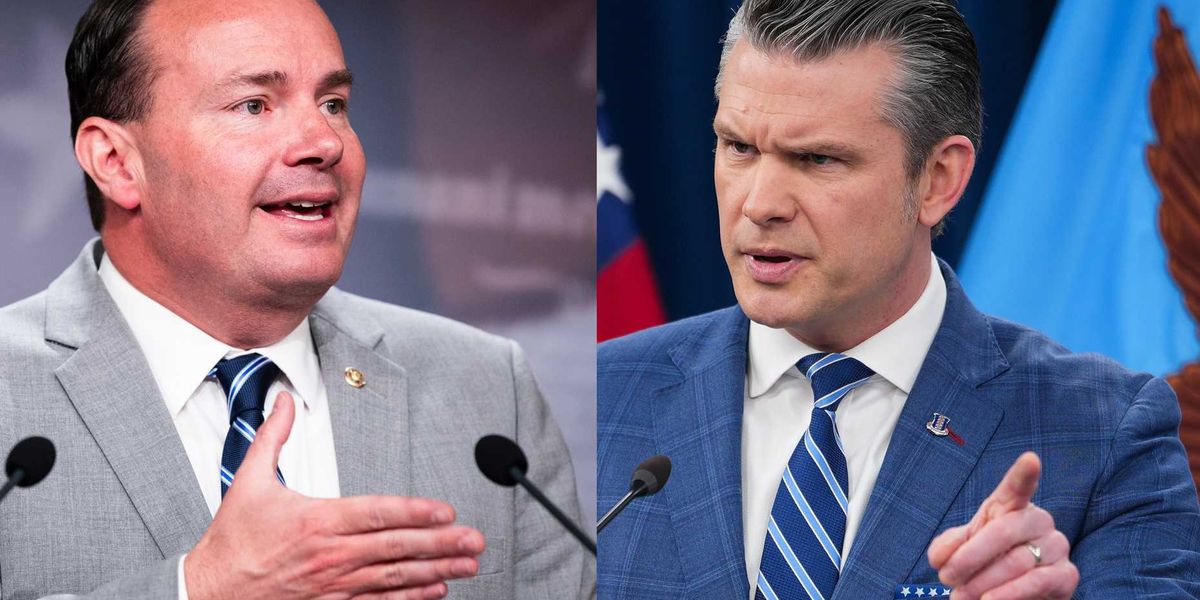
The Pentagon quietly tried to simplify its faith coding system and accidentally kicked off a public row over whether members of The Church of Jesus Christ of Latter-day Saints count as Christians, sparking pushback from Utah lawmakers and a wider debate about who gets to decide religious identity inside the armed forces.
The Department of War issued a revised set of faith codes that left some Latter-day Saints off the list of Christian denominations, and that omission lit up social media and conservative circles. The move felt like more than a clerical error to many service members and veterans who wear their faith openly. That reaction pushed the issue into mainstream politics almost immediately.
Members of the LDS church were rightly upset to find their faith listed but not grouped under Christian denominations, and voices from Utah were quick to challenge the decision. “I’m a member of The Church of Jesus Christ of Latter-day Saints,” he Saturday. “My church membership is inextricably intertwined with my Christianity, as it is for 17 million other Latter-day Saints. Regardless of what the Pentagon thinks.” Senator Mike Lee framed the omission as an affront to identity and to religious recognition in uniform.
Not everyone agreed with Lee, and some religious leaders pointed to long-standing theological disagreements as the crux of the matter. “In strictly theological terms, Catholics do not consider Mormons (Latter-day Saints) as Christians,” explained Father Ronald Vierling, a priest who rejection of the Trinity as one of the differences. That argument rests on doctrine, not on policy, and it exposes how messy religious categorization can be when a government office tries to tidy it up.
Lee pushed the matter up the chain, and the story took on a political edge when he raised it with the White House. Lee later on Sunday that he has spoken to President Donald Trump about the issue. “I won’t speak for him, but I’m thrilled about where this is heading,” the senator wrote, making clear he wanted a quick fix and a clear statement that the Pentagon would not pick winners and losers among faiths.
By Monday the War Department reversed course, calling the omission a mistake and promising a correction to the faith codes. “Last week, a proposed list of simplified faith codes was released to the media. The Pentagon list included redundant and unnecessary labeling, and the mistake has been fixed,” reads the from the agency posted on social media. Officials said the goal had been simplification, not theology, and that the paperwork glitch would be corrected.
https://x.com/BasedMikeLee/status/2063471431267066070
The agency stressed its broader role in supporting religious freedom in the ranks and defending the sincere exercise of faith by service members. “The Pentagon’s job is not to adjudicate theological debates, but instead to ensure sincerely-held faith is respected and encouraged in our ranks,” the agency added. That line was meant to draw a bright line between administrative coding and ecclesiastical judgment.
Agency officials explained the effort was meant to reduce an unwieldy list of more than 200 faith codes and streamline personnel processes rather than decide doctrinal questions. The coding overhaul had practical motives: simplify record-keeping and make chaplain support more consistent across units. Still, the backlash showed how administrative edits can have outsized cultural effects.
‘The Pentagon’s job is not to adjudicate theological debates.’ That short, exact line popped up as both a criticism and a defense, and it became the rallying cry for those who argue the military should avoid theological gatekeeping. The phrase landed with conservatives who see government overreach whenever a federal office wades into questions of belief and identity.
Senator Lee publicly thanked War Secretary Pete Hegseth for moving to correct the list, and lawmakers on the right framed the fix as a win for religious liberty in uniform. The episode is likely to keep attention on how faith is coded and recognized inside federal systems. The next steps will be about policy safeguards, clearer guidance for chaplains, and making sure service members do not have to litigate their faith in personnel databases.
