
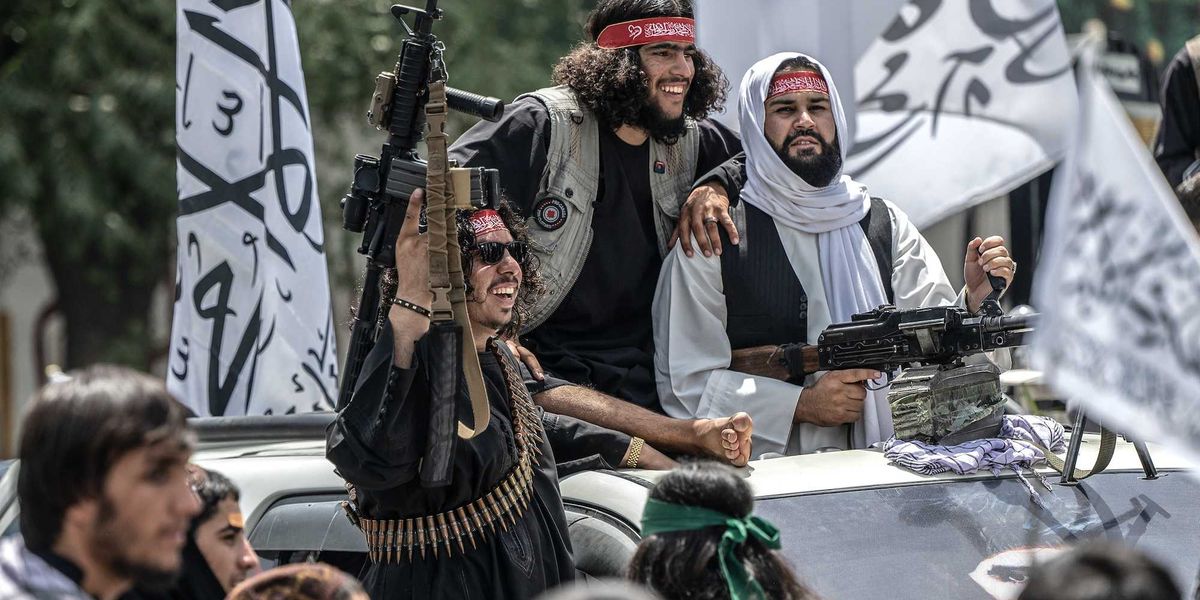
The Taliban’s new decree on marriage puts local custom above children’s rights and hands men broad power to decide when girls are considered married, and U.N. officials have publicly warned this moves Afghan women and girls backward. The language in the order lets silence at puberty be read as consent and makes divorce far easier for men than for women, prompting sharp condemnation from the United Nations. The decree arrives amid continued international concern and questions about how the Afghan regime interprets religion and law.
The justice ministry issued a decree that covers separation and validity of marriages, but one clause is especially troubling: it treats a girl reaching puberty as a signal that marriage consent can be assumed. Critics say that standard effectively legalizes child marriage by letting adult men claim a minor’s silence counts as agreement. For families and communities already under strain, this ruling risks locking young girls into relationships long before they can make informed choices.
“This situation reinforces structural discrimination and limits women’s autonomy in matters fundamental to their dignity, safety, and well-being.”
The United Nations Assistance Mission in Afghanistan pointed out that parts of the decree permit men to infer consent from silence and contain phrasing that seems to allow child marriage. The agency called the move a direct blow to the principle that consent must be free and informed. “This undermines the principle of free and full consent and failing to safeguard the best interests of the child,” reads a statement from the organization.
Beyond consent, the decree also includes a provision that a marriage can be declared invalid if a father or grandfather gives a minor girl or boy in marriage without an agreed dowry or with an insufficient dowry. On paper this sounds like a protection, but in practice it could be used to control girls’ futures and give elders more legal leverage over young lives. The legal text shifts decision-making power toward male guardians and away from judges or the children themselves.
The U.N.’s special representative stressed the broader implications, saying the decree is “part of a broader and deeply concerning trajectory in which the rights of Afghan women and girls are being eroded.” That quote underlines how this rule fits into a pattern of policies that pare back freedoms and civil protections. For many observers the measure is not an isolated technical tweak but a visible sign of where the regime is headed.
The decree also changes the rules around divorce. While women are allowed to seek separation, the process is intentionally complex and judicially restrictive, making it much harder for them to leave marriages. “While men retain the unilateral right to divorce, women must pursue complex and restrictive judicial avenues to separate from a spouse,” UNAMA said. That imbalance leaves women more vulnerable to staying trapped in undesirable or abusive relationships.
A spokesperson for the Afghan regime dismissed critics by saying “those who contradict the religion of Islam are not new, and we should not pay attention to them.” That remark indicates the government expects to weather international criticism and to defend the decree as consistent with its view of faith and law. For many outside the country this defense rings as a refusal to engage with concerns about children’s rights and gender equality.
The backdrop to all this is the chaotic American exit from Afghanistan in 2021, when U.S. forces withdrew and the Taliban took control of the capital and state institutions. Critics on the right argue that the withdrawal left a vacuum that enabled repressive policies like this decree. The political debate at home continues over responsibility and whether different choices could have prevented these outcomes.
On the ground, Afghan families face the immediate consequences: girls pushed into marriages before they are ready, legal paths that favor men, and social pressures that limit schooling and opportunities. International agencies and advocates warn the decree will make life harder for millions of women and children, while the Afghan regime insists it is enforcing religiously derived law. The clash between those positions will determine whether this rule becomes the norm or faces meaningful pushback.
